
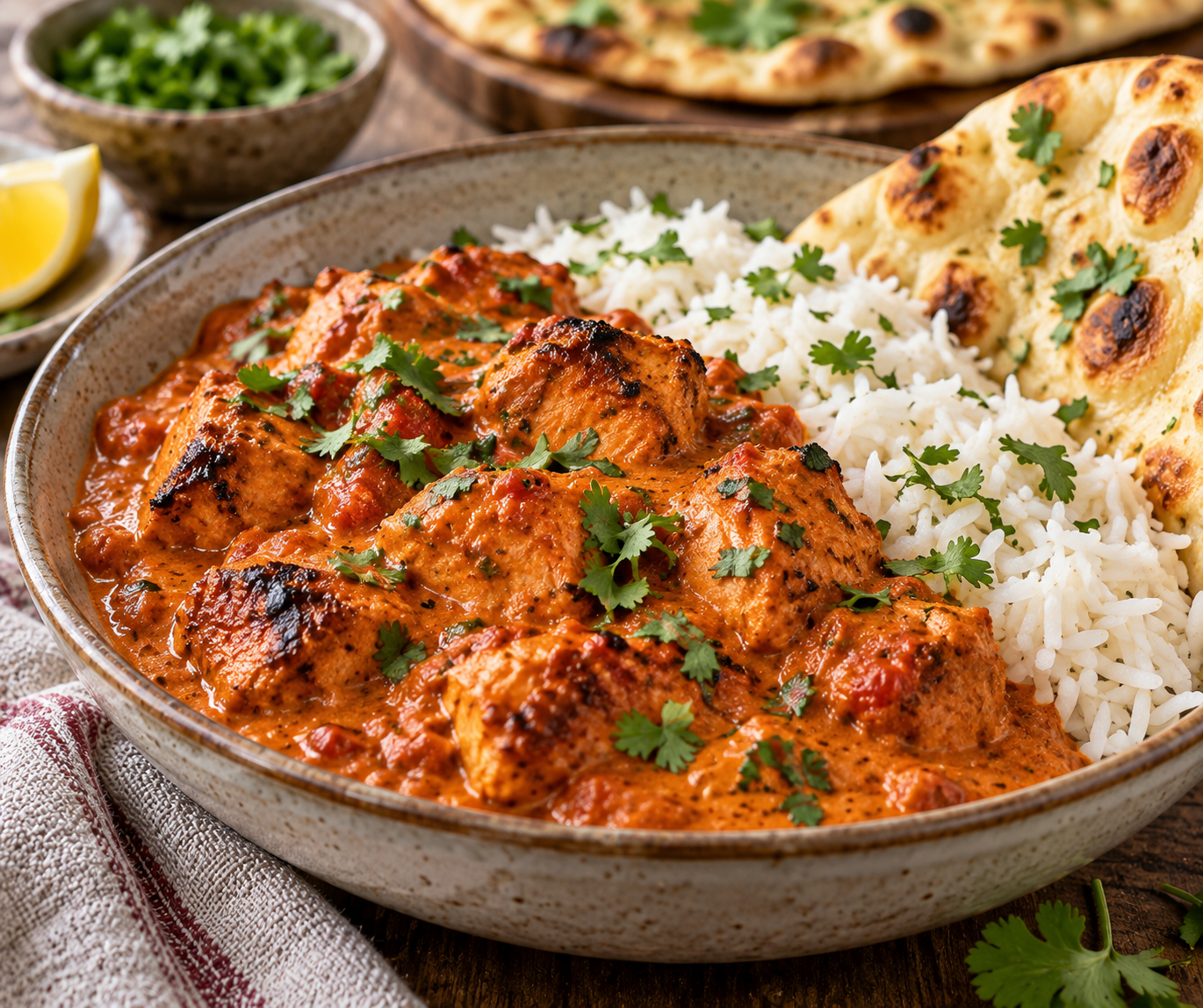
Chicken tikka masala may look quite different from steak and ale pie or a Sunday roast, but it has become one of the most recognizable dishes in modern British food culture.
Tender pieces of spiced yogurt-marinated chicken are cooked until lightly charred, then folded into a rich tomato sauce flavored with garlic, ginger, warming spices and cream. Served with basmati rice or naan, it’s the sort of comforting curry that has become a fixture of British curry houses and home kitchens alike.
The precise origins of chicken tikka masala are debated, with several stories surrounding its creation and development in Britain. What isn’t disputed is the enormous influence South Asian cooking — and particularly Britain’s Indian, Pakistani and Bangladeshi communities — has had on modern British food.
This version is designed specifically for an American home kitchen. You don’t need a tandoor, unusual equipment or difficult-to-find ingredients to get wonderfully flavorful chicken with a creamy, deeply spiced sauce.
What Is Chicken Tikka Masala?
Chicken tikka masala consists of two main components.
First comes chicken tikka: pieces of chicken marinated with yogurt and spices and traditionally cooked at very high heat.
The cooked chicken is then served in a tomato-based masala sauce.
The sauce varies considerably between cooks and restaurants, but commonly includes tomatoes, onion, garlic, ginger, garam masala and cream.
The finished curry is generally creamy and aromatic with a gentle sweetness and as much — or as little — chilli heat as you prefer.
Is Chicken Tikka Masala British or Indian?
It’s best described as a dish shaped by both South Asian and British food culture.
Its exact origin is disputed, and there are competing stories about where and by whom the finished dish was first created.
Chicken tikka itself has South Asian roots, while the saucier dish known as chicken tikka masala became particularly associated with Britain’s curry-house culture.
Rather than trying to assign the dish to a single moment or person, it’s more useful to recognize it as part of the long culinary exchange between Britain and South Asia.
Today, it is firmly established as a familiar part of modern British eating.
Ingredients
For the Chicken Tikka
- 1 1/2 lb (680g) boneless, skinless chicken thighs
- 1/2 cup (120g) plain whole-milk Greek yogurt
- 1 tablespoon (15ml) fresh lemon juice
- 3 cloves garlic, finely grated or minced
- 1 tablespoon freshly grated ginger
- 2 teaspoons garam masala
- 1 teaspoon ground cumin
- 1 teaspoon ground coriander
- 1 teaspoon paprika
- 1/2 teaspoon ground turmeric
- 1/4–1/2 teaspoon cayenne pepper, optional
- 1 teaspoon kosher salt
- 1 tablespoon (15ml) neutral oil
For the Masala Sauce
- 2 tablespoons (28g) unsalted butter
- 1 tablespoon (15ml) neutral oil
- 1 medium yellow onion, finely diced
- 3 cloves garlic, finely grated or minced
- 1 tablespoon freshly grated ginger
- 2 teaspoons garam masala
- 1 teaspoon ground cumin
- 1 teaspoon ground coriander
- 1 teaspoon paprika
- 1/2 teaspoon ground turmeric
- 1/4 teaspoon cayenne pepper, optional
- 2 tablespoons (30g) tomato paste
- 1 can (14–15 oz / 400g) crushed tomatoes or tomato puree
- 1/2 cup (120ml) water
- 3/4 cup (180ml) heavy cream
- 1 teaspoon granulated sugar, optional
- 3/4 teaspoon kosher salt, plus more to taste
- 1 tablespoon fresh lemon juice
- Fresh cilantro, for serving
To Serve
- Cooked basmati rice
- Warm naan, optional
- Fresh cilantro
- Lemon wedges, optional
Chicken Thighs or Chicken Breasts?
I prefer boneless, skinless chicken thighs for chicken tikka masala.
They’re flavorful and remain juicy when exposed to the high heat we need to create those lightly charred edges.
Chicken breasts work too, but they cook more quickly and can become dry if left under the broiler too long.
Whichever you choose, cut the chicken into irregular bite-size pieces rather than perfectly identical cubes. Besides looking more natural, slight variation gives you more edges and surfaces to brown.
Brit & Skillet Tip
Don’t worry about making every piece of chicken identical. Chicken tikka should look like food cooked over intense heat, not perfectly manufactured cubes. Aim for roughly similar sizes so they cook evenly, while keeping the pieces naturally irregular.
Make the Yogurt Marinade
Place the yogurt, lemon juice, garlic, ginger, garam masala, cumin, coriander, paprika, turmeric, cayenne, salt and oil in a large bowl.
Stir until thoroughly combined.
Add the chicken and turn the pieces until completely coated.
Cover and refrigerate for at least 1 hour.
For even better flavor, marinate it for 4–8 hours.
Avoid leaving it much longer than overnight because the acidic marinade can eventually affect the chicken’s texture.
What Is Garam Masala?
Garam masala is a fragrant spice blend used throughout South Asian cooking.
The exact mixture varies considerably, but it commonly contains warming spices such as cumin, coriander, cardamom, cinnamon, cloves and black pepper.
You’ll now find garam masala in the spice section of many American supermarkets, so there is no need to make your own unless you want to.
It provides much of the distinctive warm aroma in this dish.
How to Cook Chicken Tikka Without a Tandoor
A traditional tandoor reaches temperatures far beyond those of an ordinary home oven.
We can imitate some of that intense heat with an American oven broiler.
Line a rimmed baking sheet with foil and place a wire rack over it if you have one.
Arrange the marinated chicken in a single layer, leaving a little room between the pieces.
Position the oven rack approximately 6 inches from the broiler.
Broil the chicken for approximately 5–7 minutes.
Turn the pieces and broil for another 4–6 minutes, until cooked through with browned and lightly charred patches.
Chicken should reach an internal temperature of 165°F (74°C).
Exact broiling time will depend on the size of the pieces and the strength of your broiler.
Don’t worry if some edges become quite dark. Those charred areas add tremendous flavor to the finished curry.
Can I Cook the Chicken on the Grill?
Yes — and it’s excellent.
Thread the marinated chicken loosely onto skewers or place the pieces directly onto a well-oiled grill grate.
Cook over medium-high to high heat until nicely charred and the chicken reaches 165°F (74°C) internally.
A grill gives you some of the smoky character associated with traditional high-heat cooking.
Make the Masala Sauce
While the chicken cooks, heat the butter and oil in a large skillet or Dutch oven over medium heat.
Add the onion.
Cook for approximately 8–10 minutes, stirring occasionally, until very soft and beginning to turn golden.
Don’t rush this stage. Properly softened onion gives the sauce much more depth.
Add the garlic and ginger and cook for another 1 minute.
Add the garam masala, cumin, coriander, paprika, turmeric and optional cayenne.
Stir constantly for about 30 seconds, just until fragrant.
Add the tomato paste and cook for another 1–2 minutes.
Pour in the crushed tomatoes and water.
Stir well, scraping up anything stuck to the bottom of the pan.
Simmer the Sauce
Bring the sauce to a gentle simmer.
Reduce the heat and cook uncovered for approximately 15–20 minutes, stirring occasionally.
The tomatoes should lose their raw flavor and the sauce should thicken slightly.
If it becomes too thick, add a small splash of water.
Make It Creamy
Reduce the heat to low.
Stir in the heavy cream.
Add the optional teaspoon of sugar and the salt.
The sugar isn’t intended to make the curry sweet. It can simply balance particularly acidic canned tomatoes, so taste the sauce before deciding whether you need it.
Simmer gently for another 3–5 minutes.
Do not allow the cream sauce to boil aggressively.
Add the Chicken
Add the cooked chicken and any flavorful juices from the baking sheet to the sauce.
Stir gently until the chicken is coated.
Simmer over low heat for approximately 5 minutes, allowing the chicken and sauce flavors to come together.
Stir in the lemon juice.
Taste and adjust the salt, chilli or lemon as needed.
Finish with fresh cilantro.
Brit & Skillet Tip
Add the chicken after the sauce is nearly finished. Simmering already-cooked chicken in the sauce for a long time can make it dry and eliminates some of the contrast between those charred edges and the creamy masala sauce.
How Spicy Is Chicken Tikka Masala?
Chicken tikka masala is generally more aromatic than fiercely hot.
The cayenne in this recipe is deliberately adjustable.
For a mild curry, omit it entirely.
For medium heat, use approximately 1/4 teaspoon in both the marinade and sauce.
For something hotter, increase it according to your preference.
Remember that garam masala contributes warmth and fragrance rather than the direct chilli heat you get from cayenne.
Can I Use Curry Powder Instead of Garam Masala?
I don’t recommend making a straight substitution.
“Curry powder” is a broad Western term for many different spice blends, and its flavor can vary significantly between brands.
Garam masala has a particular aromatic character that’s important to this recipe.
Fortunately, it has become quite easy to find in American supermarkets.
Heavy Cream vs British Double Cream
British recipes frequently call for double cream, which has a higher fat content than standard American heavy cream.
For this recipe, American heavy cream or heavy whipping cream works perfectly well.
You don’t need to search for imported double cream.
I’ve covered several other common ingredient translations in my British Baking Ingredients Americans Need to Know guide.
Can I Make Chicken Tikka Masala Without Cream?
Yes.
Full-fat coconut milk can be used for a dairy-free variation, although it will change the flavor.
You can also use half-and-half for a lighter sauce, but it won’t be quite as rich and should be heated gently to reduce the chance of splitting.
If you’re avoiding dairy completely, remember that you’ll also need to replace the yogurt in the marinade with an appropriate unsweetened dairy-free yogurt.
Why Does My Tikka Masala Taste Too Tomatoey?
The sauce probably needs more cooking time.
Canned tomatoes can taste sharp and raw when they first go into the pan.
Allowing the sauce to simmer for 15–20 minutes before adding the cream mellows that acidity considerably.
A small amount of sugar can also help if your particular tomatoes are especially acidic.
Don’t add lots of sugar — the finished curry shouldn’t taste sweet.
Why Is My Chicken Dry?
The most common causes are:
- Cutting the chicken too small
- Using chicken breast and overcooking it
- Broiling for too long
- Simmering the cooked chicken in the sauce for too long
Chicken thighs give you a little more margin for error.
The chicken only needs a brief final simmer once it has been added to the sauce.
Why Doesn’t My Chicken Have Charred Edges?
High heat and space are essential.
If the chicken pieces are packed tightly together, they release moisture and begin steaming instead of browning.
Arrange them in a single layer with gaps between the pieces and get them relatively close to the broiler.
A wire rack can also help hot air circulate around the chicken.
Can I Make Chicken Tikka Masala Ahead?
Absolutely.
Like many curries and stews, the flavors can be even better the following day.
Prepare the entire dish, allow it to cool and refrigerate it in an airtight container for up to 3 days.
Reheat gently over medium-low heat, adding a splash of water if the sauce has thickened considerably.
If you enjoy make-ahead British comfort food, my Traditional British Beef and Ale Stew is another excellent option.
Can I Freeze Chicken Tikka Masala?
Yes.
Allow it to cool completely and transfer it to a freezer-safe container.
Freeze for up to 3 months.
Thaw overnight in the refrigerator and reheat gently on the stovetop.
Cream sauces can occasionally look slightly separated after freezing, but gentle reheating and stirring will usually bring everything back together.
What to Serve with Chicken Tikka Masala
Serve it with:
- Steamed basmati rice
- Warm naan
- Cucumber salad
- Chutney
- Plain yogurt
- Lemon wedges
- Fresh cilantro
A bowl of fluffy basmati rice is really all you need to turn it into a satisfying dinner.
Chicken Tikka Masala and Modern British Food
Brit & Skillet has plenty of older British favorites — from Traditional Welsh Rarebit to pies, puddings and cakes — but British food hasn’t stood still.
Migration and cultural exchange have profoundly influenced what people across Britain cook and eat.
South Asian restaurants and communities have been an especially important part of that story, and curry-house dishes have become deeply woven into Britain’s modern food landscape.
Chicken tikka masala is therefore a useful reminder that “British food” doesn’t refer only to recipes that have existed unchanged for centuries.
It continues to evolve.
British Chicken Tikka Masala
Prep time: 25 minutes
Marinating time: At least 1 hour
Cook time: 40 minutes
Serves: 4–6
Creamy, aromatic and full of warming spices, chicken tikka masala represents a very different side of British cooking from the traditional pies and bakes for which the country is often known.
With a yogurt marinade, an ordinary American broiler and supermarket spices, you can make a wonderfully satisfying version at home without specialized equipment.
For more traditional and modern favorites, explore all of my British Recipes made approachable for American kitchens.
Leave a Reply