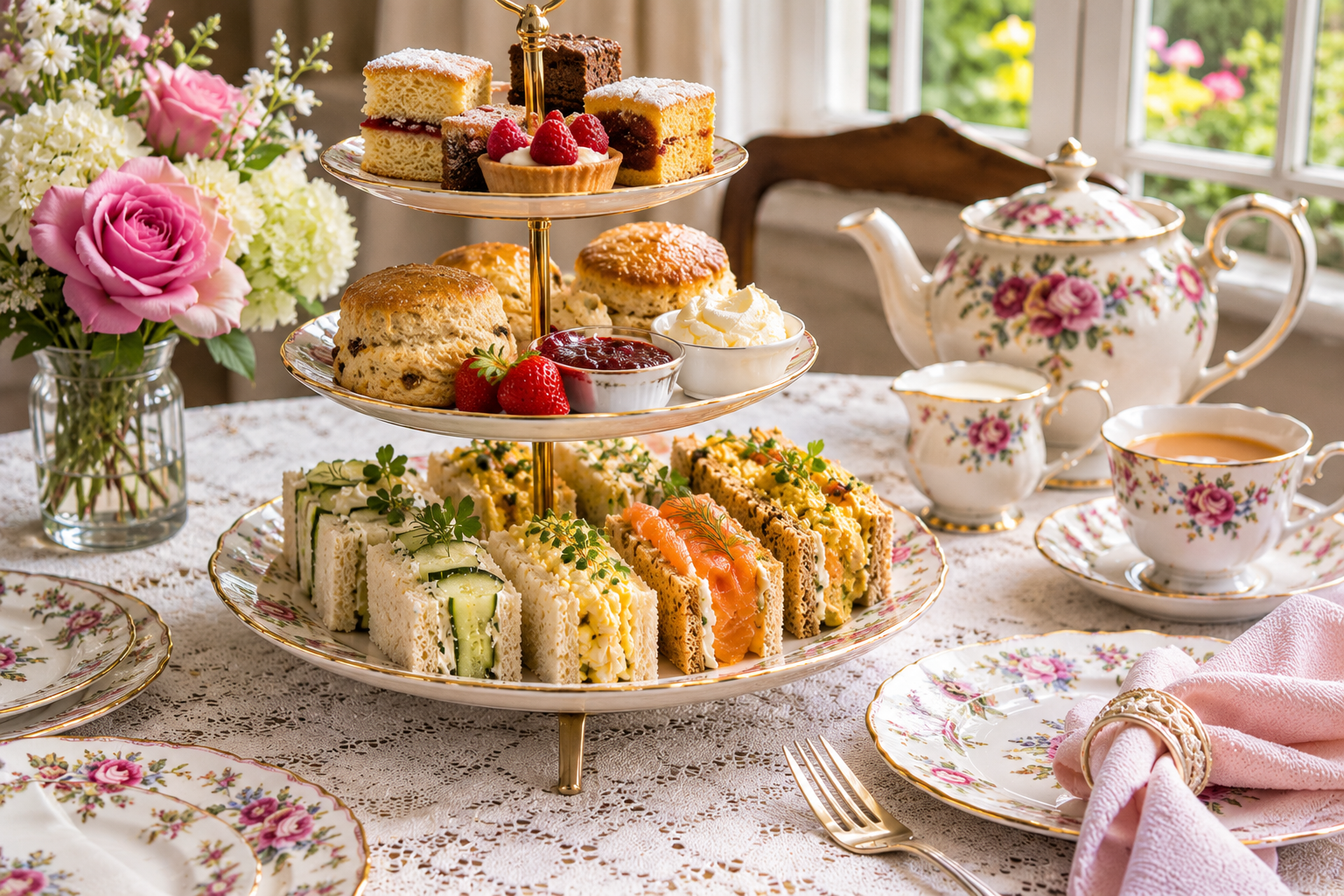
There’s a particular art to making a proper British afternoon tea sandwich. The bread should be soft, the filling delicate, the crusts neatly removed and the finished sandwiches small enough to eat without making a complete spectacle of yourself.
Which, admittedly, is easier said than done when you’re trying to balance a teacup, a plate and a cucumber sandwich at the same time! 😂
Growing up in Britain, I was familiar with the idea of afternoon tea as something rather special. It’s one of those traditions that manages to make even a simple sandwich feel a little more elegant.
And while a beautiful afternoon tea spread might look complicated, the sandwiches themselves are surprisingly straightforward.
The secret is choosing the right fillings, preparing them carefully and knowing which ones can be made ahead without turning the bread soggy.
In this guide to traditional British afternoon tea sandwiches, I’ll show you the classic fillings, how to prepare and cut them properly, how many to make for your guests and which American ingredients work best.
Whether you’re planning a birthday celebration, a baby shower, a garden party or simply fancy treating yourself to a proper British afternoon tea, you’ll have everything you need to get started.
And yes, we’re removing the crusts. Sometimes tradition simply has to be respected! 😂
Affiliate Disclosure: Brit & Skillet may earn a commission from qualifying purchases made through links on this page, at no additional cost to you.
What Are Traditional British Afternoon Tea Sandwiches?
Afternoon tea sandwiches are small, neatly prepared sandwiches served as the savoury part of a traditional British afternoon tea.
They’re usually made with soft bread, delicate fillings and very little fuss.
Unlike a typical American deli sandwich, afternoon tea sandwiches aren’t supposed to be enormous or piled high with ingredients.
The idea is to offer several different flavours in small portions, allowing guests to enjoy a selection without becoming too full before the scones and cakes arrive.
Traditionally, the sandwiches are served first, followed by scones with jam and clotted cream, and then an assortment of cakes or pastries.
For more about the tradition itself, including the history and customs, see our British Afternoon Tea Explained guide.
The Most Popular British Afternoon Tea Sandwich Fillings
Although afternoon tea menus vary, several fillings have become particularly associated with the British tradition.
Here are some of the classics worth including on your tea table.
1. Cucumber Sandwiches
Few things say British afternoon tea quite like a cucumber sandwich.
Traditionally, thinly sliced cucumber is layered between soft white bread, often with a little butter.
Some modern versions use cream cheese, fresh dill or a squeeze of lemon, but the classic preparation is beautifully simple.
The important thing is slicing the cucumber thinly and removing excess moisture before assembling the sandwiches.
Otherwise, you’ll end up with soggy bread, which rather defeats the purpose of all that careful preparation!
American ingredient tip: English cucumbers are widely available in American supermarkets and are ideal because they have thin skins and relatively few seeds.
2. Egg and Cress Sandwiches
Egg and cress is another much-loved British sandwich filling.
Hard-boiled eggs are chopped and mixed with mayonnaise, a little seasoning and fresh garden cress.
The result is creamy, gently peppery and particularly delicious on soft white or wholemeal bread.
In Britain, egg and cress sandwiches are a familiar sight in cafés and sandwich shops.
American ingredient tip: Garden cress can be difficult to find in some American supermarkets. Watercress makes a good alternative, or you can use a small amount of finely chopped arugula for a similar peppery flavour.
3. Coronation Chicken Sandwiches
Coronation Chicken is a wonderful choice if you’d like something with a little more flavour and history.
Originally created for Queen Elizabeth II’s coronation celebrations in 1953, this British favourite combines tender chicken with a creamy, gently spiced curry dressing and fruity sweetness.
It makes a particularly lovely afternoon tea sandwich filling because you can prepare it ahead of time.
Our Traditional British Coronation Chicken recipe uses mango chutney, dried apricots and a gently spiced dressing, with ingredients readily available in American supermarkets.
For afternoon tea sandwiches, chop the chicken fairly finely so the filling spreads evenly and the sandwiches are easy to cut.
Avoid overfilling them, as the dressing can make the bread difficult to handle.
4. Smoked Salmon and Cream Cheese Sandwiches
Smoked salmon sandwiches add a lovely touch of elegance to an afternoon tea spread.
A thin layer of cream cheese, a little lemon juice and fresh dill work beautifully with smoked salmon.
Soft brown bread or wholemeal bread is particularly good with this filling.
For a more traditional presentation, cut the sandwiches into small rectangles or fingers.
American ingredient tip: Look for cold-smoked salmon, sometimes labelled lox-style smoked salmon. Hot-smoked salmon has a different texture and is better suited to a flaked filling.
5. Ham and Mustard Sandwiches
A good ham and mustard sandwich might sound rather ordinary, but it’s a classic combination that works beautifully in small portions.
Choose thinly sliced cooked ham and spread the bread lightly with butter and a little English mustard.
English mustard can be considerably stronger than many American yellow mustards, so use it sparingly.
If you prefer something milder, Dijon mustard makes a good alternative.
6. Cheese and Chutney Sandwiches
Cheese and chutney is another familiar British combination.
A mature Cheddar cheese paired with a little sweet and tangy chutney makes a delicious savoury sandwich.
For afternoon tea, grate the cheese or slice it very thinly so the sandwiches hold together neatly.
American ingredient tip: Look for extra-sharp Cheddar if you can’t find British mature Cheddar. A good-quality apple or onion chutney works beautifully.
This is also an excellent vegetarian option.
Which Bread Is Best for Afternoon Tea Sandwiches?
Bread makes an enormous difference to the finished sandwiches.
For traditional British afternoon tea, soft, thinly sliced sandwich bread is generally the best choice.
You want bread that holds together neatly when cut but doesn’t overwhelm the filling.
White Sandwich Bread
Soft white bread is particularly good for cucumber, egg and cress, and Coronation Chicken sandwiches.
Choose a good-quality loaf with a fine, even texture.
Wholemeal or Brown Bread
In Britain, we’d usually call this wholemeal bread.
In America, look for soft whole-wheat sandwich bread.
It’s especially good with smoked salmon, cheese and ham.
Can You Use Sourdough?
You can, but thick, chewy sourdough isn’t usually ideal for traditional afternoon tea sandwiches.
The bread can overpower delicate fillings and make neat finger sandwiches difficult to cut.
Save the hearty sourdough for another occasion!
How to Make Perfect Afternoon Tea Finger Sandwiches
Presentation is one of the things that makes afternoon tea feel special.
Fortunately, you don’t need professional catering experience to achieve a lovely result.
1. Start with Soft, Fresh Bread
Use bread that’s fresh but not so delicate that it tears when handled.
If your bread is particularly soft, chilling the assembled sandwiches briefly can help them hold their shape before cutting.
2. Spread the Bread Lightly
A thin layer of softened butter can help create a barrier between moist fillings and the bread.
For some fillings, such as smoked salmon, cream cheese serves a similar purpose.
Don’t spread the filling too thickly.
Afternoon tea sandwiches should be delicate rather than overflowing.
3. Remove the Crusts
Once the sandwiches are assembled, use a sharp knife to trim away the crusts.
This creates the neat, uniform appearance associated with traditional finger sandwiches.
You can save the crusts for breadcrumbs or croutons rather than throwing them away.
4. Cut into Fingers or Triangles
Rectangular finger sandwiches are particularly traditional.
Depending on the size of your bread, cut each sandwich into three or four narrow fingers.
Small triangles are another attractive option.
For a beautiful tea table, you can mix shapes while keeping the portions similar in size.
5. Keep the Sandwiches Covered
Sandwich bread dries out surprisingly quickly.
Once you’ve prepared your sandwiches, arrange them on a tray and cover them carefully until serving.
If they need to be refrigerated, use an airtight container or cover them well so they don’t absorb refrigerator odours.
How Many Afternoon Tea Sandwiches Per Person?
This is one of the most useful things to work out before hosting afternoon tea.
If you’re serving a full afternoon tea with sandwiches, scones and cakes, plan on approximately four to six small finger sandwiches per person.
For a group of six guests, that means around 24 to 36 finger sandwiches.
You don’t need to offer every filling on the list.
Three or four different varieties usually provide plenty of choice.
Afternoon Tea Sandwich Quantity Guide
| Number of Guests | Finger Sandwiches |
|---|---|
| 2 | 8–12 |
| 4 | 16–24 |
| 6 | 24–36 |
| 8 | 32–48 |
| 10 | 40–60 |
| 12 | 48–72 |
These are suggested quantities rather than strict rules. If sandwiches are the main food you’re serving, allow more.
And if you’re inviting people with particularly enthusiastic appetites, a few extras certainly won’t go to waste!
Can You Make Afternoon Tea Sandwiches Ahead of Time?
Yes, although some fillings are better suited to advance preparation than others.
The trick is to prepare as much as possible without allowing the bread to become damp or stale.
The Day Before
You can prepare fillings such as Coronation Chicken and egg mayonnaise in advance.
Store them in airtight containers in the refrigerator.
You can also wash and dry salad leaves, prepare herbs and organise your serving equipment.
On the Day
For the best texture, assemble most sandwiches on the day you plan to serve them.
Cucumber sandwiches are particularly sensitive to moisture, so I recommend making them relatively close to serving time.
If you need to prepare sandwiches a few hours ahead, keep them properly covered and refrigerated.
Just Before Serving
Trim the crusts, cut the sandwiches neatly and arrange them on your serving plates.
Keep perishable sandwiches chilled until shortly before your guests arrive.
Don’t leave sandwiches containing chicken, eggs, fish or dairy products at room temperature for more than two hours, or one hour when temperatures exceed 90°F (32°C).
How to Arrange Afternoon Tea Sandwiches
You don’t need an elaborate collection of fine china to create a beautiful afternoon tea, although a pretty cake stand certainly adds to the occasion.
Traditionally, a three-tier afternoon tea stand often holds sandwiches on the bottom tier, scones in the middle and cakes or pastries at the top.
However, there’s no rule saying you can’t use separate plates or serving trays.
Arrange the sandwiches in neat rows, alternating different fillings and bread colours.
A mixture of white and wholemeal bread creates an attractive contrast.
For a larger gathering, small labels identifying the fillings are a thoughtful touch, particularly for guests with allergies or dietary restrictions.
Useful Equipment for Preparing Afternoon Tea Sandwiches
You don’t need much specialist equipment, but a few good kitchen tools make preparation easier.
A sharp bread knife is particularly useful for removing crusts and cutting clean, even fingers without squashing the sandwiches.
For preparing fillings such as egg mayonnaise or Coronation Chicken, sturdy mixing bowls are another useful kitchen staple.
I like the King Arthur Stainless Steel Mixing Bowls because they’re practical for preparing ingredients and easy to clean.
A simple serving platter, cake stand or collection of pretty plates will finish the presentation.
And remember, a beautiful afternoon tea doesn’t have to cost a fortune. It’s the little details that make it special.
What Else Should You Serve at a British Afternoon Tea?
Sandwiches are only the beginning!
A traditional British afternoon tea usually includes scones, sweet treats and, of course, a good pot of tea.
Classic British Scones
Freshly baked Classic British Scones are an essential part of afternoon tea.
Serve them with strawberry jam and clotted cream, or a suitable American alternative.
Victoria Sponge Cake
A slice of Traditional Victoria Sponge Cake is another wonderful addition.
With its soft sponge layers and jam filling, it’s a familiar British favourite.
Other British Baking Ideas
You could also serve small slices of Bakewell Tart, traditional shortbread or individual jam tarts.
For more ideas on building the complete menu, see our British Afternoon Tea Explained guide.
Frequently Asked Questions
What Are the Most Traditional British Afternoon Tea Sandwiches?
Cucumber and egg and cress are two of the best-known traditional choices.
Smoked salmon, ham and mustard, cheese and chutney, and Coronation Chicken are also popular options for modern British afternoon tea menus.
Do Afternoon Tea Sandwiches Have to Be Crustless?
Traditionally, afternoon tea sandwiches are served without crusts.
However, if you’re making them for an informal family gathering, there’s nothing wrong with leaving the crusts on.
How Many Types of Sandwiches Should I Serve?
Three or four different fillings are usually plenty for a small afternoon tea.
Try to include a mixture of meat, fish and vegetarian options to suit your guests.
Can I Make Afternoon Tea Sandwiches the Night Before?
It’s better to prepare the fillings ahead and assemble the sandwiches on the day.
Some sandwiches can be made several hours in advance, but cucumber sandwiches are best prepared closer to serving time.
What Is the Difference Between Afternoon Tea and High Tea?
Despite what many people assume, traditional British high tea wasn’t simply a more luxurious version of afternoon tea.
Historically, high tea was a more substantial early evening meal, often served at a dining table.
Afternoon tea was generally a lighter social occasion featuring tea, sandwiches, scones and cakes.
Can I Use American Sandwich Bread?
Absolutely!
Soft American sandwich bread works very well for traditional British afternoon tea sandwiches.
Choose a good-quality loaf and avoid varieties that are excessively sweet or heavily textured.
Bringing a Little British Tradition to Your Table
A proper afternoon tea doesn’t have to involve expensive china, complicated recipes or hours of preparation.
A few carefully chosen sandwich fillings, freshly baked scones and a good pot of tea can turn an ordinary afternoon into something rather special.
And there’s something rather satisfying about seeing a platter of neatly cut finger sandwiches ready for your guests.
Whether you choose traditional cucumber sandwiches, creamy egg and cress or a generous helping of Coronation Chicken, the important thing is enjoying the occasion.
After all, afternoon tea was never meant to be rushed.
Put the kettle on, bring out the sandwiches and make an afternoon of it!
From my British kitchen to yours — happy cooking!
Jane at Brit & Skillet
Leave a Reply