
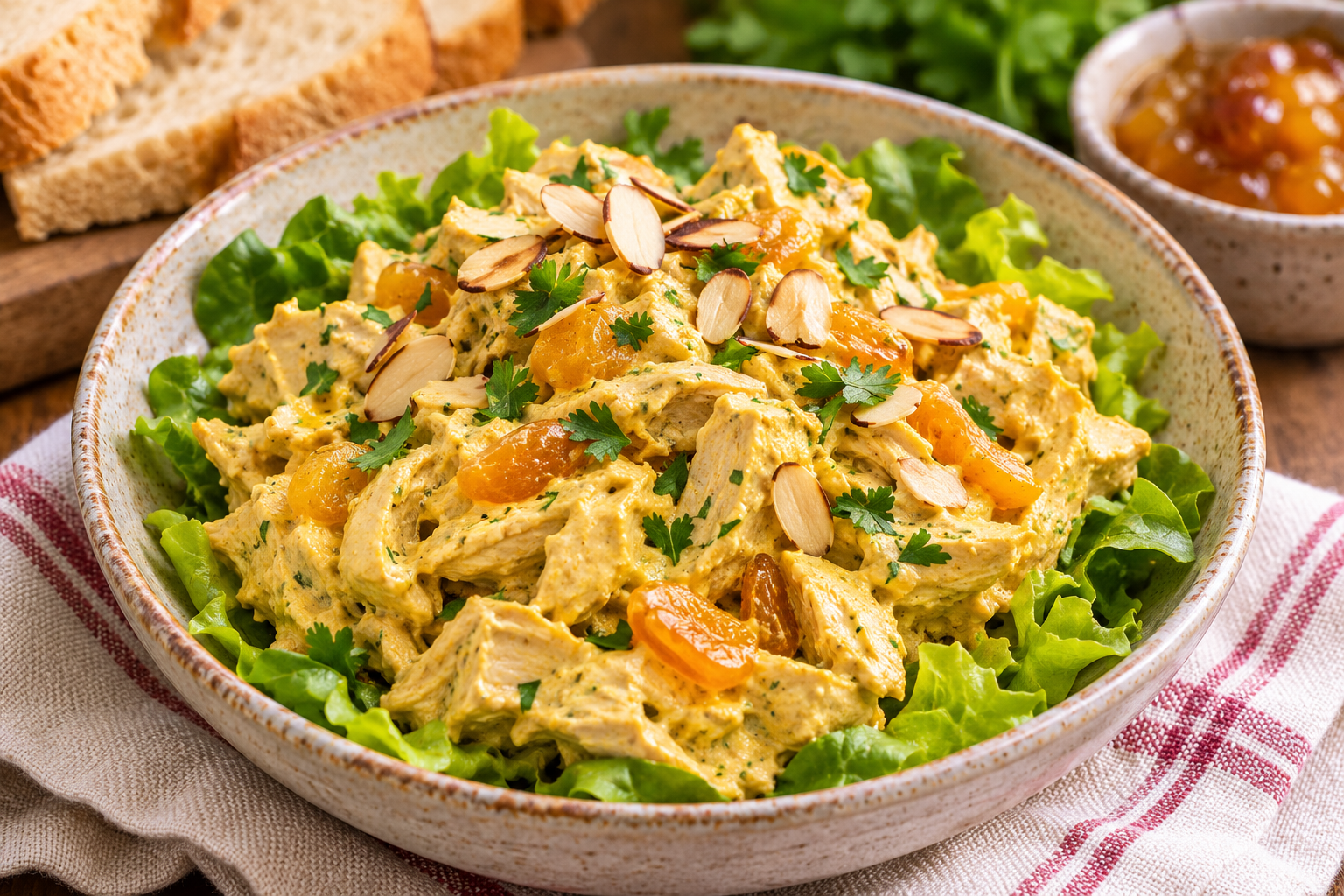
A chicken salad created for a royal coronation sounds rather grand, doesn’t it? But Coronation Chicken has become one of Britain’s most familiar and well-loved lunch dishes.
You’ll find it tucked into sandwiches at cafés, piled onto jacket potatoes, served at garden parties and occasionally making an appearance at a rather posh afternoon tea.
And despite its royal beginnings, there’s nothing particularly complicated about making it.
This traditional British Coronation Chicken recipe combines tender chicken with a creamy, gently spiced curry dressing, fruity mango chutney, dried apricots and a little lemon juice to brighten everything up. Toasted almonds add a lovely crunch.
It’s quite different from the chicken salads you might be used to in America, but that’s part of its charm!
I’ll show you how to make this British favourite using ingredients available in American supermarkets, with tips for adjusting the sweetness, choosing the right curry powder and preparing it ahead of time.
Whether you’re planning afternoon tea, making sandwiches for lunch or looking for something delicious to serve with a baked potato, Coronation Chicken is well worth adding to your recipe collection.
And if it’s good enough for a coronation, I reckon it’s good enough for Tuesday’s lunch! 😂
Affiliate Disclosure: Brit & Skillet may earn a commission from qualifying purchases made through links on this page, at no additional cost to you.

Traditional British Coronation Chicken
Ingredients
Equipment
Method
- Place the cooked, cooled chicken in a large mixing bowl. Chop or shred it into bite-sized pieces, depending on the texture you prefer.
- In a separate bowl, combine the mayonnaise, Greek yogurt, mango chutney, lemon juice, mild curry powder and optional turmeric. Stir until smooth and evenly combined.
- Add the dressing and chopped dried apricots to the chicken. Fold gently until the chicken is evenly coated. Season with salt and black pepper, tasting and adjusting the curry powder or lemon juice if needed.
- Cover and refrigerate for at least 30 minutes to allow the flavours to develop. Stir gently before serving and scatter the toasted almonds and fresh herbs over the top, if using. Serve chilled in sandwiches, on jacket potatoes or over salad leaves.
Notes
What Is Coronation Chicken?
Coronation Chicken is a classic British dish made with cooked chicken coated in a creamy, mildly spiced dressing.
The sauce typically combines mayonnaise with curry flavourings and a fruity element, creating a balance of savoury, sweet and gently tangy flavours.
Modern recipes often include mango chutney, dried fruit, yogurt or cream, and sometimes nuts.
Unlike a hot chicken curry, Coronation Chicken is usually served cold, making it particularly useful for sandwiches, buffets and summer lunches.
It’s also an excellent way to use leftover roast chicken.
The Royal History of Coronation Chicken
Coronation Chicken has a rather fascinating place in British food history.
The dish was created for the celebrations surrounding Queen Elizabeth II’s coronation in 1953.
It is generally credited to Rosemary Hume and Constance Spry, who were involved in preparing the coronation banquet at the Westminster School of Domestic Science in London.
The original dish was known as Poulet Reine Elizabeth, or Chicken Queen Elizabeth.
Its sauce was more elaborate than many modern versions, incorporating curry spices, fruit and a creamy dressing.
Over the decades, British home cooks adapted the recipe into something quicker and more convenient.
Today, Coronation Chicken is a familiar sight in supermarket sandwich fillings, delicatessens and home kitchens throughout Britain.
And although the modern version may be simpler than its royal ancestor, the combination of chicken, gentle spice and fruity sweetness remains its defining feature.
British Coronation Chicken vs American Chicken Salad
If you’re familiar with American chicken salad, you’ll recognise the basic idea.
Both dishes use cooked chicken mixed with a creamy dressing, and both are delicious served cold.
The main difference is the flavour.
American chicken salad often features celery, herbs, mustard or grapes.
British Coronation Chicken gets its distinctive character from curry spices, fruit and chutney.
The curry flavour shouldn’t overwhelm everything else. A good Coronation Chicken has a gentle warmth balanced by sweetness and acidity.
Think of it as a British chicken salad with a little royal flair!
Ingredients for Coronation Chicken in America
One of the best things about this recipe is that you won’t need to hunt down specialist British ingredients.
Most of what you need is available at an ordinary American supermarket.
Cooked Chicken
You can use poached chicken breasts, cooked chicken thighs or leftover roast chicken.
For convenience, a plain rotisserie chicken also works beautifully.
Remove the skin and bones, then chop or shred the meat into bite-sized pieces.
Avoid heavily seasoned or barbecue-flavoured chicken, as it can compete with the delicate curry dressing.
Curry Powder
British-style mild curry powder is ideal for Coronation Chicken.
American supermarkets usually carry curry powder in the spice aisle, although the flavour and heat can vary between brands.
Start with a modest amount and adjust to your taste.
We’re aiming for gentle warmth rather than a fiery curry.
Mango Chutney
Mango chutney brings fruity sweetness and a little tanginess to the dressing.
Look for it in the international foods aisle, particularly among Indian sauces and condiments.
A mild mango chutney works best.
If your chutney contains large pieces of mango, chop them finely before mixing them into the sauce.
Mayonnaise and Greek Yogurt
Mayonnaise gives Coronation Chicken its familiar creamy texture.
For this version, we’re combining it with a little plain Greek yogurt to keep the dressing fresh and slightly lighter.
You can use additional mayonnaise instead if you prefer a richer result.
Dried Apricots
Finely chopped dried apricots add little bursts of sweetness throughout the chicken.
They’re a lovely alternative to raisins, although either can work.
Choose soft dried apricots and chop them small enough to distribute evenly through the dressing.
Toasted Almonds
A scattering of toasted flaked or sliced almonds adds texture and a subtle nutty flavour.
They’re optional, especially if you’re serving someone with a nut allergy.
For the best texture, add them just before serving rather than mixing them in hours ahead.
Brit & Skillet Tip: Let the Flavours Develop
Coronation Chicken is one of those dishes that often tastes even better after a little time in the refrigerator.
Once you’ve mixed the chicken with the dressing, cover it and refrigerate for at least 30 minutes before serving.
This gives the curry spices, chutney and lemon juice time to mingle.
Taste the mixture again before serving, as chilling can change how strongly you notice the seasoning.
If it seems a little thick, stir in a spoonful of yogurt or mayonnaise.
And don’t forget a squeeze of lemon if the dressing tastes too sweet!
Useful Kitchen Equipment
You don’t need any fancy equipment to make Coronation Chicken.
A good mixing bowl, a sharp knife and a sturdy spoon will do most of the work.
I particularly like using stainless steel mixing bowls for preparing cold dishes like this because they’re easy to clean and convenient for chilling ingredients.
The King Arthur Stainless Steel Mixing Bowls are a useful option for mixing the dressing and combining it with the cooked chicken.
If you’re preparing chicken specifically for this recipe, a reliable kitchen thermometer is also useful for checking that it reaches a safe internal temperature of 165°F (74°C).
The King Arthur Volume and Weight Scale is another handy kitchen staple for accurately measuring ingredients, especially when switching between American and British recipes.
How to Serve Traditional Coronation Chicken
One reason Coronation Chicken has remained popular for so long is its versatility.
Coronation Chicken Sandwiches
This is probably one of the most familiar ways to enjoy it in Britain.
Spoon the chicken mixture between slices of soft white or wholemeal bread, perhaps with a few crisp lettuce leaves.
For afternoon tea, remove the crusts and cut the sandwiches into neat fingers or triangles.
Our British Afternoon Tea Explained guide has more ideas for planning a traditional afternoon tea at home.
Coronation Chicken Jacket Potatoes
A fluffy baked potato topped with Coronation Chicken makes a wonderful lunch.
In Britain, we’d call this a jacket potato.
Split the hot potato, fluff the inside with a fork and add a generous spoonful of the chilled chicken mixture.
The contrast between the warm potato and cool, creamy filling is delicious.
Coronation Chicken Salad
Serve the chicken over crisp lettuce with cucumber, tomatoes and a little extra toasted almond.
This makes a lovely lighter lunch, particularly during warmer weather.
Coronation Chicken for Buffets and Parties
Coronation Chicken is ideal for a cold buffet because you can prepare it ahead of time.
Serve it in a chilled bowl with bread rolls, salad leaves or small sandwich buns.
Keep it properly refrigerated until serving and avoid leaving it at room temperature for extended periods.
Can You Make Coronation Chicken Ahead of Time?
Absolutely!
In fact, making it ahead gives the flavours time to develop.
Prepare the chicken mixture, transfer it to an airtight container and refrigerate promptly.
For the best quality, I recommend making it the day before you plan to serve it.
If you’re using leftover cooked chicken, remember that the storage time begins when the chicken was originally cooked, not when you mixed the Coronation Chicken.
Add toasted almonds and any fresh garnishes shortly before serving.
How to Store Leftover Coronation Chicken
Keep Coronation Chicken in an airtight container in the refrigerator at 40°F (4°C) or below.
Use it within three to four days of cooking the chicken, provided it has been handled and refrigerated safely.
Don’t leave it sitting out for more than two hours, or more than one hour in temperatures above 90°F (32°C).
Because the dressing contains mayonnaise and yogurt, I wouldn’t recommend freezing the finished dish. The texture can become watery or separated after thawing.
Frequently Asked Questions
Is Coronation Chicken Actually British?
Yes. Coronation Chicken was created for Queen Elizabeth II’s coronation celebrations in 1953 and has since become a familiar British dish.
Is Coronation Chicken Spicy?
Not usually.
Traditional-style Coronation Chicken has a mild curry flavour rather than intense heat.
You can adjust the curry powder to suit your preference.
Can I Use Rotisserie Chicken?
Yes! Plain rotisserie chicken is a convenient option.
Remove the skin and bones and allow the chicken to cool before mixing it with the dressing.
Can I Make Coronation Chicken Without Mango Chutney?
You can, although the flavour will be different.
Try a little finely chopped dried fruit and a small amount of apricot jam, adjusting the lemon juice to balance the sweetness.
Can I Make It Without Nuts?
Absolutely.
Simply leave out the almonds. The chicken and dressing are delicious on their own.
Can I Use Leftover Roast Chicken?
Yes, provided it has been stored safely.
Leftover roast chicken is an excellent choice and makes this a particularly economical recipe.
Is Coronation Chicken Served Hot or Cold?
Coronation Chicken is traditionally served cold or chilled.
It’s especially popular as a sandwich filling, salad topping or buffet dish.
A Royal Favourite for Everyday Kitchens
Coronation Chicken may have started life as a dish for a royal celebration, but it’s become something far more familiar in British kitchens.
It’s practical, versatile and full of flavour without requiring complicated cooking techniques.
I particularly love how easily it fits into an ordinary lunch, a family gathering or a proper British afternoon tea.
And with American supermarket ingredients, there’s no reason you can’t enjoy this little piece of British food history wherever you live.
From my British kitchen to yours — happy cooking!
Jane at Brit & Skillet
Leave a Reply