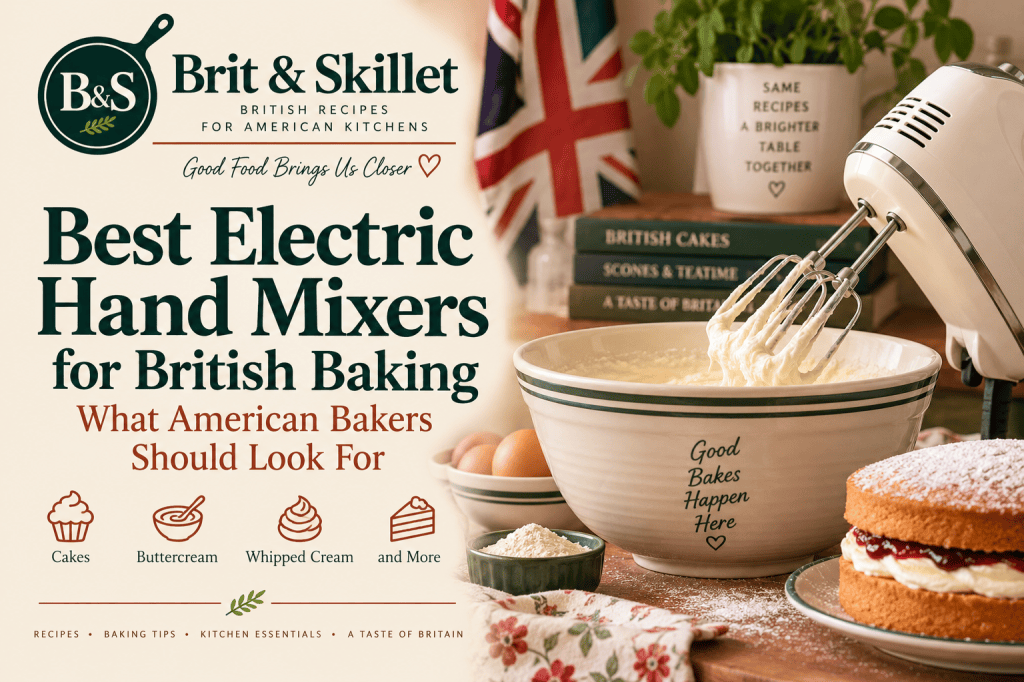
British baking doesn’t require a kitchen full of expensive equipment, but a good electric hand mixer can make some classic recipes much easier.
From creaming butter and caster sugar for a Victoria sponge to whipping cream, beating buttercream and whisking egg whites for meringue, an electric hand mixer handles many jobs that would otherwise require a fair amount of elbow grease.
If caster sugar is unfamiliar, our guide to caster sugar vs. granulated sugar explains the difference and what American bakers can use instead.
For American bakers exploring British recipes, the good news is that you don’t necessarily need a large stand mixer. A hand mixer is compact, easier to store and well suited to everyday jobs such as cake batters, frosting, whipped cream and creaming butter and sugar.
But hand mixers aren’t all the same. Speed control, attachments, weight, low-speed performance and storage can make a noticeable difference—especially when you’re working with everything from delicate whipped cream to thicker cake mixtures.
In this guide, we’ll explain what to look for in an electric hand mixer for British baking and compare three strong options for American home bakers.
Affiliate disclosure: Brit & Skillet may earn a commission from qualifying purchases made through links on this page, at no additional cost to you. Our recommendations are based on independent research and manufacturer information; we do not claim to have personally tested these products unless explicitly stated.
Do You Need an Electric Hand Mixer for British Baking?
You don’t need an electric hand mixer to make British cakes and desserts. Generations of home bakers managed perfectly well with a wooden spoon, whisk and a little determination.
But an electric hand mixer can make several common baking jobs considerably faster and easier.
One of the best examples is a classic Victoria sponge. Creaming softened butter and caster sugar until the mixture becomes pale and fluffy incorporates air and helps create the light texture associated with a good sponge.
A hand mixer is also useful for:
- Creaming butter and sugar
- Making smooth buttercream
- Whipping double cream — heavy cream in the US
- Whisking egg whites for meringues
- Mixing ordinary cake and cupcake batters
- Beating eggs and other light mixtures
For many home bakers, a hand mixer also makes more sense than a full-size stand mixer. It takes up very little cupboard space, works with the mixing bowls you already own and usually costs considerably less.
If you’re building your British baking setup, take a look at our guide to the best mixing bowls for British baking, including the most useful sizes and materials for an American kitchen.
There are limits, though. A hand mixer isn’t necessarily the best tool for frequent bread making or particularly heavy doughs. If you regularly make bread, enriched doughs or very large batches, a stand mixer may eventually be the better investment.
For most beginners exploring British baking, however, a good electric hand mixer is more than enough to get started.
What to Look for in a Hand Mixer for British Baking
A hand mixer doesn’t need dozens of complicated features to be useful. For British baking, the most important qualities are good speed control, comfortable handling and attachments that suit the cakes and desserts you actually make.
A Gentle Low Speed
One of the most useful features is a genuinely low starting speed.
Starting too quickly can send flour, icing sugar or cocoa powder flying out of the bowl. A controlled low speed makes it easier to begin combining ingredients before increasing the speed.
This is particularly useful for cake batters, buttercream and other mixtures containing dry ingredients.
Several Useful Speeds
You don’t necessarily need the mixer with the highest number of speeds, but having a good range makes it easier to move between different baking jobs.
Lower speeds are useful for combining ingredients, while higher speeds work well for whipping cream, beating egg whites and creating light buttercream.
The important thing isn’t simply the number printed on the box—it’s having useful control across that range.
Comfortable Weight and Handle
Unlike a stand mixer, you’ll be holding a hand mixer throughout much of the mixing process.
A comfortable handle and manageable weight therefore matter more than you might expect, particularly when creaming butter and sugar or whipping a mixture for several minutes.
Look for a mixer that’s comfortable to hold and easy to maneuver around your mixing bowl.
The Right Attachments
Standard beaters will handle most everyday British baking jobs, including sponge cakes, traybakes, buttercream and many biscuit mixtures.
A whisk attachment is particularly useful for whipped cream and egg whites.
Some hand mixers also include dough hooks. These can add versatility, but they’re better considered an occasional extra rather than a substitute for a stand mixer if you regularly make heavy bread dough.
Easy Storage
Hand mixers are popular partly because they don’t require much kitchen space, but loose beaters and whisks have an impressive ability to disappear into the back of a drawer.
A storage case or attachment bag can therefore be genuinely useful, particularly in a smaller kitchen.
Don’t Choose by Wattage Alone
A larger wattage number doesn’t automatically mean a mixer will perform better for your baking.
Design, gearing, attachments, speed control and how efficiently the mixer delivers its power all matter.
For the average Brit & Skillet reader, good low-speed control, comfortable handling and useful attachments are more important than simply buying the mixer with the biggest number printed on the box.
Our Hand Mixer Picks for British Baking
There are plenty of electric hand mixers available in the United States, but you don’t need the most expensive model to make a good Victoria sponge or bowl of buttercream.
For this guide, we considered manufacturer specifications, attachments, speed control, storage and how well each mixer suits the everyday jobs involved in British-style home baking.
These recommendations are based on research rather than personal testing by Brit & Skillet.
Best Premium Pick: Breville Handy Mix Scraper
For frequent bakers who want a feature-rich hand mixer, the Breville Handy Mix Scraper is our premium pick.
Breville gives the mixer nine speed settings plus a boost function. Its Beater IQ technology detects the attachment being used and adjusts the speed range accordingly.
It comes with scraper beaters, balloon whisks and dough hooks, along with a detachable storage compartment that keeps the attachments and cord together.
For British baking, that versatility is particularly appealing. The scraper beaters are useful for cake mixtures and creaming, while the balloon whisks suit jobs such as whipped cream and egg whites.
The biggest drawback is price. At the time of this update, Breville lists it at around $160, making it considerably more expensive than many conventional hand mixers.
Best for: Frequent bakers who want premium features and don’t mind paying more for them.
Best Value for Serious Home Bakers: Cuisinart Power Advantage Plus 9-Speed
The Cuisinart Power Advantage Plus 9-Speed Hand Mixer offers an appealing middle ground between inexpensive basic mixers and premium models.
It has nine speeds and three low starting speeds designed to reduce splattering. Its 220-watt motor uses automatic feedback, and the set includes beaters, a chef’s whisk and dough hooks.
The attachments fit into a storage case beneath the mixer, which is particularly useful if you’re trying to keep a small kitchen organized.
That combination makes the Cuisinart particularly well suited to someone building a British baking toolkit. You get lower speeds for bringing flour into a cake mixture, higher speeds for whipping, and several useful attachments without needing to store a large stand mixer.
At the time of this update, Cuisinart lists the model at around $100.
Best for: Home bakers who want plenty of useful features and attachments without moving into premium pricing.
Best Versatile Alternative: KitchenAid 9-Speed Hand Mixer
The KitchenAid 9-Speed Hand Mixer is another strong option for bakers who want plenty of control without giving up countertop or cupboard space to a stand mixer.
Its nine speeds cover everything from gently incorporating chunky ingredients at the lower end to whipping egg whites at the highest setting.
The current model includes stainless steel Turbo Beaters, a Pro Whisk, dough hooks and a blending rod, along with a storage bag to keep the accessories together.
That makes it particularly versatile for a baker who wants one compact appliance capable of handling cake mixtures, buttercream, whipped cream and other everyday baking jobs.
At the time of this update, KitchenAid’s U.S. site lists this model around the $100 mark, although prices and promotions can change.
Best for: Bakers who want a familiar, versatile mixer with a particularly useful selection of attachments.
Hand Mixer Comparison at a Glance
| Mixer | Best For | Speeds | Standout Features |
|---|---|---|---|
| Breville Handy Mix Scraper | Premium / frequent baking | 9 + Boost | Beater IQ, scraper beaters, whisks, dough hooks |
| Cuisinart Power Advantage Plus 9-Speed | Best value | 9 | Low-start speeds, whisk, dough hooks, storage case |
| KitchenAid 9-Speed Hand Mixer | Versatile alternative | 9 | Turbo Beaters, whisk, dough hooks, blending rod |
Which Hand Mixer Should You Choose?
For most American home bakers interested in British recipes, you don’t need to buy the most expensive hand mixer available.
The right choice depends on how frequently you bake and which features matter most to you.
Choose the Breville Handy Mix Scraper if you bake frequently and want the premium option. Its scraper beaters, balloon whisks, dough hooks, nine speeds and attachment-sensing system give it an unusually broad set of capabilities for a hand mixer.
Choose the Cuisinart Power Advantage Plus 9-Speed if value is your priority. Its nine speeds, low-start mixing capability and storage case give you many of the practical features a home baker needs without moving into Breville’s premium price range.
Consider the KitchenAid 9-Speed Hand Mixer if you want versatility and a particularly useful attachment selection. Its whisk, dough hooks and blending rod expand what you can do beyond ordinary cake batter.
Our recommendation: If you’re buying your first electric hand mixer specifically for British baking, the Cuisinart is probably the sweet spot for many home bakers. It offers plenty of speed control and useful attachments without requiring the premium investment of the Breville.
Frequent bakers who want more sophisticated features may find the Breville worth the extra cost, while KitchenAid offers another compelling all-purpose alternative.
Hand Mixer vs. Stand Mixer for British Baking
If you’re just getting started with British baking, you may wonder whether it makes more sense to buy a hand mixer or invest in a stand mixer.
For many everyday British bakes, a hand mixer is perfectly capable.
Victoria sponge, buttercream, whipped cream, meringues, cupcakes and many traybakes involve relatively light mixtures that suit a hand mixer well.
A stand mixer becomes more useful when you regularly work with heavy doughs, large batches or recipes requiring longer mixing times. It also has the advantage of working hands-free while you prepare other ingredients.
There’s also the question of space.
A hand mixer can usually be stored in a cupboard or drawer, while a stand mixer takes up considerably more room and may end up living permanently on the countertop.
If your baking plans mainly involve cakes, buttercream, whipped cream and other traditional British treats, start with a good hand mixer.
If you later find yourself regularly making bread, enriched doughs or large batches, that may be the point when a stand mixer becomes worth the investment.
If you’d like help putting together the rest of your baking setup, see our British Baking Equipment Guide for the essential tools an American kitchen needs for British recipes.
The Bottom Line
You don’t need an elaborate collection of appliances to start baking British recipes in an American kitchen.
For many home bakers, a reliable electric hand mixer provides the right balance of convenience, versatility and easy storage.
The Breville Handy Mix Scraper is our premium choice for frequent bakers who want additional features and a versatile attachment set.
The Cuisinart Power Advantage Plus 9-Speed is our choice for many home bakers looking for a strong balance of features and value.
And the KitchenAid 9-Speed Hand Mixer is a strong alternative for bakers who value versatility and a broad attachment selection.
Whichever model you choose, the most important thing is finding a mixer that suits the recipes you actually make.
A good hand mixer should make British baking easier—not make your kitchen more complicated.
And once you have one, a Victoria sponge seems like a very good place to start.
 Brit & Skillet
Leave a comment