
If you’ve opened a traditional British recipe and found suet on the ingredient list, you may have wondered what on earth you’re supposed to buy in an American grocery store.
You’re certainly not looking for ordinary butter, and you definitely don’t want to accidentally buy a block of bird food!
Suet is an old-fashioned but still very useful British cooking ingredient. It appears in everything from dumplings and savory puddings to classic desserts such as Jam Roly-Poly and Christmas pudding.
The confusing part for American cooks is that suet isn’t nearly as common on US supermarket shelves as it is in Britain.
So what exactly is British suet, where can you find it in America, and what can you use when a recipe calls for suet but you don’t have any?
Let’s sort it out.
Affiliate disclosure: Brit & Skillet may earn a commission from qualifying purchases made through links on this page, at no additional cost to you.
What Is Suet?
Traditional suet is a firm animal fat associated particularly with the area around the kidneys and loins of cattle or sheep.
But when a modern British recipe tells you to add shredded suet, it may be referring to a packaged baking product rather than asking you to prepare raw animal fat yourself.
One of Britain’s best-known brands is Atora, which has been producing shredded suet since 1893. Its traditional product is made primarily from beef fat, while the company also makes a vegetable version. Atora
That convenient shredded form is what many British home cooks recognize when a recipe simply says “suet.”
What Is Suet Called in America?
Here’s the important bit:
Suet is still called suet in the United States.
There isn’t really an American ingredient with a completely different name that translates directly to British suet.
The difference is availability.
British cooks can buy packaged shredded cooking suet relatively easily. In America, you may need to look in a specialty British grocery store, order it online, or find fresh beef suet through a butcher.
If you’re searching online, useful terms include:
- shredded suet
- beef suet
- baking suet
- vegetable suet
- British suet
- Atora suet
Just make sure the product is intended for cooking.
Don’t Confuse Cooking Suet With Bird Suet
This is especially important in America.
Search for “suet” in the US and you may encounter blocks, cakes and pellets designed to feed wild birds.
That’s not what your British pudding recipe is asking for.
For baking and cooking, look specifically for food-grade suet intended for human consumption.
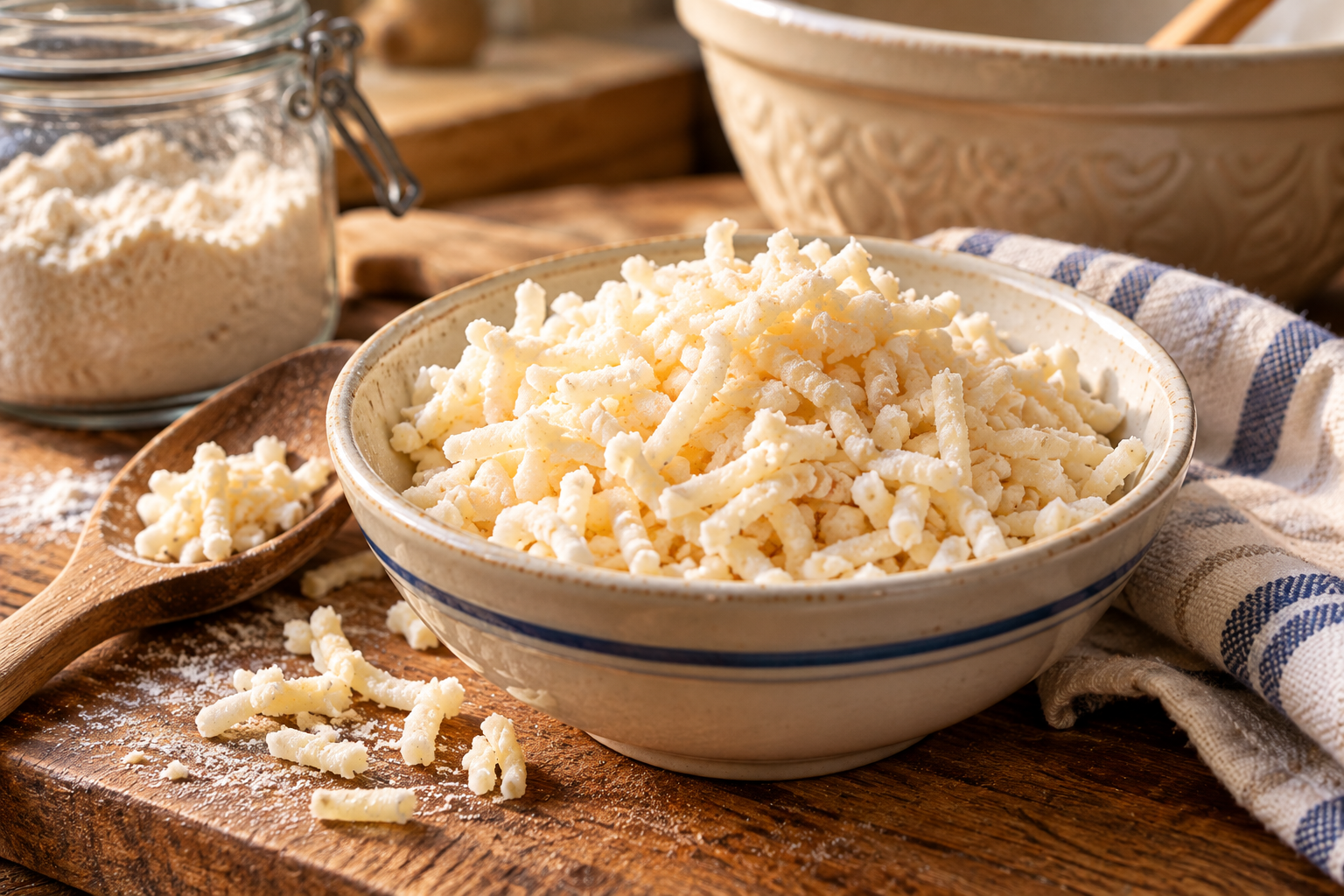
What Is Shredded Suet?
Traditional British packaged suet is prepared in small pieces so it can be mixed directly into flour and other dry ingredients.
Atora’s Original Beef Suet, for example, currently contains beef fat along with wheat flour, while its vegetable version contains vegetable oils and wheat flour. Atora
That flour coating helps explain why packaged shredded suet doesn’t look quite like a lump of raw beef fat.
It’s designed to be convenient: measure it, stir it into your ingredients and continue with the recipe.
What Is Vegetable Suet?
Vegetable suet is a meat-free product designed to perform a similar job in recipes that traditionally use animal suet.
Atora’s current vegetable version is made primarily from vegetable oils and is marketed for puddings, pastries, pies and dumplings. It is suitable for vegetarians. Atora
That makes vegetable suet particularly useful when you want the characteristic style of a British suet pudding without using beef fat.
In fact, that’s exactly what we use in my Traditional British Jam Roly-Poly.
What Does Suet Do in a Recipe?
Suet isn’t there simply to add fat.
As it cooks, the fat contributes richness and helps create the characteristic texture associated with traditional suet doughs and puddings.
This is why a suet pastry doesn’t behave exactly like ordinary butter pastry.
British recipes continue to use shredded suet with flour and water to make doughs for traditional dishes. Good Food’s suet pastry, for example, combines self-raising flour, shredded suet and enough cold water to create a soft dough. Tollbit
Suet is also used in sweet and savory recipes.
Think:
- Jam Roly-Poly
- steamed puddings
- steak and kidney pudding
- dumplings
- Christmas pudding
- mincemeat
- savory suet pastry
Atora itself currently provides recipes spanning beef stew and dumplings, Christmas pudding, steak and kidney pudding, steamed puddings and other sweet and savory dishes. Atora
Beef Suet vs. Vegetable Suet
For many British recipes, you’ll have a choice between the two.
Beef Suet
This is the traditional option.
Packaged beef suet provides the rich flavor associated with classic British suet pastry, dumplings and puddings.
Atora’s current Original Beef Suet is made with beef fat and wheat flour. Atora
Vegetable Suet
Vegetable suet is useful when you want a vegetarian alternative or simply find it easier to obtain.
Atora’s vegetable product is made primarily with palm and sunflower oils plus wheat flour and is specifically intended for sweet and savory baking. Atora
For something like Jam Roly-Poly, vegetable suet works particularly well and avoids introducing a beef flavor into a sweet pudding.
Where Can I Buy Suet in America?
Your easiest options are usually:
British specialty stores:
Stores specializing in imported British foods may carry packaged suet.
Online retailers:
Search specifically for food-grade shredded British suet or vegetable suet.
Butchers:
If you want traditional fresh beef suet rather than a packaged product, ask a butcher whether they can supply food-grade beef suet suitable for cooking.
International grocery stores:
Some larger stores with substantial British or international sections may carry imported packaged suet.
Availability varies considerably by location, so don’t be surprised if your regular supermarket doesn’t stock it.
Can You Substitute Butter for Suet?
Sometimes—but it’s not a perfect one-for-one substitute in terms of texture.
Butter contains water as well as fat and behaves differently as it melts, while suet is valued precisely for the texture it gives traditional puddings and pastry.
If you’re making a recipe where suet is a defining ingredient—particularly Jam Roly-Poly, dumplings or a traditional suet pudding—I recommend using actual cooking suet or vegetable suet for your first attempt.
You’ll get a much better idea of what the dish is supposed to be like.
Can You Substitute Shortening for Suet?
Vegetable shortening is sometimes suggested as an American substitute because it is a solid fat and is widely available.
It can be useful when suet simply isn’t obtainable, but again, the result won’t be identical.
If you do substitute shortening in a dough, it generally works better incorporated in small pieces or grated while very cold rather than melted into the mixture.
For Brit & Skillet recipes where the distinctive suet texture matters, I’ll tell you specifically whether I think a substitution is worthwhile rather than automatically replacing it.
Can You Use Lard Instead of Suet?
Lard is another solid animal fat, but it isn’t the same thing as suet and doesn’t behave identically in pastry.
It can work in recipes designed for lard, but I wouldn’t automatically swap it into every traditional British recipe calling for shredded suet.
If authenticity and texture are important, proper cooking suet remains the better choice.
Is Suet the Same as Lard?
No.
Although both are animal fats, suet and lard are different products.
Suet traditionally refers to the firm fat associated with cattle or sheep, particularly around the kidneys and loins, while lard is rendered pig fat.
So if a British recipe asks for suet, a tub of American lard isn’t simply the same ingredient under another name.
Is Suet the Same as Shortening?
No.
American vegetable shortening is a manufactured solid vegetable fat. It can sometimes act as a practical substitute, but it isn’t another name for suet.
Similarly, vegetable suet is specifically formulated as a suet-style cooking product. For example, Atora’s current vegetable suet combines vegetable oils with wheat flour and is sold specifically for uses such as puddings, pastry and dumplings. Atora
Brit & Skillet Tip
If you’re making a traditional British suet recipe for the first time, use proper shredded cooking suet if you can find it.
It’s tempting to immediately convert every unfamiliar British ingredient into something more recognizable, but sometimes that removes the very thing that makes the recipe distinctive.
Once you’ve tasted the original, you’ll have a much better idea of whether a substitute works for you.
And remember: if you’re shopping in America, make sure the package is food-grade cooking suet—not wild bird food!
Does Suet Need to Be Refrigerated?
Check the instructions on the particular product you buy.
Atora currently recommends keeping both its beef and vegetable suet in a cool, dry place and says refrigeration gives the best results; once opened, both products should be refrigerated and used within the manufacturer’s stated period. Atora
Fresh suet from a butcher is a different product, so follow your butcher’s storage advice and treat it as a perishable animal fat.
What British Recipes Use Suet?
Now for the fun part.
If you’ve bought a packet of suet and you’re wondering what to do with it, start with my Traditional British Jam Roly-Poly.
It’s a lovely introduction because the dough is straightforward and the finished pudding shows exactly why suet has remained part of British cooking.
Other traditional dishes we’ll be exploring on Brit & Skillet include savory suet puddings and more classic steamed puddings.
And if unfamiliar British ingredients keep appearing in your recipes, take a look at British Baking Ingredients Americans Need to Know and British Baking Terms Explained.
You may also find my Self-Raising Flour vs. Self-Rising Flour guide helpful when working from British recipes.
The Bottom Line
If a British recipe calls for suet, you don’t need to abandon the recipe just because you’re cooking in America.
Look for food-grade shredded beef suet or vegetable suet first. If neither is available, a substitute such as shortening may be possible in some recipes—but it won’t necessarily produce exactly the same result.
That’s really what Brit & Skillet is about: not removing everything unfamiliar from British food, but translating it so you can make the real thing in an American kitchen.
And now that you know what suet is, you’re ready for a warm slice of Traditional British Jam Roly-Poly with plenty of custard.
Leave a Reply