
Tag: british comfort food

  • Traditional British Toad in the Hole: An Easy Recipe for American Kitchens

    Traditional British Toad in the Hole: An Easy Recipe for American Kitchens

    There are few British comfort foods quite as wonderfully named as Toad in the Hole.

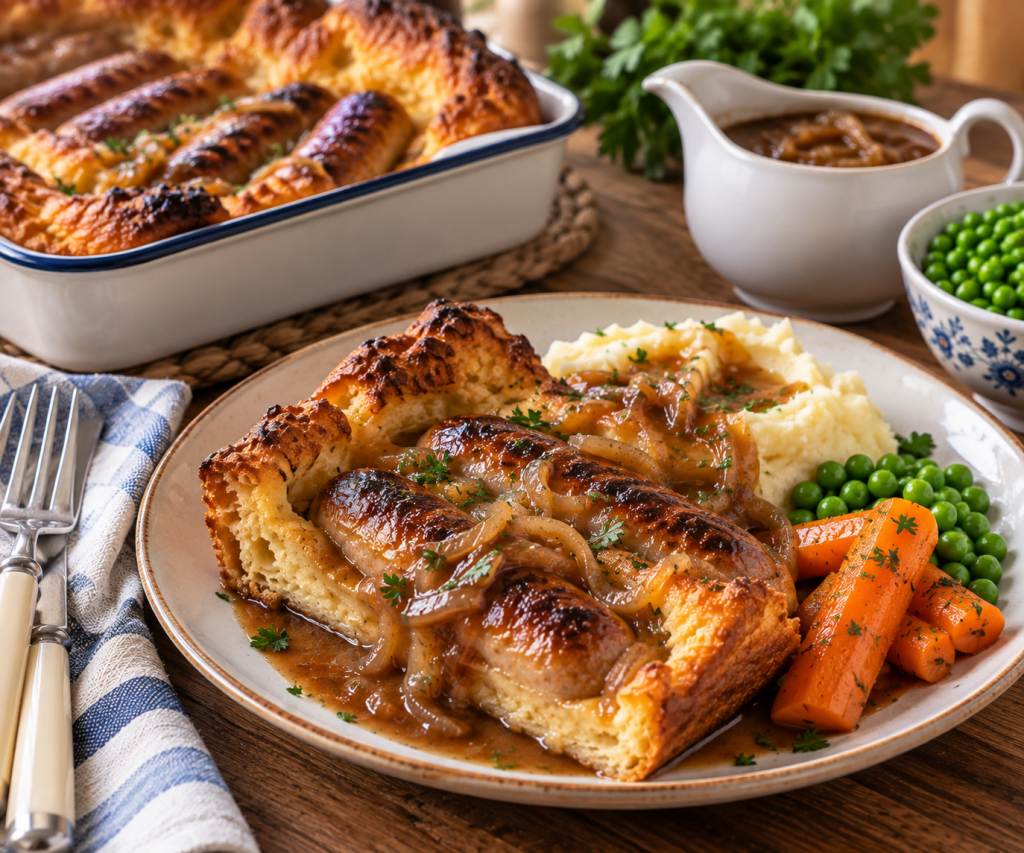
    Despite what the name might suggest, there are thankfully no toads involved. Instead, this traditional British dish combines juicy sausages with a crisp, golden Yorkshire pudding batter that rises dramatically around them in the oven.

    The edges become wonderfully crisp while the middle stays softer and slightly custardy underneath the sausages. Add plenty of rich onion gravy and you have exactly the sort of warming dinner that belongs on the table when the weather turns chilly.

    If you’ve already made our Traditional Yorkshire Puddings, you’ll recognize the batter. Toad in the Hole uses the same basic combination of flour, eggs and milk, but instead of baking individual puddings in a muffin tin, we pour the batter around browned sausages in a larger baking dish.

    This version has been adapted specifically for an American kitchen, with US and metric measurements and guidance on choosing sausages when traditional British bangers aren’t readily available.

    What Is Toad in the Hole?

    Toad in the Hole is a traditional British dish made by baking sausages inside Yorkshire pudding batter.

    The sausages are first browned in a hot baking dish. The batter is then poured around them and everything goes back into a very hot oven.

    As it bakes, the batter puffs dramatically around the sausages, creating crisp golden edges and a tender centre.

    It’s inexpensive, hearty and wonderfully comforting — especially when served with onion gravy and vegetables.

    Why Is It Called Toad in the Hole?

    The exact origin of the name isn’t completely certain.

    The dish dates back centuries, and earlier versions weren’t necessarily made with sausages. Various inexpensive meats could be cooked inside batter as a way of stretching them into a more substantial meal.

    The unusual name is generally thought to refer to the pieces of meat peeking through the batter, rather like little creatures poking their heads out of holes.

    Whatever its origins, Toad in the Hole eventually became closely associated with sausages and Yorkshire pudding batter, which is the version most British cooks would recognize today.

    What Kind of Sausages Should Americans Use?

    Traditional British sausages — often simply called bangers — are different from many common American sausages.

    For Toad in the Hole, look for a mild fresh pork sausage rather than a smoked sausage or strongly seasoned Italian sausage.

    If you can find British-style pork sausages, Cumberland sausages or Lincolnshire-style sausages, they’re excellent choices.

    Otherwise, a good-quality mild pork breakfast sausage in links can work well.

    Avoid very sweet maple-flavoured breakfast sausages because they’ll change the flavour of the finished dish considerably.

    Brit & Skillet Tip: Don’t worry if your American sausages aren’t exactly the same as British bangers. The important thing is choosing a good-quality fresh pork sausage with a fairly simple savoury seasoning.

    The Secret to a Proper Yorkshire Pudding Batter

    The biggest trick with Toad in the Hole is heat.

    The baking dish and fat need to be very hot before the batter goes in.

    When the relatively cool batter hits the sizzling fat, the intense heat helps create the dramatic rise and crisp edges that make Yorkshire pudding so good.

    Resting the batter beforehand also helps.

    And once the dish is in the oven, resist the temptation to open the oven door.

    A sudden drop in temperature can cause that beautifully risen batter to collapse.

    Traditional British Toad in the Hole Recipe

    Prep Time: 15 minutes
    Batter Rest: 30 minutes
    Cook Time: 35–40 minutes
    Yield: 4–6 servings
    Dish: Approximately 9 x 13-inch (23 x 33cm) metal roasting pan or baking dish

    Ingredients

    For the Toad in the Hole

    • 8 fresh pork sausages, approximately 1½ lb (680g) total
    • 1 cup (120g) all-purpose flour
    • ½ teaspoon salt
    • 4 large eggs
    • 1 cup (240ml) whole milk
    • 2 tablespoons (30ml) neutral oil, beef drippings or other high-heat cooking fat

    For the Onion Gravy

    • 2 tablespoons (28g) butter
    • 2 medium yellow onions, thinly sliced
    • 1 tablespoon all-purpose flour
    • 2 cups (480ml) beef broth or stock
    • 1 teaspoon Worcestershire sauce
    • ½ teaspoon dried thyme
    • Salt and freshly ground black pepper, to taste

    Make the Yorkshire Pudding Batter

    Place the flour and salt in a large mixing bowl.

    Make a well in the centre and add the eggs.

    Whisk gradually, incorporating the flour from the sides of the bowl.

    Slowly pour in the milk while continuing to whisk until you have a smooth, fairly thin batter.

    A few tiny lumps won’t cause any trouble, so don’t feel you need to whisk it endlessly.

    Set the batter aside at room temperature for 30 minutes.

    Brit & Skillet Tip: You can also make the batter several hours ahead and refrigerate it. Bring it back toward room temperature before baking so you’re not pouring ice-cold batter into the hot pan.

    Brown the Sausages

    Preheat the oven to 425°F (220°C).

    Add the oil or cooking fat to your roasting pan and arrange the sausages in a single layer.

    Place the pan in the oven and roast the sausages for approximately 12–15 minutes, turning them once, until they’ve started to brown.

    They don’t need to be completely cooked at this stage because they’ll finish cooking inside the batter.

    Add the Batter

    This part needs to happen fairly quickly.

    Carefully remove the hot roasting pan from the oven.

    The fat should be very hot and may be sizzling around the sausages.

    Give the rested batter a quick whisk, then pour it carefully into the pan around the sausages.

    You should hear a sizzle as the batter meets the hot fat.

    Immediately return the pan to the oven.

    Bake the Toad in the Hole

    Bake at 425°F (220°C) for 25–30 minutes without opening the oven door.

    The Yorkshire pudding should become dramatically puffed and deeply golden around the edges.

    The centre will usually remain a little softer than the crisp outer edges, which is exactly what you want.

    The sausages should be completely cooked through to a safe internal temperature of 160°F (71°C) for pork.

    Serve immediately while the Yorkshire pudding is still beautifully puffed.

    Make the Onion Gravy

    While the Toad in the Hole is baking, melt the butter in a saucepan over medium-low heat.

    Add the sliced onions and cook for approximately 12–15 minutes, stirring occasionally, until soft and golden.

    Sprinkle the flour over the onions and stir for about 1 minute.

    Gradually add the beef broth, stirring well so the flour blends smoothly into the liquid.

    Add the Worcestershire sauce and thyme.

    Bring to a gentle simmer and cook for another 5–8 minutes, stirring occasionally, until the gravy has thickened.

    Taste and season with salt and black pepper as needed.

    If the gravy becomes thicker than you’d like, simply add another splash of beef broth.

    How to Serve Toad in the Hole

    Toad in the Hole and onion gravy are made for each other, so be generous with the gravy.

    For a traditional British-style dinner, serve it with vegetables such as:

    • Green peas
    • Roasted carrots
    • Green beans
    • Cabbage
    • Broccoli

    Mashed potatoes are certainly delicious alongside it too, although the Yorkshire pudding already provides plenty of comforting carbohydrate on its own.

    For an especially cozy British dinner, put the baking dish straight on the table and let everyone help themselves.

    Why Didn’t My Toad in the Hole Rise?

    Usually, the culprit is temperature.

    For a good rise, you need a very hot oven, a hot baking dish and sizzling fat before adding the batter.

    Opening the oven door during baking can also cause the batter to deflate.

    Another common problem is using a dish that’s too deep or overcrowding the pan with sausages. The batter needs enough exposed hot surface area to rise around them.

    Why Is My Toad in the Hole Soggy?

    The centre of Toad in the Hole is naturally softer than its crisp outer edges, so don’t expect the entire pudding to have the texture of a crisp Yorkshire pudding shell.

    However, it shouldn’t be wet or raw.

    If the centre is excessively soggy, it may simply need another few minutes in the oven.

    A ceramic or glass casserole dish can also take longer to heat than metal. A metal roasting pan is particularly good for Yorkshire pudding-style recipes because it heats quickly and helps produce crisp edges.

    Can I Make Toad in the Hole Ahead of Time?

    The batter can certainly be prepared ahead.

    Make it earlier in the day, cover it and refrigerate until you’re ready to cook. Allow it to lose some of its refrigerator chill before using.

    The finished dish, however, is at its best straight from the oven.

    Yorkshire pudding gradually loses its crispness as it sits, so this isn’t one I’d recommend completely baking several hours before dinner.

    How to Store Leftovers

    Allow leftovers to cool before transferring them to an airtight container.

    Refrigerate for up to 3 days.

    The Yorkshire pudding will soften in the refrigerator, but leftovers can still be very tasty.

    How to Reheat Toad in the Hole

    For the best texture, reheat leftovers in a 375°F (190°C) oven for approximately 10–15 minutes, or until piping hot throughout.

    The oven will help restore some crispness to the batter.

    A microwave works in a hurry, but the Yorkshire pudding will remain much softer.

    Can You Freeze Toad in the Hole?

    Yes, although freshly baked is best.

    Allow it to cool completely, divide into portions and wrap securely before freezing for up to 2 months.

    Thaw overnight in the refrigerator and reheat in the oven until thoroughly hot.

    The texture won’t be quite as crisp as the freshly baked version, but it still makes a very comforting meal.

    More Traditional British Recipes

    If the towering golden batter is your favourite part of this dish, try our Traditional Yorkshire Puddings next. They’re made individually and are an essential part of a proper British Sunday roast.

    For another savoury British favourite that’s easy to eat by hand, our Traditional British Sausage Rolls wrap seasoned pork sausage filling in crisp, flaky puff pastry.

    And if you’re in the mood for another proper British comfort-food dinner, our Traditional British Cottage Pie combines a rich beef and vegetable filling with a generous layer of creamy mashed potatoes.

    You can also browse all of our traditional British recipes for more classic British dishes, cakes, bakes and desserts adapted for American kitchens.

    Brit & Skillet Tip: Toad in the Hole is one of those dishes that looks far more impressive than the ingredients suggest. Bring that towering golden Yorkshire pudding straight to the table while it’s still puffed up — then pour over plenty of onion gravy and don’t worry when everyone goes quiet for a minute.

  • Traditional British Cottage Pie: An Easy Recipe for American Kitchens

    Traditional British Cottage Pie: An Easy Recipe for American Kitchens

    There are few dinners quite as comforting as a proper cottage pie.

    Underneath that golden layer of creamy mashed potato is a rich, savoury beef filling with onions, carrots and gravy — the sort of warming British food that feels particularly welcome when the weather starts turning chilly.

    Cottage pie has been a familiar part of British home cooking for generations, and thankfully there’s very little translation required to make it in an American kitchen. The ingredients are simple, affordable and readily available in most American grocery stores.

    There are, however, a few British cooking terms and ingredient differences worth knowing, and we’ll explain those as we go. You’ll also find US measurements alongside metric weights throughout the recipe.

    And before we get any further, let’s settle one particularly common question: cottage pie and shepherd’s pie are not quite the same thing. Cottage pie is traditionally made with beef, while shepherd’s pie is made with lamb.

    Today we’re sticking with beef and making a classic cottage pie with a deeply savoury filling and plenty of fluffy mashed potato on top.

    Brit & Skillet Tip: Don’t rush the beef filling. Giving it a little time to simmer and thicken before adding the mashed potato makes a huge difference — you want a rich filling that holds together underneath the potatoes rather than a watery gravy flooding the plate.

    What Is Cottage Pie?

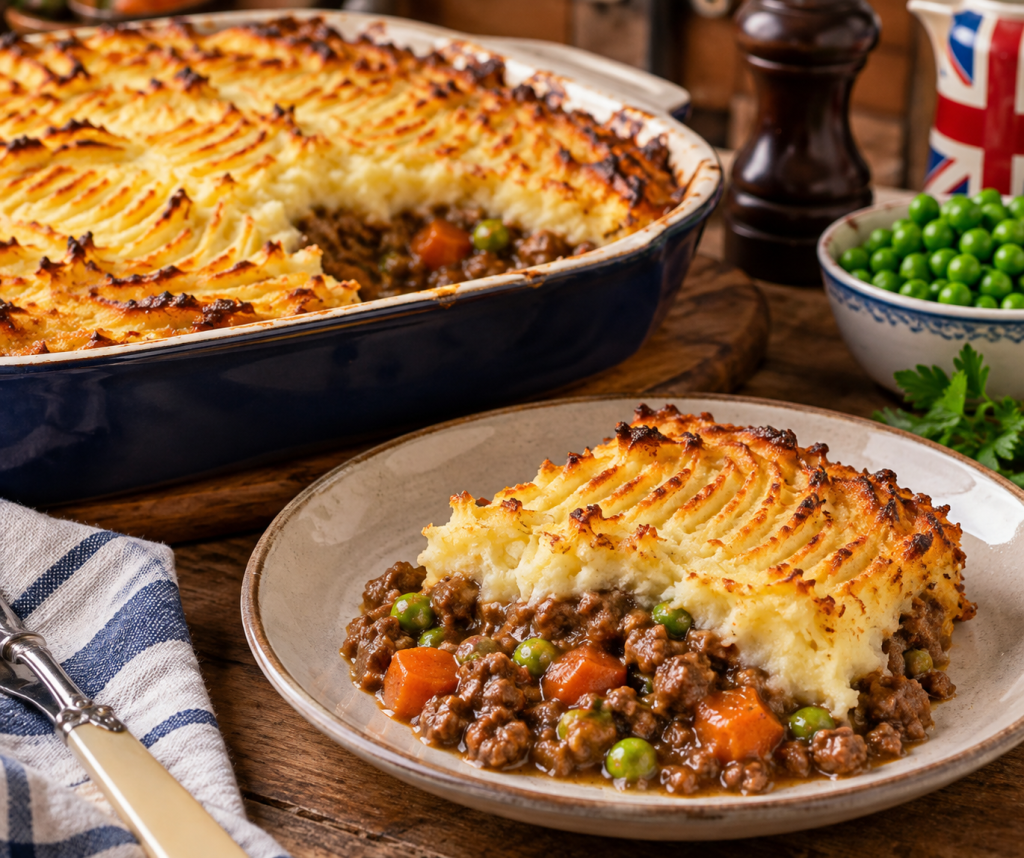
    Cottage pie is a traditional British dish made with a savoury minced beef filling topped with mashed potatoes and baked until hot, bubbling and golden.

    In Britain, what Americans usually call ground beef is commonly called minced beef or simply beef mince. So if you come across an old British recipe asking for mince, don’t worry — you won’t need to search the supermarket for anything unusual.

    The beef is typically cooked with onions and vegetables in a rich gravy before being transferred to a baking dish and covered with mashed potato.

    The potato topping is then baked until the filling bubbles around the edges and the top develops those irresistible golden ridges.

    Cottage Pie vs. Shepherd’s Pie: What’s the Difference?

    The names are sometimes used interchangeably, particularly outside Britain, but traditionally the difference comes down to the meat.

    Cottage pie is made with beef.

    Shepherd’s pie is made with lamb.

    An easy way to remember it is that a shepherd looks after sheep — so shepherd’s pie = lamb.

    Apart from the meat, the two dishes are very similar. Both feature a savoury meat-and-vegetable filling beneath a generous layer of mashed potato.

    British Ingredients in an American Kitchen

    Most of the ingredients for cottage pie translate very easily, but there are a couple of British terms worth knowing.

    Beef mince: Use American ground beef. An 85–90% lean ground beef works well because it provides plenty of flavour without leaving the filling excessively greasy.

    Worcestershire sauce: This adds a savoury, tangy depth to the beef gravy. It’s widely available in American supermarkets.

    Beef stock: This is essentially the same as American beef broth or stock. Either can work here; choose a good-quality version with a flavour you enjoy.

    Tomato purée: This is one British term that can cause confusion. In the UK, tomato purée usually refers to the concentrated tomato product Americans call tomato paste. That’s what we’ll use in this recipe.

    Brit & Skillet Tip: If a British recipe calls for tomato purée, don’t automatically reach for an American can of tomato purée. British tomato purée is much more concentrated — American tomato paste is generally the equivalent you’re looking for.

    Traditional British Cottage Pie Recipe

    Prep Time: 25 minutes
    Cook Time: 55–60 minutes
    Yield: 6 servings
    Dish: Approximately 2½–3 quart baking dish

    Ingredients

    For the Beef Filling

    • 1½ lb (680g) ground beef, preferably 85–90% lean
    • 1 tablespoon olive oil, if needed
    • 1 medium onion, finely chopped
    • 2 medium carrots, diced
    • 2 cloves garlic, minced
    • 2 tablespoons tomato paste
    • 1 tablespoon Worcestershire sauce
    • 2 tablespoons all-purpose flour
    • 1½ cups (360ml) beef broth or stock
    • 1 teaspoon dried thyme
    • ½ teaspoon dried rosemary
    • ¾ cup (100g) frozen peas
    • ½ teaspoon salt, plus more to taste
    • ½ teaspoon black pepper, plus more to taste

    For the Mashed Potato Topping

    • 2 lb (900g) Yukon Gold or russet potatoes, peeled and cut into chunks
    • 4 tablespoons (57g) unsalted butter
    • ½ cup (120ml) whole milk, warmed
    • ½ teaspoon salt, plus more to taste
    • ¼ teaspoon black pepper

    Brit & Skillet Tip: Don’t make the mashed potatoes too loose or creamy for cottage pie. A slightly firmer mash is much easier to spread over the beef filling and holds those lovely ridges that become golden in the oven.

    Make the Cottage Pie Filling

    1. Brown the Beef

    Heat a large skillet or deep frying pan over medium-high heat.

    Add the ground beef and cook for 6–8 minutes, breaking it into small pieces with a wooden spoon, until browned.

    If your beef is particularly lean, add the tablespoon of olive oil as needed. If there is a large amount of excess fat after browning, carefully drain most of it from the pan.

    2. Add the Vegetables

    Add the chopped onion and carrots to the beef.

    Cook for 5–7 minutes, stirring occasionally, until the onion has softened and the carrots are beginning to become tender.

    Add the garlic and cook for another 30 seconds, just until fragrant.

    3. Build the Gravy

    Stir in the tomato paste and Worcestershire sauce and cook for about 1 minute.

    Sprinkle the flour over the beef mixture and stir well so it coats the meat and vegetables.

    Cook for another minute before gradually pouring in the beef broth, stirring as you go.

    Add the thyme, rosemary, salt and black pepper.

    4. Simmer Until Thickened

    Bring the mixture to a gentle simmer.

    Reduce the heat and cook uncovered for 15–20 minutes, stirring occasionally, until the gravy has reduced and thickened.

    The filling should be moist and rich but not watery. When you drag your spoon across the bottom of the pan, the gravy shouldn’t immediately flood back into the space.

    Stir in the frozen peas during the final 2–3 minutes of cooking.

    Taste and adjust the salt and pepper if needed.

    Remove the pan from the heat and allow the filling to cool slightly while you prepare the mashed potatoes.

    Brit & Skillet Tip: Letting the beef filling cool for a few minutes before adding the potatoes makes assembly much easier. If the filling is piping hot and very loose, the mashed potato is more likely to sink into it instead of sitting in a lovely layer on top.

    Make the Mashed Potato Topping

    1. Cook the Potatoes

    Place the peeled and chopped potatoes in a large saucepan and cover with cold water.

    Add a generous pinch of salt and bring to a boil.

    Reduce to a steady simmer and cook for 15–20 minutes, or until the potatoes are completely tender when pierced with a fork.

    2. Mash the Potatoes

    Drain the potatoes thoroughly, then return them to the warm saucepan for a minute or two to allow any excess moisture to evaporate.

    Add the butter and mash until smooth.

    Gradually add the warm milk, then season with salt and black pepper.

    The potatoes should be creamy but still firm enough to hold their shape on top of the cottage pie.

    Assemble the Cottage Pie

    Preheat the oven to 400°F (200°C).

    Spoon the beef filling into an approximately 2½–3 quart baking dish and spread it into an even layer.

    Carefully spoon the mashed potatoes over the top.

    Start around the edges of the dish before filling in the centre. This helps create a seal and makes it less likely that the beef filling will push up through the potatoes.

    Gently spread the potatoes into an even layer.

    Run the tines of a fork across the surface to create plenty of little ridges and peaks.

    Those rough edges aren’t just decorative — they’ll become beautifully golden and slightly crisp in the oven.

    Bake

    Place the baking dish on a rimmed baking sheet in case the filling bubbles over.

    Bake for 25–30 minutes, or until the filling is bubbling around the edges and the mashed potato topping is beginning to turn golden.

    For an even deeper golden finish, you can place the cottage pie under the broiler for 1–3 minutes at the end.

    Watch it closely — the difference between beautifully browned potatoes and what on earth happened in there? can be surprisingly quick under a broiler!

    Allow the cottage pie to rest for 10 minutes before serving. This gives the filling a chance to settle and makes it much easier to spoon onto plates.

    Brit & Skillet Tip: Don’t smooth the mashed potatoes perfectly flat. Those fork-made ridges and little peaks give you more surface area to brown, which means more of those lovely golden, slightly crisp bits on top.

    What to Serve With Cottage Pie

    Cottage pie is a hearty meal on its own, but a simple vegetable on the side works beautifully.

    Try serving it with green beans, peas, broccoli, cabbage or roasted vegetables. You really don’t need anything too complicated — the rich beef gravy and creamy mashed potatoes are already doing most of the work.

    And if you’re anything like me, a little extra gravy on the side is never a bad idea.

    How to Store Leftover Cottage Pie

    Allow leftover cottage pie to cool, then cover it well or transfer portions to airtight containers.

    Store in the refrigerator for up to 3–4 days.

    Reheat individual portions until piping hot throughout. The oven works particularly well if you want to bring back some of the texture on top of the potatoes.

    Can You Make Cottage Pie Ahead of Time?

    Yes — cottage pie is a great make-ahead dinner.

    Prepare the beef filling and mashed potato topping, assemble the pie, then allow it to cool before covering and refrigerating.

    You can assemble it up to 24 hours ahead.

    When you’re ready to cook it, bake until the filling is bubbling and the centre is thoroughly hot. Because you’re starting with a chilled cottage pie, it may need a little longer in the oven than the freshly assembled version.

    Can You Freeze Cottage Pie?

    Yes. Cottage pie freezes very well.

    Allow the assembled pie to cool completely, cover it securely and freeze for up to 3 months.

    For the best result, thaw it overnight in the refrigerator before reheating.

    You can also freeze individual portions, which is particularly handy for easy lunches or dinners later.

    Why Is My Cottage Pie Watery?

    The beef filling probably needed a little more time to reduce before the potatoes were added.

    Remember that we’re looking for a thick gravy rather than a soup-like filling. Simmer it uncovered until the liquid has reduced enough that the mixture holds together when stirred.

    Allowing the filling to cool slightly before assembling the pie also helps.

    Why Did My Mashed Potato Sink Into the Filling?

    This usually happens when either the beef filling is too wet or everything is extremely hot during assembly.

    Make sure the gravy has properly thickened and give the filling a few minutes to cool.

    When adding the mashed potatoes, start around the outside edge of the baking dish and work toward the centre rather than dropping one large mound into the middle.

    How Do I Get a Golden Cottage Pie Topping?

    The easiest trick is your fork.

    Roughing up the surface of the mashed potato creates lots of little ridges and peaks that brown much more readily than a perfectly smooth surface.

    If you’d like even more colour, place the finished cottage pie under the broiler for a minute or two — but keep a very close eye on it.

    Brit & Skillet Tip: Cottage pie often tastes even better the following day after all those savoury flavours have had time to settle together. It’s definitely one of those leftovers worth looking forward to.

    A Proper British Comfort-Food Classic

    Cottage pie isn’t fancy food, and that’s exactly part of its appeal.

    It’s simple, hearty British home cooking — a rich beef and vegetable filling tucked underneath a generous layer of creamy mashed potato, with plenty of golden, slightly crisp edges on top.

    It’s also a wonderfully practical recipe for an American kitchen. The ingredients are easy to find, it can be prepared ahead of time, and leftovers are something you’ll actually be pleased to see waiting in the refrigerator.

    If you’re discovering more savoury British cooking, try our Traditional Yorkshire Puddings or Traditional British Sausage Rolls next.

    Or explore all of our traditional British recipes for more classic dishes, cakes, bakes and desserts you can recreate in your American kitchen.