Tag: recipe

  • Traditional British Sausage Rolls: An Easy Recipe for American Kitchens

    Traditional British Sausage Rolls: An Easy Recipe for American Kitchens

    Few things disappear from a British party table quite as quickly as a plate of warm sausage rolls.

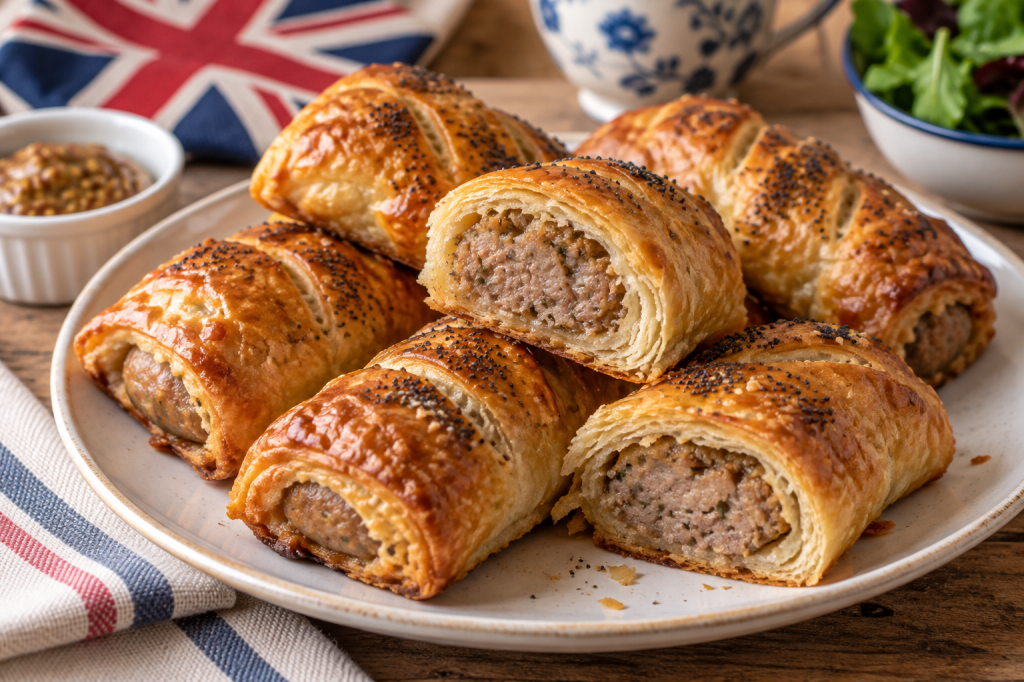
    Flaky, golden pastry wrapped around a savoury sausage filling, they’re one of those wonderfully simple British foods that work for almost any occasion — parties, picnics, lunchboxes, afternoon snacks, or simply something warm to eat when you fancy a little taste of home.

    And if you’re making British sausage rolls in America, there’s good news: you don’t need to make your own puff pastry or hunt down a long list of specialty ingredients.

    Store-bought puff pastry works beautifully, and I’ll show you how to make a classic sausage filling using ingredients that are easy to find in an American grocery store. As always, you’ll get US measurements alongside metric weights.

    The biggest difference American cooks may encounter is the sausage itself. British sausage meat isn’t quite the same as many strongly seasoned American breakfast sausages, so we’ll talk about what to look for — and how to get that familiar British-style flavour.

    Brit & Skillet Tip: Keep your puff pastry cold until you’re ready to assemble the sausage rolls. Cold pastry hitting a hot oven is one of the secrets to getting those beautifully crisp, flaky layers.

    What Are British Sausage Rolls?

    A traditional British sausage roll is made by wrapping seasoned sausage meat in puff pastry, brushing the pastry with egg, and baking until beautifully puffed and golden.

    They’re sold everywhere from bakeries to supermarkets in Britain and can be served warm or cold. You’ll find tiny versions on party tables, larger ones for lunch, and plenty of homemade versions with their own little twists.

    Despite the name, there’s no bread roll involved. The “roll” is simply the pastry rolled around the sausage filling.

    What Sausage Should I Use in America?

    This is probably the most important question when recreating British sausage rolls in an American kitchen.

    British sausage meat tends to have a fairly mild savoury flavour, often seasoned with herbs such as sage, along with salt and pepper. Some American breakfast sausages can be much sweeter or more heavily seasoned, which can change the flavour considerably.

    For a more traditional result, look for plain ground pork and season it yourself. This gives you much more control over the flavour and is the approach we’ll use in this recipe.

    If you’d rather use prepared sausage, choose a mild pork sausage without strong flavours such as maple, hot spices, Italian seasoning, or lots of fennel.

    And if you happen to have access to proper British-style sausages, you can simply remove the meat from the casings and use that as your filling.

    Do I Need to Make Puff Pastry?

    Absolutely not.

    Homemade puff pastry is wonderful, but sausage rolls are also exactly the sort of recipe where good-quality store-bought puff pastry makes life considerably easier.

    In American supermarkets, puff pastry is usually sold frozen. Thaw it according to the package directions, but keep it chilled until you’re ready to assemble the sausage rolls.

    The pastry should be flexible enough to unfold or roll without cracking, but still feel cold to the touch.

    Brit & Skillet Tip: If your kitchen is warm and the pastry starts becoming soft or sticky while you’re assembling the rolls, pop it back into the refrigerator for 10–15 minutes. You’ll get much better puff from cold pastry.

    Traditional British Sausage Rolls Recipe

    Prep Time: 25 minutes
    Chill Time: 15 minutes
    Bake Time: 25–30 minutes
    Yield: About 12 sausage rolls

    Ingredients

    For the Sausage Filling

    • 1 lb (450g) ground pork
    • ½ cup (50g) plain breadcrumbs
    • 1 small onion, very finely chopped or grated
    • 1 teaspoon dried sage
    • ½ teaspoon dried thyme
    • ¾ teaspoon salt
    • ½ teaspoon black pepper
    • ¼ teaspoon ground nutmeg
    • 2 tablespoons (30ml) cold water

    For the Pastry

    • 1 package frozen puff pastry, about 17 oz (490g), thawed according to package directions but kept cold
    • 1 large egg
    • 1 tablespoon water, for the egg wash

    Optional for the Top

    • Sesame seeds or poppy seeds

    Brit & Skillet Tip: Grating the onion rather than chopping it gives you very small pieces that disappear into the sausage filling as it cooks. You get the flavour without large pieces of onion breaking up the texture of the filling.

    Perfect. ✅ Now we’ll assemble and bake them.

    Step-by-Step Instructions

    1. Prepare the Sausage Filling

    Place the ground pork, breadcrumbs, grated onion, sage, thyme, salt, pepper, nutmeg and cold water in a large bowl.

    Using clean hands or a fork, gently mix everything together until the seasonings are evenly distributed.

    Try not to overwork the pork, as this can make the filling firmer than you want.

    2. Prepare the Puff Pastry

    Line a large baking sheet with parchment paper.

    Unfold or gently roll the chilled puff pastry on a lightly floured surface.

    Depending on the shape and number of pastry sheets in your package, divide the pastry into long rectangles approximately 4–5 inches (10–13cm) wide.

    The exact dimensions aren’t critical — you simply need enough pastry to wrap comfortably around the sausage filling with a small overlap.

    3. Add the Sausage Filling

    Divide the sausage mixture evenly between the pastry rectangles.

    Shape each portion into a long sausage about 1–1½ inches (2.5–4cm) thick and place it lengthwise near one edge of the pastry.

    4. Roll and Seal

    Beat the egg with 1 tablespoon of water to make an egg wash.

    Brush a little egg wash along the opposite long edge of the pastry.

    Roll the pastry snugly around the sausage filling so the edges overlap, then place the roll seam-side down.

    Repeat with the remaining pastry and filling.

    5. Cut and Chill

    Using a sharp knife, cut the long rolls into pieces approximately 2 inches (5cm) wide. You should end up with about 12 sausage rolls.

    Arrange them on the prepared baking sheet, leaving a little space between each one.

    Brush the tops with egg wash and, if you like, sprinkle with sesame or poppy seeds.

    Using the tip of a sharp knife, make 2 or 3 small slashes across the top of each sausage roll.

    Refrigerate the assembled sausage rolls for about 15 minutes while the oven preheats.

    6. Bake

    Preheat the oven to 400°F (200°C).

    Bake the sausage rolls for 25–30 minutes, or until the pastry is deeply golden and puffed and the pork filling is completely cooked.

    For food safety, the centre of the sausage filling should reach 160°F (71°C) when checked with an instant-read thermometer.

    Allow the sausage rolls to cool on the baking sheet for about 5 minutes before serving.

    Brit & Skillet Tip: Don’t pull your sausage rolls from the oven when the pastry is merely pale gold. Giving puff pastry enough time to become properly golden helps create those crisp, flaky layers that make a good sausage roll so irresistible.

    How to Serve British Sausage Rolls

    British sausage rolls are delicious either warm or at room temperature, which is one reason they’re such a favourite for parties, picnics and packed lunches.

    Serve them on their own or with a little mustard, ketchup, chutney or brown sauce on the side.

    For something more substantial, pair warm sausage rolls with a simple salad, soup, or a few other British favourites for an easy lunch.

    Can You Make Sausage Rolls Ahead of Time?

    Yes. You can assemble the sausage rolls, place them on the prepared baking sheet, cover them well and refrigerate them for up to 24 hours before baking.

    Keep them cold until you’re ready to put them into the oven, then brush with egg wash if you haven’t already done so and bake as directed.

    How to Store Leftover Sausage Rolls

    Because the filling contains cooked pork, leftover sausage rolls should be refrigerated.

    Allow them to cool, then transfer them to an airtight container and refrigerate for up to 3 days.

    To reheat, place them in a 350°F (175°C) oven for about 10–15 minutes, or until hot throughout and the pastry has crisped again.

    The microwave will work in a hurry, but the pastry will be much softer.

    Can You Freeze Sausage Rolls?

    Absolutely. Sausage rolls are particularly handy to have in the freezer.

    You can freeze them after baking by allowing them to cool completely and storing them in a freezer-safe container for up to 3 months.

    Thaw overnight in the refrigerator and reheat in the oven until piping hot throughout.

    You can also freeze assembled unbaked sausage rolls. Freeze them on a baking sheet until firm, then transfer them to a freezer-safe container or bag.

    Bake from frozen, allowing a little additional baking time and checking that the pork filling reaches 160°F (71°C) in the centre before serving.

    Why Is My Puff Pastry Soggy?

    Make sure your pastry and sausage filling are kept cold before baking and that the oven is fully preheated.

    Placing the sausage rolls seam-side down also helps keep them securely closed while they bake.

    If your filling is particularly wet, excess moisture can soften the pastry. That’s another reason not to add too much liquid to the sausage mixture.

    Why Did My Sausage Rolls Split Open?

    A little movement in the pastry is normal as it puffs, but sausage rolls that completely unroll may not have been sealed firmly enough.

    Brush the pastry edge lightly with egg wash, overlap the edges securely and bake the rolls with the seam underneath.

    And don’t forget those little slashes across the top — they give steam somewhere to escape as the filling cooks.

    Brit & Skillet Tip: Sausage rolls are at their best reheated in the oven rather than the microwave. A few extra minutes is worth it when the reward is crisp, flaky pastry.

    Bring a British Favourite to Your American Kitchen

    There’s something wonderfully satisfying about pulling a tray of homemade sausage rolls from the oven — especially when the pastry is crisp and golden and you can smell that savoury sausage filling underneath.

    They may be a familiar sight in British bakeries and supermarkets, but making them at home is surprisingly straightforward. Store-bought puff pastry does most of the hard work, and seasoning plain ground pork yourself means you can create that classic British-style filling with ingredients from an American grocery store.

    Serve them warm from the oven, tuck them into a picnic, or make a batch for your next party. And if a few find their way into the freezer for later, even better.

    If you enjoyed making these, try our Traditional Yorkshire Puddings for another savoury British classic, or explore more of our traditional British recipes for plenty of ideas to bring a little taste of Britain to your American kitchen.

  • Where to Buy British Baking Ingredients in the USA

    Where to Buy British Baking Ingredients in the USA

    If you’ve found a British baking recipe you’d love to try but can’t find half the ingredients at your local American supermarket, you’re not alone. Golden syrup, black treacle, caster sugar, self-raising flour, and other British staples can make a recipe look much more complicated than it really is.

    The good news is that many British baking ingredients are available in the United States—you just need to know what to look for and where to look. Some can be found in ordinary grocery stores under different names, while others are easier to buy from specialty shops or online.

    In this guide, we’ll look at some of the most common British baking ingredients American cooks encounter, where you’re likely to find them in the USA, and when an American substitute will work just as well.

    You don’t need to import an entire British pantry before making your first Victoria sponge or batch of flapjacks. With a few key ingredients and some smart substitutions, you can make plenty of classic British bakes in an American kitchen.

    Golden Syrup

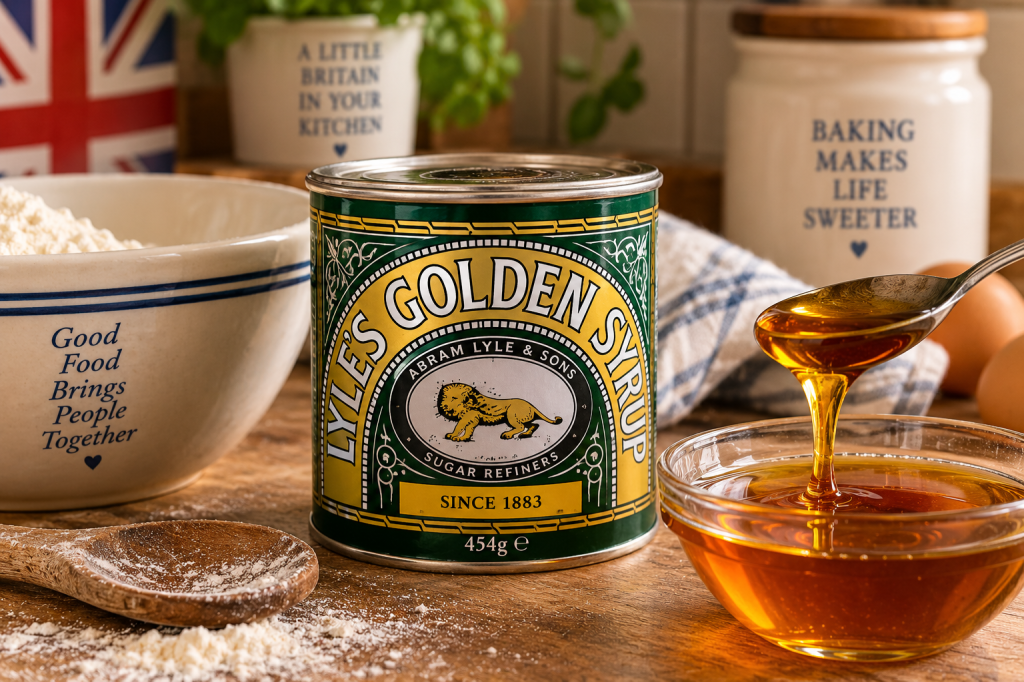
    Golden syrup is one of the British baking ingredients most likely to puzzle American cooks. This thick, amber-colored syrup has a buttery, caramel-like sweetness and appears in everything from flapjacks and steamed puddings to biscuits, cakes, and sauces.

    In the United States, look for golden syrup in the baking aisle, international foods section, or British foods section of larger supermarkets. Specialty British grocery stores and online retailers are also useful places to look when your local supermarket doesn’t carry it.

    What to look for: A product specifically labeled golden syrup rather than corn syrup, pancake syrup, or maple syrup. These syrups have different flavors and properties and aren’t automatically interchangeable in every recipe.

    Can you substitute it? Sometimes. Depending on the recipe, honey, light corn syrup, or a combination of syrups may work in a pinch, but they won’t reproduce golden syrup’s distinctive flavor exactly. If golden syrup is a major part of the recipe—especially in something like British flapjacks—using the real ingredient is usually worthwhile.

    Brit & Skillet tip: If you enjoy British baking, golden syrup is one specialty ingredient worth keeping in the pantry. An unopened container stores easily, and once you discover how many British recipes use it, you’ll probably find plenty of reasons to reach for it.

    Want to learn more? Read our guide to Golden Syrup in America: What to Buy and Where to Find It.

    Black Treacle

    Black treacle is a thick, dark syrup used in traditional British baking. It has a deep, slightly bitter caramel flavor and is commonly found in rich fruit cakes, gingerbread, parkin, steamed puddings, and other strongly flavored bakes.

    American bakers often compare black treacle with molasses, and the two can sometimes be used similarly, but they aren’t exactly the same. Black treacle has its own balance of sweetness and bitterness, so using the ingredient specified in the original recipe will usually give you the most authentic flavor.

    Where to look: Black treacle can be harder to find in an ordinary American supermarket than golden syrup. Check British or international food sections, specialty import shops, and online retailers that sell British groceries.

    Can you substitute it? Molasses is usually the first alternative American bakers consider. The exact result will depend on the recipe and the type of molasses you use, so avoid assuming that every variety—particularly very strong blackstrap molasses—will taste identical to black treacle.

    Brit & Skillet tip: If a recipe only uses a small amount of black treacle, measure it with a lightly greased spoon. The sticky syrup will slide off much more easily.

    Still confused about the difference? Read our guide to Treacle vs. Molasses vs. Golden Syrup: What’s the Difference?

    Caster Sugar

    Caster sugar is extremely common in British baking, but the name can make it sound like a specialty ingredient when you’re shopping in the United States. It’s simply a fine-grained white sugar with crystals smaller than ordinary granulated sugar but larger than powdered sugar.

    The finer crystals dissolve quickly, which makes caster sugar particularly useful in sponge cakes, meringues, biscuits, and other bakes where a light, even texture is important.

    Where to look: In the United States, caster sugar may be sold as superfine sugar or sometimes baker’s sugar. Check the baking aisle of larger supermarkets or specialty baking stores. It can also be purchased online.

    Can you substitute it? For many recipes, ordinary American granulated sugar will still work, although its larger crystals may take longer to dissolve. Another option is to briefly process granulated sugar in a food processor until the crystals become finer—but stop before it turns into powdered sugar.

    Brit & Skillet tip: Don’t substitute powdered or confectioners’ sugar for caster sugar just because it looks finer. Powdered sugar has a very different texture and often contains added starch, so it behaves differently in recipes.

    Self-Raising Flour

    Self-raising flour appears in countless British cake, scone, and biscuit recipes. It is flour that already contains a raising agent, which helps baked goods rise without requiring the recipe to add as much separate baking powder.

    American supermarkets usually spell it self-rising flour rather than self-raising flour. Although the names sound nearly identical, British and American versions aren’t always formulated exactly the same way, so results can vary slightly depending on the recipe and brand.

    Where to look: Check the regular baking aisle alongside all-purpose and cake flour. Self-rising flour is widely available in the United States, so this is one British baking ingredient you generally won’t need to import.

    Can you substitute it? Yes. If you don’t have self-raising flour, you can usually make an appropriate substitute using all-purpose flour and baking powder. Because recipes and flour formulations vary, follow the conversion recommended for the particular recipe whenever one is provided rather than assuming every mixture is identical.

    Brit & Skillet tip: Always check whether a British recipe calls for plain flour or self-raising flour before you start. Using self-raising flour when the recipe expects plain flour—or vice versa—can significantly change how your bake rises.

    For more British-to-American ingredient translations, see our guide to British Baking Ingredients Americans Need to Know.

    Demerara Sugar

    Demerara sugar is a coarse, golden-brown sugar with large crystals and a subtle caramel flavor. It appears in British baking both as an ingredient and as a crunchy topping for cakes, biscuits, crumbles, and other bakes.

    Unlike soft brown sugar, demerara has relatively dry, distinct crystals. That texture is part of its appeal, especially when it’s sprinkled over the top of a bake before it goes into the oven.

    Where to look: Demerara sugar is available in many larger American supermarkets, although you may need to check the specialty sugar, natural foods, or international section rather than the ordinary baking-sugar shelf. It’s also readily available from specialty food shops and online retailers.

    Can you substitute it? Turbinado sugar is usually the easiest American alternative when you want a similar coarse texture and golden color. The flavor won’t necessarily be identical, but it can work well in many recipes, particularly when the sugar is being used as a topping.

    Brit & Skillet tip: Keep a small container of demerara or turbinado sugar in your baking cupboard. A sprinkle over scones, muffins, crumbles, or cakes before baking adds an easy crunchy finish.

    Mixed Spice

    Mixed spice is a traditional British spice blend used in fruit cakes, Christmas cakes, hot cross buns, biscuits, puddings, and other warmly spiced bakes. It usually contains a combination of sweet spices such as cinnamon, nutmeg, and other complementary spices.

    One important warning for American bakers: mixed spice is not the same thing as allspice. Allspice is a single spice made from the dried berries of the allspice plant, while mixed spice is a blend of several spices.

    Where to look: British mixed spice isn’t always stocked in ordinary American supermarkets. Check British or international food shops, specialty spice stores, and online retailers that carry imported baking ingredients.

    Can you substitute it? Yes. If you can’t find a British mixed spice blend, you can make your own using common spices already available in American supermarkets. The exact blend varies, so if your recipe provides its own mixture, follow that version.

    Brit & Skillet tip: Label homemade mixed spice clearly. It can look surprisingly similar to other brown spice blends in the cupboard, and accidentally adding something savory to a British fruit cake would make for a memorable bake for all the wrong reasons.

    Currants, Sultanas, and Raisins

    British baking recipes often distinguish between currants, sultanas, and raisins, particularly in fruit cakes, scones, buns, puddings, and other traditional bakes. Although they’re all dried fruit, they aren’t quite the same.

    Raisins are dried grapes and are readily available in American supermarkets. They’re usually dark, sweet, and relatively large.

    Sultanas are also dried grapes but are typically lighter in color and softer than ordinary raisins. In the United States, golden raisins are often the easiest substitute to look for when a British recipe calls for sultanas.

    Currants in British baking usually means small dried grapes, often sold as Zante currants in the United States. These shouldn’t be confused with fresh red or black currant berries.

    Where to look: Raisins and golden raisins are easy to find in most American supermarkets. Zante currants may be stocked alongside other dried fruits, in the baking aisle, at specialty grocery stores, or online.

    Can you substitute them? Usually, yes. Raisins, golden raisins, and dried currants can often be swapped when necessary, although the size, sweetness, and texture of the finished bake will be slightly different.

    Brit & Skillet tip: If you’re making a traditional British fruit cake or pudding where dried fruit is one of the main ingredients, it’s worth using the specific fruits called for in the recipe. For a casual batch of scones or buns, using what you can readily find is perfectly reasonable.

    Digestive Biscuits

    Digestive biscuits are a British cupboard staple and appear in plenty of desserts as well as alongside a cup of tea. They’re lightly sweet, crisp, and slightly wheaty, with a flavor that’s less sugary than many American cookies.

    American bakers are most likely to encounter digestives in recipes for cheesecake bases, refrigerator cakes, tarts, and other desserts that call for crushed biscuits.

    Where to look: Digestive biscuits are often available in the international or British foods section of larger American supermarkets. They’re also commonly sold by specialty British food shops and online retailers.

    Can you substitute them? Graham crackers are usually the easiest American alternative when digestives are being crushed for a cheesecake or dessert crust. The flavor and texture aren’t identical, but they can serve a similar purpose.

    Brit & Skillet tip: If you’re making a distinctly British dessert and digestives provide much of the flavor, try using the real thing at least once. If they’re simply providing a crumb base underneath a strongly flavored filling, graham crackers can be a perfectly practical substitute.

    Where to Buy British Baking Ingredients in the USA

    Finding British baking ingredients in America has become much easier, but the best place to shop depends on what you’re looking for. Before ordering something online, it’s worth checking locally—you may be surprised by what your regular supermarket already carries.

    Start with your local supermarket. Check the baking aisle first, then look in the international or British foods section. Larger supermarkets may carry items such as golden syrup, digestive biscuits, superfine sugar, self-rising flour, and specialty dried fruits.

    Try specialty and international grocery stores. British import shops, European markets, and international supermarkets can be particularly useful for harder-to-find ingredients such as black treacle, mixed spice, and imported biscuits.

    Check specialty baking stores. These can be good sources for sugars, flours, dried fruits, spices, and other ingredients that ordinary supermarkets may not stock.

    Shop online when necessary. Online retailers can be the easiest option when you’re looking for a specific British ingredient or brand that isn’t available locally. Before ordering, compare the total price including shipping and check the package size—a bargain can look rather different once delivery costs are added.

    A useful option for American bakers: King Arthur Baking carries a wide range of baking ingredients and equipment. For everyday British recipes that call for plain flour, King Arthur Unbleached All-Purpose Flour is a practical American option.

    Brit & Skillet tip: Don’t assume an ingredient has to be imported simply because the recipe uses a British name. Check for the American equivalent first. Caster sugar may be labeled superfine sugar, sultanas may be sold as golden raisins, and self-raising flour becomes self-rising flour on many American shelves.

    British-to-American Baking Ingredient Quick Reference

    British IngredientWhat to look for in USAEasy Alternative
    Golden SyrupGolden SyrupHoney or light corn syrup, depending on recipe
    Black treacleImported black treacleMolasses, depending on recipe
    Caster sugarSuperfine or baker’s sugarFinely processed granulated sugar
    Self-raising flourSelf-rising flourAll-purpose flour + baking powder
    Demerara sugarDemerara sugarTurbinado sugar
    Mixed SpiceBritish mixed spiceHomemade sweet spice blend
    SultanasGolden raisinsRaisins
    CurrantsZante currantsRaisins or golden raisins
    Digestive biscuitsBritish/international foods sectionGraham crackers for crumb bases

    Bringing British Baking to Your American Kitchen

    British baking can seem intimidating when a recipe calls for ingredients you’ve never seen in an American supermarket, but most of them are easier to find—or substitute—than they first appear.

    Start by checking the baking and international aisles at your regular grocery store, learn the American names for common British ingredients, and save specialty shops or online ordering for the ingredients that are genuinely difficult to find.

    You don’t need a cupboard full of imported ingredients to enjoy British baking. A few useful staples such as golden syrup, caster sugar, and the right dried fruits can open the door to everything from flapjacks and scones to puddings, cakes, and biscuits.

    And when a British recipe sends you searching for an unfamiliar ingredient, that’s part of the fun. Before long, terms like self-raising flour, sultanas, and black treacle won’t seem foreign at all—they’ll simply be part of your baking cupboard.


    Affiliate Disclosure: Brit & Skillet may earn a commission from qualifying purchases made through links on this page, at no additional cost to you. We only recommend products and resources we believe may be useful to our readers.

  • 10 Essential Kitchen Tools for British Baking in America

    10 Essential Kitchen Tools for British Baking in America

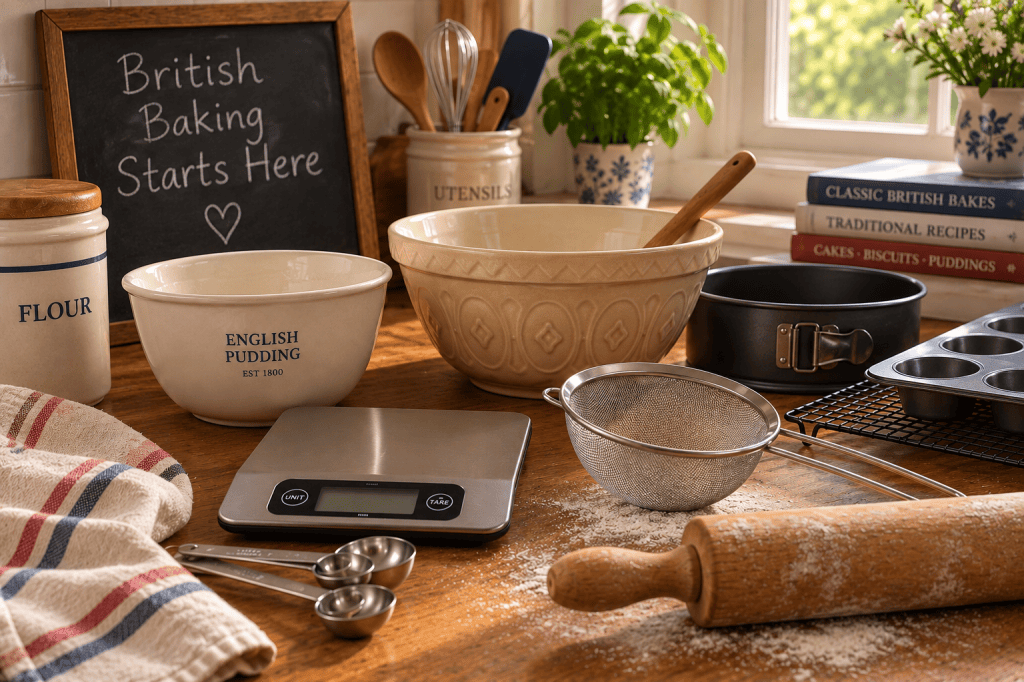
    British baking doesn’t require a completely different kitchen, but having the right tools can make traditional recipes much easier to follow—especially when you’re baking from a British recipe in an American kitchen.

    From weighing flour in grams to finding the right tin for a Victoria sponge, a few simple pieces of equipment can help take the guesswork out of converting British recipes.

    Here are 10 useful kitchen tools for anyone who wants to make British cakes, biscuits, breads, puddings, and other classic bakes at home in the United States.

    1. A Digital Kitchen Scale

    If you buy only one tool specifically for British baking, make it a digital kitchen scale. British recipes commonly list ingredients by weight in grams rather than relying primarily on cups.

    Weighing ingredients is especially helpful with flour, sugar, butter, and other ingredients where measuring by volume can produce inconsistent results. It also means you can follow a British recipe without constantly converting grams into American cups.

    Look for a digital scale that can switch between grams and ounces, has an easy-to-read display, and includes a tare function so you can place a bowl on the scale and reset the display to zero before adding your ingredients.

    Brit & Skillet tip: Keep the recipe in grams whenever possible instead of converting everything to cups. It’s usually simpler—and you’ll be following the measurements the recipe was originally designed around.

    2. The Right Baking Tins

    In British recipes, you’ll often see the word “tin” where an American recipe might say “pan.” A cake tin is simply a cake pan, a loaf tin is a loaf pan, and a roasting tin is what Americans would usually call a roasting pan.

    The important thing is the size. British recipes frequently specify tins in centimeters, so check the dimensions before choosing an American pan. Even a small difference in the size or depth of a tin can affect how quickly a cake bakes and how thick the finished layers are.

    If you plan to make classic British cakes, a pair of round cake tins is particularly useful. They’re ideal for layered bakes such as Victoria sponge and many other traditional cakes.

    Brit & Skillet tip: Don’t worry if your American pan isn’t an exact metric match. Choose the closest size available and start checking the bake a little earlier if your pan is wider or shallower than the one specified in the recipe.

    3. A Good Set of Measuring Spoons

    Even though British baking relies heavily on weighing ingredients, measuring spoons are still essential for smaller quantities such as baking powder, baking soda, spices, vanilla, and salt.

    British recipes generally use familiar teaspoon and tablespoon measurements, but there is one important difference to watch for: an Australian tablespoon is traditionally larger than the British and American tablespoon. If you’re following a British recipe, a standard American tablespoon is generally the appropriate equivalent.

    A set with clearly marked tablespoon, teaspoon, 1/2 teaspoon, and 1/4 teaspoon measurements will handle most British recipes without any trouble.

    Brit & Skillet tip: When a recipe calls for a level teaspoon or tablespoon, run the back of a knife across the top of the spoon rather than using a heaping spoonful. Small differences can matter with ingredients such as baking powder and baking soda.

    4. A Reliable Set of Mixing Bowls

    A good set of mixing bowls is one of those simple kitchen essentials you’ll use for almost every British bake. From scones and biscuits to sponge cakes and bread dough, having several bowl sizes makes preparing ingredients much easier.

    Stainless steel, glass, and sturdy ceramic bowls can all work well. A larger bowl is useful for mixing cake batters and doughs, while smaller bowls are handy for weighing ingredients separately before combining them.

    If you use a digital kitchen scale, choose bowls that sit comfortably on the weighing platform without covering the scale’s display. Lightweight bowls are particularly convenient when you’re weighing several ingredients directly into the same bowl.

    Brit & Skillet tip: Try the “weigh as you go” method. Place your mixing bowl on the scale, press tare to return it to zero, add the first ingredient, then tare the scale again before adding the next. It saves dishes and makes British recipes surprisingly easy to follow.

    5. A Pudding Basin

    If you want to venture beyond cakes and biscuits into traditional British puddings, a pudding basin is a useful addition to your kitchen. These deep, rounded bowls are traditionally used for steamed puddings such as Christmas pudding, sticky toffee-style puddings, and other classic recipes.

    Pudding basins are commonly made from ceramic, stoneware, or heat-resistant plastic. The rounded shape helps a steamed pudding cook evenly and gives it the traditional domed appearance when turned out onto a plate.

    British recipes may specify the size of a pudding basin in pints rather than cups or quarts. Before buying one, check the capacity called for in the recipe rather than judging the size by appearance alone.

    Brit & Skillet tip: You don’t need a cupboard full of pudding basins. Start with one versatile medium-sized basin, and add another size only if you find yourself making steamed puddings regularly.

    6. A Fine-Mesh Sieve

    British baking recipes often tell you to “sift” flour, icing sugar, cocoa powder, or other dry ingredients. A fine-mesh sieve makes this quick and easy while helping break up lumps before the ingredients go into your mixture.

    A sieve is particularly useful when working with icing sugar—called powdered or confectioners’ sugar in the United States—or when dusting the top of a finished cake or bake.

    You don’t need anything elaborate. A medium-sized fine-mesh sieve with a comfortable handle is versatile enough for most home baking jobs and can also be used for everyday cooking.

    Brit & Skillet tip: If a British recipe tells you to sift flour together with baking powder or another dry ingredient, put them into the sieve at the same time. This helps distribute the ingredients throughout the flour before you begin mixing.

    7. A Good Rolling Pin

    A rolling pin is essential for many British bakes, especially when you start making pastry, biscuits, pies, tarts, and other traditional favorites.

    You don’t need an expensive rolling pin. A simple wooden or silicone model works perfectly well for most home bakers. The most important thing is that it feels comfortable to use and gives you enough length to roll dough evenly.

    When rolling pastry or biscuit dough, use only enough flour on your work surface to prevent sticking. Adding too much extra flour can make the finished bake tougher or drier than intended.

    Brit & Skillet tip: When a British recipe tells you to roll something to a thickness measured in millimeters, don’t worry about getting out a ruler every time. After a little practice, you’ll become surprisingly good at judging the thickness by sight.

    8. A Wire Cooling Rack

    A wire cooling rack may not seem particularly exciting, but it makes a noticeable difference when cooling cakes, biscuits, scones, and other British bakes.

    The raised wire surface allows air to circulate underneath your bake instead of trapping steam against the bottom. This is especially useful for biscuits and pastry, where trapped moisture can make the bottoms softer than intended.

    Choose a sturdy rack that’s large enough to hold one of your usual baking tins or a batch of biscuits. If you have limited kitchen storage, a rectangular rack that fits inside one of your baking trays can be particularly convenient.

    Brit & Skillet tip: Let cakes cool in their tins for the amount of time specified in the recipe before turning them onto the rack. Removing a delicate sponge too soon can cause it to crack or break apart.

    9. An Electric Hand Mixer

    You can make plenty of British bakes with nothing more than a wooden spoon and a little determination, but an electric hand mixer makes many recipes considerably easier.

    It’s particularly useful for creaming butter and sugar together, whipping cream, beating eggs, and preparing light cake batters. For classic British sponge cakes, properly creamed butter and sugar can help create the light, tender texture you’re looking for.

    A basic hand mixer is sufficient for most home bakers. Look for several speed settings, comfortable controls, and removable beaters that are easy to clean. You don’t necessarily need a large stand mixer unless you bake frequently or regularly work with heavier mixtures and doughs.

    Brit & Skillet tip: When creaming butter and sugar, start with properly softened butter rather than trying to compensate with a higher mixer speed. The butter should be soft enough to mix easily but not melted.

    10. A Food Processor

    A food processor isn’t essential for every British recipe, but it can become one of the most useful tools in your kitchen once you start making pastry, breadcrumbs, scones, and other traditional bakes.

    For pastry in particular, a food processor can quickly combine cold butter and flour while helping you avoid overworking the mixture with warm hands. It can also make quick work of chopping nuts, preparing breadcrumbs, and mixing certain doughs and fillings.

    You don’t need the largest or most powerful model available. For most home cooks, a reliable food processor with a standard blade and a reasonably sized bowl will handle everyday baking and cooking jobs perfectly well.

    Brit & Skillet tip: When using a food processor for pastry, use short pulses rather than running the machine continuously. Stop once the mixture reaches the texture described in your recipe—you don’t want to overwork the dough.

    Start Your British Baking Kitchen

    You don’t need to replace everything in your kitchen to start baking British recipes. In fact, you probably already own several of the tools on this list.

    If you’re just getting started, begin with a digital kitchen scale and the baking tins you need for the recipes you want to make. From there, you can gradually add tools such as a pudding basin, sieve, mixer, or food processor as your British baking adventures expand.

    The most important thing is having equipment that helps you follow the original recipe confidently—without turning every bake into a complicated exercise in conversions.

    With a few dependable tools and a willingness to try something new, an American kitchen can be perfectly equipped for everything from a Victoria sponge to a proper British pudding.

    Happy baking!

    — Jane at Brit & Skillet


    Affiliate Disclosure: Brit & Skillet may earn a commission from qualifying purchases made through links on this page, at no additional cost to you. We only recommend products that we believe are relevant and useful to our readers.

  • Golden Syrup in America: What to Buy and Where to Find It

    Golden Syrup in America: What to Buy and Where to Find It

    If you’ve ever tried making a traditional British recipe in America, you may have come across one ingredient that can be surprisingly confusing: golden syrup.

    Golden syrup is a thick, amber-colored syrup with a rich, buttery caramel flavor. It’s a staple in many British kitchens and appears in everything from flapjacks and puddings to cakes and biscuits. The good news is that you can find golden syrup in the United States—you just need to know what to look for.

    In this guide, we’ll look at what golden syrup is, how it differs from common American syrups, where you can buy it, and what you can use if you can’t find the real thing.

    Affiliate disclosure: This post may contain affiliate links. If you make a purchase through one of these links, I may earn a small commission at no additional cost to you.

    What Is Golden Syrup?

    Golden syrup is a thick, smooth sugar syrup with a distinctive golden color and a mild caramel flavor. It has been a familiar ingredient in British baking for generations.

    Unlike maple syrup, golden syrup doesn’t taste like maple, and unlike honey, it doesn’t have a floral flavor. Its rich sweetness and thick texture make it especially useful in baked goods where it adds both flavor and chewiness.

    One of the best-known brands is Lyle’s Golden Syrup, recognizable by its classic green-and-gold packaging. It’s commonly used in British recipes such as flapjacks, steamed puddings, cakes, biscuits, and treacle tart.

    Is Golden Syrup the Same as Corn Syrup?

    No. Although golden syrup and corn syrup can look similar, they are different products.

    Golden syrup is made from sugar and has a noticeable caramel-like flavor. Light corn syrup is made primarily from corn starch and has a much milder, more neutral sweetness.

    Corn syrup can sometimes work as a substitute when a recipe mainly needs sweetness and moisture, but it won’t give a traditional British bake quite the same flavor.

    What About Maple Syrup or Honey?

    Maple syrup and honey can also work in certain recipes, but both bring their own distinctive flavors. They may also behave differently because their consistency and moisture content can vary.

    For classic British recipes such as flapjacks or treacle tart, using genuine golden syrup will usually give you the most traditional result.

    Where to Buy Golden Syrup in America

    Golden syrup isn’t as common in American supermarkets as it is in Britain, but it has become much easier to find.

    British and International Food Stores

    If you have a British or international grocery store nearby, this is a great place to start. Look in the baking aisle or the section devoted to imported British foods.

    Larger Grocery Stores

    Some larger supermarkets carry imported golden syrup in their international-food or baking sections. Availability varies by location, so it’s worth checking the store’s website before making a special trip.

    Online

    Buying golden syrup online can be one of the easiest options, particularly if you don’t have a British food shop nearby. Lyle’s Golden Syrup is widely sold online in both tins and squeeze bottles.

    Tip: When shopping online, check the container size and price before ordering. Imported foods can vary considerably in price between sellers.

    Which Golden Syrup Should You Buy?

    For someone trying a traditional British recipe for the first time, Lyle’s Golden Syrup is an easy choice because it is the classic product called for in many British recipes.

    The traditional tin is iconic, while the squeeze bottle can be more convenient for measuring and everyday use. The best choice really comes down to how you plan to use it.

    What Can You Make With Golden Syrup?

    Once you have a jar or tin of golden syrup in the cupboard, there are plenty of ways to use it. It is especially useful in traditional British baking.

    Some popular ideas include:

    • British flapjacks
    • Treacle tart
    • Sticky puddings
    • Biscuits and cookies
    • Cakes and loaf cakes
    • Homemade granola
    • Drizzling over pancakes, waffles, or porridge

    If you’re new to British baking, flapjacks are one of the easiest places to start. They require only a handful of ingredients and really showcase the distinctive flavor of golden syrup.

    How to Store Golden Syrup

    Golden syrup is easy to keep in the pantry. Store it tightly closed in a cool, dry place away from direct sunlight.

    Because the syrup is naturally very thick, it may become even thicker when kept somewhere cold. Keeping it at normal room temperature generally makes it easier to pour and measure.

    Always check the packaging for the manufacturer’s current storage instructions.

    What Can You Substitute for Golden Syrup?

    If you can’t find golden syrup, you may be able to substitute another liquid sweetener depending on the recipe.

    Light corn syrup is relatively neutral in flavor, while honey adds a more distinctive taste. Maple syrup is another possibility for some recipes, although its flavor and thinner consistency can noticeably change the finished result.

    For recipes where golden syrup is a major part of the flavor—particularly traditional British bakes—it is worth seeking out the real thing if you can.

    Bringing a Little Britain Into Your Kitchen

    Golden syrup may not be an everyday American pantry ingredient, but it opens the door to all sorts of classic British treats.

    If you’re curious about British baking, a tin or bottle of golden syrup is a useful ingredient to have on hand. Start with a batch of traditional flapjacks, then explore some of the other British recipes that use this distinctive syrup.

    And if you’ve ever stood in an American grocery store wondering what on earth a British recipe means by “golden syrup,” now you know exactly what you’re looking for.