Tag: hershey

  • Self-Raising Flour vs. Self-Rising Flour: What’s the Difference?

    Self-Raising Flour vs. Self-Rising Flour: What’s the Difference?

    If you’re an American baker following a British recipe, one ingredient can cause confusion before you’ve even cracked an egg: self-raising flour.

    At first glance, it seems easy enough. American supermarkets sell something called self-rising flour, so surely that’s simply the American name for the same ingredient.

    Almost—but not quite.

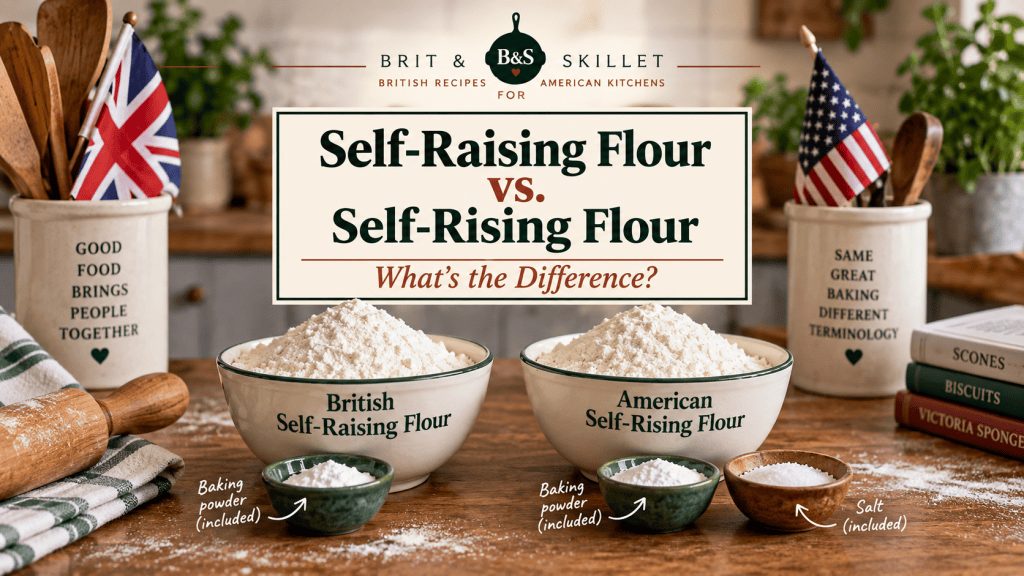
    Both products are designed to make baking easier by combining flour with a chemical raising agent. But depending on the brand and country, the exact formulation can differ. American self-rising flour commonly contains flour, baking powder, and salt, while British self-raising flour is generally understood as flour with a raising agent already incorporated.

    There can also be differences in the flour itself. For example, King Arthur’s American self-rising flour is made from soft wheat and has a protein content around 8.5%, which helps produce tender baked goods. That’s quite different from simply adding baking powder to every type of American all-purpose flour and assuming the result will behave identically.

    Does that mean you need to import British flour every time you want to make a Victoria sponge or a batch of scones?

    Thankfully, no.

    For most home baking, an American baker can work with ingredients readily available in the United States—you just need to understand what’s already in your flour and what the original British recipe expects you to add separately.

    In this guide, we’ll explain the difference between British self-raising flour and American self-rising flour, how they compare with plain and all-purpose flour, how to make a useful substitute at home, and what to watch for when adapting British recipes for an American kitchen.

    Because flour already caused enough international confusion in our guide to plain flour and all-purpose flour.

    Apparently we needed a sequel.

    And here we are. 😂

    Affiliate disclosure: Brit & Skillet may earn a commission from qualifying purchases made through links on this page, at no additional cost to you.

    What Is British Self-Raising Flour?

    British self-raising flour is wheat flour that already contains a chemical raising agent, usually baking powder. That built-in raising power is why British cake recipes can sometimes contain self-raising flour without listing baking powder separately. Collins Dictionary

    You’ll see it frequently in British baking, particularly in cakes, scones, muffins, and other recipes where a light, risen texture is wanted.

    Self-Raising Flour vs. Plain Flour

    The easiest way to understand self-raising flour is to compare it with plain flour.

    Plain flour does not normally contain a raising agent. If a recipe made with plain flour needs chemical leavening, ingredients such as baking powder or bicarbonate of soda are usually added separately.

    Self-raising flour already has raising power incorporated into it. Good Food

    So if a British recipe says:

    200g self-raising flour

    don’t automatically use 200g plain flour and carry on with the recipe unchanged. You would be removing some of the leavening the recipe expects.

    This is also why our guide to Plain Flour vs. All-Purpose Flour is useful alongside this one. Plain flour and self-raising flour aren’t simply two different names for the same ingredient.

    Can You Make British Self-Raising Flour Yourself?

    Yes—and this is particularly useful for American bakers who don’t want to keep another bag of flour in the pantry.

    A common British home-baking method is to combine plain flour with baking powder. Good Food, for example, gives a rule of thumb of:

    150g plain flour + 2 teaspoons baking powder

    to make a self-raising-flour substitute.

    You’ll encounter slightly different ratios from different sources and recipes, so don’t be surprised if another British recipe gives somewhat different instructions. Even Good Food’s own guidance varies depending on the particular recipe or reference page. BBC Good Food

    That’s one reason we prefer to follow the conversion recommended by the specific recipe you’re baking whenever it provides one.

    Why Do Some British Recipes Add Baking Powder Anyway?

    Here’s something that can look particularly strange:

    A recipe may call for self-raising flour and additional baking powder.

    That isn’t necessarily a mistake.

    Some recipes need more lifting power than the flour alone provides. Good Food notes that additional raising agent may be used when a batter or dough is heavier and needs extra help achieving a lighter texture. Good Food

    So don’t see self-raising flour in the ingredient list and automatically decide that any additional baking powder must be redundant.

    Follow the recipe.

    One Important Detail for American Bakers

    The words self-raising and self-rising are largely the British and American names for the same general category of flour. Dictionaries even give American self-rising flour as the regional equivalent of British self-raising flour. Cambridge Dictionary

    But that does not guarantee that a bag of British self-raising flour and a bag of American self-rising flour have exactly the same formulation.

    And that’s where things get interesting.

    Because American self-rising flour commonly brings another ingredient to the party:

    Salt.

    What Is American Self-Rising Flour?

    American self-rising flour follows the same basic idea as British self-raising flour: the raising agent is already mixed into the flour.

    But there’s an important difference American bakers need to know.

    In the United States, self-rising flour typically contains flour, baking powder, and salt. King Arthur, for example, describes its self-rising flour as soft wheat flour combined with baking powder and salt. King Arthur Baking

    That means substituting American self-rising flour directly into a British recipe may introduce salt that wasn’t present in the British flour the recipe was written for.

    American Self-Rising Flour Is Often Softer, Too

    The difference isn’t only about raising agents and salt.

    Some American self-rising flours are milled from soft, lower-protein wheat, which produces less gluten and can create a more tender texture.

    King Arthur’s self-rising flour, for example, has a protein content of approximately 8.5%, compared with 11.7% for its all-purpose flour. King Arthur Baking

    That’s one reason self-rising flour is particularly popular for tender American baked goods such as biscuits, pancakes, cakes, and scones.

    So when you’re adapting a British recipe, you’re potentially dealing with three variables:

    the flour itself, the amount of raising agent, and the salt.

    What’s Actually Inside American Self-Rising Flour?

    A typical American formulation looks something like this:

    Soft wheat flour + baking powder + salt

    King Arthur’s current product ingredient list, for example, contains soft wheat flour, leavening ingredients that make up its baking powder system, and salt.

    If you want to make an American-style self-rising flour substitute yourself, King Arthur recommends combining:

    1 cup (120g) all-purpose flour
    1½ teaspoons baking powder
    ¼ teaspoon table salt

    Whisk everything together thoroughly before using it.

    So Is American Self-Rising Flour the Same as British Self-Raising Flour?

    Not exactly.

    They’re close relatives and perform the same general job, but you shouldn’t assume that every bag sold in Britain and America has precisely the same flour strength, leavening level, or salt content.

    For many everyday recipes, the differences may not cause a dramatic problem.

    But British baking—especially sponge cakes—can depend heavily on ingredient ratios. That’s why we prefer understanding what the original recipe expects rather than automatically replacing one ingredient based solely on a similar name.

    And don’t worry: this doesn’t mean we’re about to tell American bakers they need imported flour shipped across the Atlantic every time they fancy a Victoria sponge.

    There is a much easier solution.

    British Self-Raising Flour vs. American Self-Rising Flour

    British self-raising flour and American self-rising flour are designed to accomplish the same basic job: provide flour and chemical leavening in one convenient ingredient.

    But they’re not necessarily identical products.

    The biggest practical difference for an American baker following a British recipe is that American self-rising flour commonly contains added salt, while traditional British self-raising flour generally does not. Nigella Lawson’s guidance specifically notes this UK-versus-US distinction. Nigella.com

    Here’s the comparison:

    FeatureBritish Self-Raising FlourAmerican Self-Rising Flour
    FlourWheat flourCommonly soft wheat flour
    Baking powder/raising agentYesYes
    Salt already addedGenerally noCommonly yes
    Typical spellingSelf-raisingSelf-rising
    Common usesCakes, scones and other bakingBiscuits, pancakes, cakes and other baking
    Can formulations vary?YesYes

    American products can also differ in protein content from ordinary all-purpose flour. King Arthur’s self-rising flour, for example, contains 8.5% protein, compared with 11.7% in its all-purpose flour. Lower-protein flour generally produces less gluten and a softer, more tender result. King Arthur Baking

    Can You Use American Self-Rising Flour in a British Recipe?

    Often, yes—but check the recipe first.

    If a British recipe calls for self-raising flour, American self-rising flour already supplies flour and leavening, so it’s much closer to what the recipe needs than ordinary all-purpose flour used by itself.

    But check whether the British recipe also contains salt or additional baking powder.

    Because American self-rising flour may already contain salt, using it and then adding all the salt specified by the recipe could increase the total amount.

    Likewise, don’t automatically omit additional baking powder simply because you’re using self-rising flour. Some British recipes intentionally combine self-raising flour with extra raising agent when additional lift is needed. Good Food specifically notes that recipes sometimes do this for heavier batters or doughs. Good Food

    The safest approach is to consider the whole ingredient list, rather than treating the flour name as an isolated substitution.

    What Would Brit & Skillet Use?

    For an American baker following a British recipe, we’d use this order of preference:

    1. Use the British self-raising flour specified by the recipe if you already have it.
    2. Make a British-style substitute from all-purpose flour and baking powder if you don’t.
    3. Use American self-rising flour when appropriate, but account for the salt and any additional raising agents already present in the recipe.

    We particularly like option two because it gives you more control over what goes into the flour—and it means you don’t have to buy another bag of something you’ll use twice before discovering it hiding at the back of the pantry in 2029.

    British-Style Self-Raising Flour Substitute

    For a British recipe, Good Food gives a useful rule of thumb of:

    150g plain flour + 2 teaspoons baking powder

    for homemade self-raising flour. Good Food

    For an American kitchen, all-purpose flour can stand in for the plain flour in this sort of homemade substitution, although flour protein levels vary and the finished texture may not be exactly identical to one made with British flour.

    Notice what we haven’t added:

    Salt.

    That’s intentional when we’re trying to approximate the British ingredient rather than making American-style self-rising flour. Nigella’s guidance similarly recommends baking powder without added salt when replacing the self-raising flour used in her UK recipes. Nigella.com

    American-Style Self-Rising Flour Substitute

    If you’re following an American recipe that specifically calls for self-rising flour, that’s different.

    King Arthur’s homemade version uses:

    1 cup (120g) all-purpose flour + 1½ teaspoons baking powder + ¼ teaspoon table salt. King Arthur Baking

    So the recipe’s country of origin actually matters.

    Brit & Skillet rule: British recipe? Think self-raising flour. American recipe? Think self-rising flour. They’re close cousins—but check what’s already included before assuming they’re twins.

    Which is an extraordinary amount of international diplomacy for a bag of flour. 😂

    How to Substitute Self-Raising Flour in a British Recipe

    If you’re in an American kitchen and a British recipe calls for self-raising flour, you usually have several workable options.

    The simplest is to use the self-raising flour specified by the recipe if you already have it. But there’s generally no need to import a bag of British flour just to bake one cake.

    For most home baking, you can make a useful substitute with American all-purpose flour and baking powder.

    Option 1: Make a British-Style Substitute

    Good Food gives this straightforward rule of thumb:

    150g all-purpose flour + 2 teaspoons baking powder

    In Britain, the original instruction uses plain flour. For an American kitchen, all-purpose flour is generally the practical counterpart for this substitution. Good Food

    Whisk the flour and baking powder together thoroughly before adding them to the recipe. You want the raising agent distributed evenly rather than concentrated in one part of your cake.

    Notice that we’re not adding salt to this British-style version.

    That’s intentional.

    Option 2: Use American Self-Rising Flour

    If you already have American self-rising flour, you may be able to use it.

    But remember that American self-rising flour commonly contains both baking powder and salt. King Arthur’s homemade version, for example, combines 120g all-purpose flour with 1½ teaspoons baking powder and ¼ teaspoon table salt. King Arthur Baking

    So check the rest of your British recipe before making the substitution.

    If the recipe contains additional salt or baking powder, don’t automatically remove or add ingredients without considering what your particular flour already contains and what the recipe requires.

    Option 3: Follow a Conversion Provided by the Recipe

    This is actually our favorite option when it’s available.

    Some British recipes tell you exactly what to do if you don’t have self-raising flour. One Good Food muffin recipe, for example, gives 400g self-raising flour or 400g plain flour plus 3 teaspoons baking powder. BBC Good Food

    If the recipe author has already provided an alternative, use that rather than applying a generic formula.

    Should You Convert the Grams to Cups Too?

    We wouldn’t.

    If the British recipe says 225g self-raising flour, keep the 225g measurement and weigh your substitute on a digital kitchen scale.

    Cup measurements for flour can vary depending on how the flour is filled into the cup. King Arthur recommends weighing ingredients when possible and uses 120g as its standard weight for one cup of its all-purpose flour. King Arthur Baking

    This is a perfect place to use our guide How to Convert British Baking Measurements for American Recipes.

    How to Convert British Baking Measurements for American Recipes.

    What About Plain Flour and All-Purpose Flour?

    If you’re wondering why we’re casually replacing British plain flour with American all-purpose flour here, we’ve already gone much deeper into that particular transatlantic rabbit hole.

    See Plain Flour vs. All-Purpose Flour: A Guide for American Bakers.

    The short version is that they’re generally the closest everyday counterparts, but flour protein levels and brands can differ. That’s another reason weighing the flour and following the original recipe as closely as practical gives you a better starting point.

    Don’t “Improve” the Recipe With Extra Baking Powder

    More baking powder does not automatically mean a taller, fluffier cake.

    Use the amount specified by the recipe or the substitution you’re following. Good Food specifically advises measuring ingredients carefully and using the flour type stated rather than casually changing plain and self-raising flour. BBC Good Food

    And if the British recipe already calls for self-raising flour plus additional baking powder, don’t assume the author made a mistake. Some recipes deliberately use both.

    Brit & Skillet rule: When adapting a British recipe, change as little as necessary. Keep the gram measurements, reproduce the intended raising power, and then get the cake into the oven before we create another international flour incident. 😂

    Common Questions About Self-Raising Flour

    Once you understand what’s inside self-raising flour, using it becomes much less mysterious. But a few questions come up repeatedly when American bakers start working with British recipes.

    Does Self-Raising Flour Expire?

    Yes—although the issue isn’t only the flour itself.

    Self-raising flour contains baking powder, and that raising agent gradually loses potency over time. King Arthur notes that while older self-rising flour may still be usable, baked goods made with it may not rise as well once the baking powder has lost strength. King Arthur Baking

    Check the best-by date, store the flour properly, and if a very old bag has been sitting in the pantry since nobody remembers buying it, replacing it is probably preferable to sacrificing a Victoria sponge in the name of science.

    Can I Use Baking Soda Instead of Baking Powder?

    Not as a simple one-for-one replacement.

    Baking soda and baking powder work differently. Baking soda generally needs sufficient acid in the recipe to produce its leavening reaction, whereas baking powder contains the components needed for its own acid-base reaction.

    King Arthur’s guidance specifically says that when self-rising flour replaces all-purpose flour in a suitable recipe, you omit the recipe’s baking powder and salt—but leave baking soda in the recipe when it’s called for. King Arthur Baking

    So if you’re making a British-style self-raising flour substitute, use baking powder, not an equal quantity of baking soda.

    What Should I Use for a Victoria Sponge?

    Follow the particular Victoria sponge recipe you’re using.

    Many traditional-style British versions call directly for self-raising flour. One Good Food Victoria sponge uses 200g self-raising flour with no separate baking powder, while another uses 225g self-raising flour plus an additional ½ teaspoon baking powder. BBC Good Food

    That’s a perfect example of why we shouldn’t create a universal rule saying:

    “Self-raising flour means never add baking powder.”

    Sometimes the recipe deliberately asks for both.

    If you’re making a British Victoria sponge in America and don’t have British self-raising flour, make an appropriate British-style substitute or follow any substitution supplied by the recipe itself. Keep the flour measurement in grams whenever possible.

    Is Self-Raising Flour the Same as Cake Flour?

    No.

    Cake flour is generally a low-protein flour designed to produce tender cakes, but it does not automatically contain the baking powder required to make it self-raising.

    Likewise, American self-rising flour may be made from relatively soft, low-protein wheat, but that doesn’t make the terms cake flour and self-rising flour interchangeable. King Arthur’s self-rising flour, for example, is about 8.5% protein and already contains baking powder and salt. King Arthur Baking

    Always check what the bag actually contains.

    Can I Use All-Purpose Flour Instead?

    Yes—but not by itself when the recipe depends on self-raising flour for leavening.

    American all-purpose flour doesn’t normally have baking powder incorporated into it. You’ll need to add the appropriate raising agent according to the recipe or a reliable self-raising-flour substitution.

    For more about how American all-purpose flour compares with British plain flour, see Plain Flour vs. All-Purpose Flour: A Guide for American Bakers.

    Should I Buy Self-Rising Flour or Make My Own?

    If you regularly bake recipes specifically designed for American self-rising flour, keeping a bag in the pantry can be convenient.

    Prefer to buy it ready-made? King Arthur Self-Rising Flour is a convenient option for American recipes that specifically call for self-rising flour. Keep in mind that American self-rising flour isn’t necessarily identical to traditional British self-raising flour, so check the recipe before substituting it directly.

    But if your main reason for needing it is an occasional British recipe calling for self-raising flour, making a British-style substitute from flour and baking powder gives you more control and avoids the added salt commonly found in American self-rising flour.

    A good flour to start with: King Arthur Unbleached All-Purpose Flour is a practical choice for making a homemade self-raising flour substitute, since you can add the raising agent separately according to your recipe.

    If other British baking terminology has you scratching your head, our British Baking Terms Explained: A Guide for American Bakers translates many of the most common terms.

    It also prevents another half-used bag of flour from joining the archaeological excavation at the back of your pantry.

    Brit & Skillet tip: Read the entire ingredient list before substituting anything. Flour, baking powder, baking soda, and salt work as part of a recipe—not as four strangers who happened to arrive at the same cake.

    The Bottom Line

    British self-raising flour and American self-rising flour are close relatives, but they’re not necessarily identical.

    Both combine flour with chemical leavening, but American self-rising flour commonly includes salt as well, and the underlying flour can differ in protein content.

    For American bakers following British recipes, the easiest solution is often to keep the recipe’s original gram measurements and make a British-style self-raising flour substitute with all-purpose flour and baking powder when necessary.

    If you use American self-rising flour instead, check the rest of the recipe for additional salt and raising agents before making changes.

    And remember that the recipe itself always wins. If it calls for self-raising flour and additional baking powder, there’s usually a reason.

    Once you understand that distinction, another piece of British baking vocabulary becomes considerably less intimidating.

    We’ve now translated caster sugar, plain flour, and self-raising flour.

    At this rate, Britain is rapidly running out of ingredients with which to confuse us. 😂🇬🇧🇺🇸

  • British Baking Terms Explained: A Guide for American Bakers.

    British Baking Terms Explained: A Guide for American Bakers.

    Sometimes the trickiest part of a British baking recipe comes before you turn on the oven.

    You’ve gathered the ingredients and found the right tin. Then the recipe tells you to “rub in the butter” or mix until you reach “a soft dropping consistency.”

    If those instructions sound unfamiliar, you’re not alone.

    This guide explains common British baking terms in plain language for American home bakers. We’ll cover equipment names, mixing instructions, and the texture clues that help you understand what the recipe is asking you to do.

    Think of it as a little translation help for your kitchen counter. Same baking adventure, fewer pauses to wonder what “treacle” means.

    Baking Tins, Trays, and Other Equipment Names

    British recipes sometimes use a different name for a tool you already own. Before buying something new, check whether the unfamiliar item is hiding in your cupboard under its American name.

    Baking Tin

    A “baking tin” is a baking pan. The term doesn’t mean it must be made from tin.

    You’ll see references to cake tins, loaf tins, and muffin tins. Match the dimensions and shape specified in the recipe rather than relying on the name alone.

    Sandwich Tin

    A sandwich tin is a shallow round cake pan used to bake individual cake layers, often for a Victoria sponge.

    The “sandwich” refers to the layers with filling between them. No bread required.

    Baking Tray

    A baking tray generally means a baking sheet. However, pay attention to the recipe: a tray used for biscuits is different from a deeper tin needed to hold traybake batter.

    Cooling Wire

    If a recipe tells you to transfer something to a “cooling wire” or “wire rack,” it means a cooling rack.

    Follow the instructions about when to remove the bake from its tin. Some cakes need a little time to firm up before being moved.

    Palette Knife

    A palette knife is a flat, blunt tool used for jobs such as spreading icing. Depending on the task, an American icing spatula or offset spatula may serve the same purpose.

    For more help matching equipment to your recipe, see our British Baking Equipment Guide: Everything an American Kitchen Needs.

    Rub In”: Working Butter Into Flour

    When a British recipe tells you to “rub in the butter,” it means working the fat into the flour with your fingertips.

    You may encounter this instruction in recipes for scones, crumble toppings, and some pastries. American recipes often describe a similar task as “cutting in” the butter or fat.

    How to Do It

    Follow your recipe’s directions for the butter’s temperature and preparation. For many rubbing-in methods, you’ll start with cold butter cut into small pieces.

    Coat the pieces in flour, then gently rub them between your fingertips and thumbs, letting the mixture fall back into the bowl as you work.

    Use a light touch. The aim is to distribute the fat through the flour without turning it into a warm, greasy paste.

    What Should It Look Like?

    Many recipes ask for a mixture resembling breadcrumbs. Others call for some larger pieces of butter to remain.

    Follow the texture described in your particular recipe. Those differences can affect the finished bake, so “keep going until every lump disappears” isn’t a universal rule.

    Does “Cut In” Mean Exactly the Same Thing?

    The terms describe closely related ways of combining solid fat with flour. “Rub in” usually specifies your fingertips, while “cut in” often involves a pastry blender or other cutting tool.

    The recipe’s target texture matters more than making the wording match perfectly.

    And no, “rub in” does not mean rubbing butter into the baking tin. That’s a separate job—and a much quicker one.

    Cream Together”: Beating Butter and Sugar

    When a recipe asks you to “cream the butter and sugar,” it means beating them together until they reach the texture described in the recipe.

    There’s no cream to add. Here, “cream” is a mixing instruction rather than an ingredient.

    Start With the Right Butter

    For a typical creaming method, the butter should be softened enough to beat but still hold its shape. It shouldn’t be melted or oily.

    Follow your recipe’s directions. Butter that is too cold can be difficult to combine, while melted butter won’t behave the same way during creaming.

    What Does “Light and Fluffy” Mean?

    As you beat the butter and sugar, the mixture should become paler and look more aerated. Scrape down the bowl occasionally so everything mixes evenly.

    You may still feel some sugar grains. “Light and fluffy” doesn’t necessarily mean the sugar has completely dissolved.

    Can You Do It by Hand?

    Yes. Softened butter and sugar can be creamed with a wooden spoon, although it takes effort. An electric hand mixer or stand mixer can make the job easier.

    Use the recipe’s texture cues alongside any suggested mixing time. The time needed can vary with the equipment, quantity, and butter temperature.

    Is This a British-Only Term?

    No—American recipes use “cream together” too. It’s included here because it’s easy to mistake a familiar food word for an instruction to add another ingredient.

    Keep the cream in the fridge unless the ingredient list actually asks for it.

    Fold In”: Combining Ingredients Gently

    When a recipe tells you to “fold in” an ingredient, it means combining it gently, often to preserve air already beaten into the mixture.

    You’ll see this instruction when adding flour to an aerated cake mixture or combining whipped egg whites with another mixture.

    How to Fold

    Use a flexible spatula or a large spoon. Cut down through the mixture, sweep along the bottom of the bowl, then lift and turn the mixture over itself.

    Rotate the bowl and repeat, reaching the bottom so pockets of flour or unmixed ingredients don’t remain hidden.

    Gentle Doesn’t Mean Incomplete

    Stop when the ingredients are evenly combined and no unwanted streaks or dry pockets remain.

    The aim is to mix thoroughly with as little unnecessary handling as possible. A beautifully airy mixture with a pocket of dry flour in the middle still needs another fold.

    Why Not Keep Using the Mixer?

    Beating and folding do different jobs. Vigorous mixing at this stage can knock air out of a delicate mixture.

    If the recipe asks you to switch from beating to folding, pause the mixer and follow that change in method.

    Add Ingredients as Directed

    Some recipes ask you to fold ingredients in several additions. Others have you stir in a small amount first to loosen a thicker mixture before folding in the rest.

    Follow that sequence rather than adding everything at once. It can make two mixtures with very different textures easier to combine.

    Soft Dropping Consistency”: Knowing When the Mixture Is Ready

    “Soft dropping consistency” describes the texture of a mixture, usually a cake batter.

    It means the mixture is soft enough to fall from a spoon with a gentle shake or tap. It shouldn’t cling stubbornly to the spoon or pour off like a thin liquid.

    How to Check It

    Lift a spoonful of mixture above the bowl, then gently shake or tap the spoon.

    For a soft dropping consistency, the mixture should drop back into the bowl fairly easily. You shouldn’t need to scrape it off.

    What if It Seems Too Thick?

    Check the recipe before adding anything. If it instructs you to add a little milk or another liquid to reach this consistency, add it gradually and check again.

    Don’t add liquid to every thick cake mixture. Some recipes are meant to produce a firmer batter, and changing the balance can affect the bake.

    Texture Is a Clue, Not a Universal Rule

    Use this test only when the recipe calls for it. Sponge cakes, fruit cakes, and other bakes can start with quite different mixtures.

    The useful question is whether your batter matches the description in your recipe—not whether every cake batter in your kitchen behaves the same way.

    Grease and Line”: Preparing the Baking Tin

    When a British recipe tells you to “grease and line” a tin, it means preparing the pan with a little fat and baking parchment to help the finished bake release.

    Grease the Tin

    Apply a thin layer of the butter, oil, or other suitable fat specified in the recipe to the required surfaces.

    A pastry brush or a piece of kitchen paper can help spread it evenly. “Kitchen paper” is the British term for a paper towel.

    Add Baking Parchment

    “Baking parchment” means parchment paper. Cut it to fit the parts of the tin the recipe tells you to line.

    For a round cake tin, that may mean a circle covering the base. A loaf cake recipe may call for lining the base and sides.

    The greased surface helps hold the parchment in place while you add the mixture.

    What Does “Base-Line” Mean?

    If a recipe says to “base-line” the tin, it means lining only the bottom with parchment. Follow any separate instructions about greasing the sides.

    “Line the tin” can be less specific, so look for further directions in the recipe.

    Don’t Substitute Wax Paper

    Wax paper and baking parchment are different products. Use oven-safe parchment rated for your baking temperature.

    Also, don’t assume every tin needs greasing. Some recipes rely on the mixture gripping the sides as it rises, so follow the preparation method given.

    Bake Blind”: Baking a Pastry Case Before Filling It

    “Baking blind” means baking a pastry crust before adding its filling. American recipes often call this “blind baking” or “prebaking.”

    It’s useful when the filling needs less oven time than the pastry—or won’t be baked at all.

    What Is a Pastry Case?

    A “pastry case” is the pastry shell or crust that holds the filling.

    The recipe may ask you to bake it partly or fully before filling it. Those aren’t interchangeable, so check how much further baking the assembled tart or pie will receive.

    What Are Baking Beans?

    “Baking beans” are reusable weights, often ceramic, used to help keep pastry from puffing up during blind baking. American shops commonly label them “pie weights.”

    They normally sit on a lining of baking parchment rather than directly against the pastry.

    Follow the Recipe’s Sequence

    A recipe may tell you to chill the pastry, line it with parchment, add weights, and bake. It may then ask you to remove the lining and weights so the base can bake further.

    Follow its temperatures, timings, and appearance cues. Take care when removing the weights—they’ll be hot.

    Does “Prick the Base” Mean the Same Thing?

    No. Pricking small holes in pastry with a fork is called “docking.” It helps steam escape, but it doesn’t automatically replace baking weights.

    Only do it when your recipe directs you to, particularly if the pastry will hold a liquid filling.

    Despite the name, baking blind is a job best done with your eyes open.

    Turn Out”: Removing a Bake From Its Tin

    When a recipe tells you to “turn out” a cake, loaf, or pudding, it means removing it from the tin, basin, or mould.

    It doesn’t mean turning off the oven, although that deserves remembering too.

    Check When to Do It

    Follow the recipe’s instructions about how long to leave the bake in its tin first.

    Some cakes need a short rest to become firm enough to handle. Other bakes need longer cooling, so don’t assume everything should come out immediately.

    Handle It Gently

    For a cake in a solid tin, turning out often involves placing a cooling rack over the top, holding the rack and tin securely together, and carefully inverting them.

    Use oven gloves if the tin is still hot, and make sure the rack is large enough to support the cake.

    Loose-bottomed and springform tins release differently, so use the method appropriate to your pan and recipe.

    Which Way Up?

    If the recipe asks you to cool the cake upright, you may need a second rack to gently turn it back over.

    For a steamed pudding, turning out usually means inverting it onto a suitable serving plate. Follow the recipe’s timing and take care around the hot basin and any escaping steam.

    What Does “Leave in the Tin” Mean?

    Exactly what it sounds like: let the bake rest or cool inside its baking pan for the stated time.

    This waiting period can be part of the method. Give a delicate cake its few minutes of peace before attempting the grand unveiling.

    Ingredient Names: A Few British-to-American Translations

    Sometimes the method makes sense, but the ingredient list needs translating.

    These common names are a useful starting point. Keep in mind that similar names don’t always mean products behave identically.

    Plain Flour

    Plain flour generally corresponds to American all-purpose flour. Protein content can vary between brands, so results may differ slightly.

    “Plain” means it doesn’t contain added raising agents.

    Self-Raising Flour

    British self-raising flour contains added raising agents. American self-rising flour commonly includes salt as well, and the formulations may differ.

    Don’t assume they’re an exact swap. Follow a substitution designed for the recipe rather than adding baking powder or salt by guesswork.

    Caster Sugar

    Caster sugar is finely granulated sugar, often sold in the United States as superfine sugar.

    It isn’t powdered sugar. Its smaller crystals help it dissolve more readily than ordinary granulated sugar.

    Icing Sugar

    Icing sugar is powdered or confectioners’ sugar. It’s commonly used in icings, buttercream, and dusting.

    Products can contain different anti-caking ingredients, so check the label if that matters for your recipe.

    Bicarbonate of Soda

    Bicarbonate of soda means baking soda. It isn’t the same as baking powder.

    Use the one specified in the recipe—the two aren’t interchangeable spoon for spoon.

    Golden Syrup and Black Treacle

    Golden syrup is a thick, amber sugar syrup. Black treacle is darker and has a stronger flavour.

    Neither name simply means maple syrup. If you can’t find the specified ingredient, look for a substitution suited to that particular recipe, since changing the syrup can change both flavour and texture.

    British Baking Terms at a Glance

    Use this quick-reference list when an unfamiliar instruction interrupts your baking. Your recipe’s specific directions should always guide the details.

    British term or instructionWhat it means
    Baking tinBaking pan
    Sandwich tinShallow round pan for an individual cake layer
    Baking trayBaking sheet; check whether the recipe needs a deeper pan
    Baking parchmentParchment paper
    Kitchen paperPaper towel
    Rub inWork fat into flour with your fingertips
    Cream togetherBeat ingredients, usually butter and sugar, to the stated texture
    Fold inCombine gently, often to preserve air
    Soft dropping consistencyA mixture that drops from a spoon with a gentle shake or tap
    Base-lineLine the bottom of the pan with parchment
    Bake blindBake a pastry shell before adding its filling
    Baking beansPie weights
    Turn outRemove a bake from its pan or mould
    Caster sugarSuperfine sugar
    Icing sugarPowdered or confectioners’ sugar
    Bicarbonate of sodaBaking soda

    Some of these terms appear in American recipes too. The aim isn’t to draw a strict line between two baking languages—it’s to help you keep going when the wording feels unfamiliar.

    Ready to Put the Instructions Into Practice?

    Once you understand the vocabulary, a British baking recipe becomes much easier to follow.

    Read the method before you begin, check unfamiliar ingredients, and pay attention to the texture clues along the way. “Light and fluffy” and “soft dropping consistency” tell you what to look for, alongside the recipe’s timings.

    For help choosing pans and tools, explore our British Baking Equipment Guide: Everything an American Kitchen Needs.

    If grams, millilitres, or oven temperatures are your next question, read How to Convert British Baking Measurements for American Recipes.

    You don’t need to memorise every term before making a start. Keep the recipe close, take it one instruction at a time, and put the kettle on when the work is done.

    British food. American kitchens. A little less lost in translation.

  • British Baking Equipment Guide: Everything an American Kitchen Needs.

    British Baking Equipment Guide: Everything an American Kitchen Needs.

    Baking from a British recipe in an American kitchen can feel like following instructions from someone who knows your kitchen—but calls everything by a different name.

    They mention sandwich tins. You look at your cake pans. They ask for a pudding basin. You wonder whether a cereal bowl counts.

    The good news? You may already own much of what you need.

    This guide will help you work out which equipment deserves cupboard space, which specialist pieces suit the recipes you want to make, and what can wait. We’ll also point you toward our detailed Brit & Skillet guides when you need help choosing a particular tool or understanding British measurements.

    Whether you’re starting with scones, planning a Victoria sponge, or contemplating your first steamed pudding, let’s get your kitchen ready—without buying half a baking shop.

    Affiliate Disclosure: This post contains affiliate links. If you purchase through one of these links, Brit & Skillet may earn a small commission at no additional cost to you. I only recommend products that are relevant to the recipes and information shared here.

    Start With What You Already Own

    Before buying anything, take a look through your kitchen cupboards. Mixing bowls, wooden spoons, a whisk, a spatula, and a rolling pin can all earn their keep in British baking.

    Start with the recipe you want to make, then check what it actually requires. A batch of scones calls for a different setup from a steamed Christmas pudding, and neither automatically requires an electric mixer.

    Some British equipment names may sound unfamiliar even when the item itself looks familiar. A “sandwich tin,” for example, is a shallow round cake pan used to bake layers for cakes such as Victoria sponge.

    Before substituting a pan you already own, compare its diameter, depth, and shape with the recipe’s instructions. A different pan can change the depth of the batter and how quickly it bakes.

    Choose a few recipes you’re excited to bake and let those guide your purchases. You’ll soon discover which tools you reach for regularly and which specialist pieces can wait.

    There’s no need to buy a pudding basin before you’ve decided whether steamed pudding is something you actually want to make.

    Although, after our pudding-basin guide, we understand if you’ve already become emotionally attached to a bowl.


    A Digital Kitchen Scale

    One of the first differences you’ll notice in British baking recipes is the use of grams for ingredients such as flour, sugar, and butter.

    A digital kitchen scale lets you follow those measurements directly, without converting each ingredient into cups.

    A cup of flour can contain different amounts depending on how it’s filled. Scooping directly from the bag can pack flour into the cup, while spooning it in more lightly may give you less.

    Weighing ingredients removes that particular source of variation. If your recipe asks for 225 grams of flour, you can measure 225 grams without wondering how firmly someone else filled a cup.

    It also makes British butter measurements easier. You can weigh the amount the recipe requests instead of working out fractions of an American stick.

    Brit & Skillet Tip: If you’re going to buy one piece of equipment specifically to make British recipes easier in an American kitchen, a digital scale is a very good place to start. Working directly in grams removes a whole layer of conversion and guesswork.

    For a scale that can handle the everyday measuring jobs involved in British baking, the King Arthur Volume & Weight Scale is one option worth considering.

    Place your mixing bowl on the scale, then press the tare—or zero—button. This resets the display so you’re measuring the ingredient rather than the bowl.

    You can reset it again before adding another ingredient, provided the recipe calls for those ingredients to go into the same bowl.

    Add slowly as you approach the target weight. Taking extra sugar out of a bowl of flour is considerably less convenient than putting it in.

    Measuring cups and spoons still have a place in your kitchen, especially when you’re following American recipes. A scale simply gives you another way to measure.

    When a British recipe provides weights, use those original measurements where possible. If you need help interpreting the alternatives, see our guide to British baking measurements for American recipes.


    British Baking Tins and American Baking Pans

    British recipes usually call baking pans “tins,” even when they’re made from another material. The name may be different, but the job is familiar.

    What matters most is choosing the size and shape specified in your recipe.

    Sandwich Tins

    Sandwich tins are shallow round cake pans used to bake separate layers for cakes such as Victoria sponge.

    Check both the diameter and depth before using a pan you already own. Two shallow sandwich tins and one deep cake pan aren’t automatically interchangeable: changing the depth of the batter can affect baking time.

    Brit & Skillet Tip: Want to see sandwich tins doing the job they were made for? Our Classic Victoria Sponge Cake uses those separate sponge layers to make one of Britain’s best-loved cakes.

    For a sturdy American option, Fat Daddio’s Anodized Aluminum Round Cake Pans are available in multiple sizes, including an 8-inch pan that’s a useful match for many British recipes calling for a 20cm round or sandwich tin.

    Loaf Tins

    Loaf tins are useful for loaf cakes and bread. British recipes sometimes describe them by a pound size, such as a “2 lb loaf tin.”

    Those labels aren’t a reliable guide to exact dimensions across every manufacturer. If the recipe provides measurements or capacity, compare those with your own pan before filling it.

    For a dependable American option, Fat Daddio’s Anodized Aluminum Bread & Loaf Pans come in a range of sizes, making it easier to choose a pan that closely matches the dimensions called for in a British recipe.

    Baking Trays

    A baking tray is the British equivalent of a baking sheet. You may already have one suitable for scones, biscuits, and other everyday bakes.

    Check whether the recipe needs a flat sheet, a rimmed tray, or a deeper pan. A shallow baking sheet cannot substitute for a deep traybake tin holding cake batter.

    Start with the pans required for your first few recipes. Add specialist shapes when you have a use for them.

    A cupboard full of lovely tins is enjoyable. Being able to open that cupboard without a small metal avalanche is also enjoyable.

    For more help choosing suitable pans, see our guide to British baking tins and their uses.

    For a sturdy everyday option, Fat Daddio’s Natural Aluminum Baking Sheet Pans are available in several sizes and work well for the kinds of biscuits, scones, and tray bakes you’ll come across in British baking.


    Mixing Bowls and Everyday Utensils

    Not every British bake needs an electrical appliance. Mixing bowls and a few familiar utensils can handle plenty of everyday preparation.

    Before adding anything to your shopping basket, check what’s already in your kitchen drawer.

    Choose a bowl with enough space to stir or fold without sending flour over the sides. A larger bowl is useful for cake mixtures and dough, while a smaller one comes in handy for beating eggs or combining dry ingredients.

    A stable base helps keep the bowl steady as you work. If yours slides around the counter, placing a damp kitchen towel underneath can help.

    If you’re building a baking setup from scratch, the King Arthur Complete Lightweight Mixing Bowl Set gives you several sizes for different jobs.

    If you prefer the durability and simplicity of metal bowls, the King Arthur Stainless Steel Mixing Bowls are another option.

    Brit & Skillet Tip: You don’t necessarily need both types. Choose the bowl set that suits the way you bake and the storage space you have. A useful bowl earns its cupboard space; a beautiful stack you never reach for does not.

    A wooden spoon is useful for stirring mixtures and beating softened ingredients together by hand.

    A flexible spatula helps scrape the sides of the bowl and fold ingredients together. It also gets more batter into the tin, although this does slightly reduce the amount available for the traditional bowl inspection.

    A balloon whisk is useful for beating eggs, blending liquids, and whisking small amounts of cream.

    For mixtures that need prolonged beating, an electric mixer can reduce the effort. But you don’t need to bring one out every time a recipe asks you to mix something.

    A sieve is useful when a recipe calls for sifted ingredients, particularly if flour, cocoa powder, or icing sugar contains lumps.

    “Icing sugar” is the British name you’ll commonly encounter for powdered or confectioners’ sugar. Your sieve doesn’t mind which name is on the bag.

    For a closer look at choosing a bowl, read our guide to Best Mixing Bowls for British Baking: What Size and Material Do You Need?


    Hand Mixers and Stand Mixers

    An electric mixer can make some baking jobs easier, particularly when a recipe calls for creaming butter and sugar or whisking a mixture for several minutes.

    Whether you need one depends on what you bake and how often you bake it.

    Hand Mixers

    A hand mixer is useful for many cake mixtures, whipped cream, and beaten egg whites. It also takes up relatively little cupboard space.

    You’ll still need to hold and move it through the mixture, but it can take much of the effort out of prolonged beating.

    Start at a low speed when incorporating loose ingredients. A cloud of icing sugar is rarely the kitchen decoration anyone intended.

    Stand Mixers

    A stand mixer holds the bowl and mixing attachment in place, leaving your hands free while it runs.

    That can be convenient for frequent baking or recipes requiring longer mixing. However, it takes up more space, and you don’t need one simply because you’re baking from a British recipe.

    Use the attachment, speed, and batch size recommended for your machine and recipe.

    An electric mixer doesn’t replace every mixing technique. If a recipe asks you to gently fold in an ingredient, switch to a spatula or suitable spoon rather than continuing to beat.

    The aim is to combine the ingredients while preserving as much of the mixture’s air as possible.

    Brit & Skillet Tip: Start with the equipment you own. If mixing by hand becomes the part that puts you off baking, that’s a useful sign that an electric helper might actually earn its place.

    If you’re considering one, explore our guide to electric hand mixers for British baking.


    Rolling Pins and Pastry Tools

    If pies, tarts, or scones are on your baking list, a rolling pin and a clear work surface will come in handy.

    You can add specialist pastry tools as you discover which recipes you enjoy making.

    A simple straight rolling pin gives you direct control over the pressure you’re applying to pastry or dough. If you need one, the King Arthur Straight Rolling Pin is an option that fits neatly into this basic British-baking toolkit.

    Follow your recipe’s instructions for flouring the surface. Too little flour can leave dough sticking, while repeatedly adding more can change the dough.

    Some recipes suggest rolling between sheets of baking parchment to help prevent sticking.

    Round cutters are useful for shaping scones and cutting pastry for small pies or tarts. In British recipes, “biscuit cutters” generally means what American bakers call cookie cutters.

    Buy shapes and sizes that suit your recipes. A small set of round cutters can cover several jobs without taking over a drawer.

    A pastry brush helps apply egg wash, milk, or other glazes evenly.

    Use a light touch and follow the recipe’s directions about where to brush. For layered pastry, coating the cut edges can interfere with how those layers rise.

    A dough scraper can help lift sticky dough and gather scraps from the work surface. Pastry guides can help you roll to a consistent thickness.

    Both can be convenient, but start with the tools your chosen recipe requires. You don’t need a miniature hardware department to make your first jam tart.


    Pudding Basins

    If you want to make Christmas pudding or a steamed treacle sponge, you may encounter a piece of equipment less familiar in American kitchens: the pudding basin.

    This deep, rounded bowl holds the mixture while the pudding steams. Traditional basins often have a pronounced rim that helps secure the covering.

    Check the basin capacity in the recipe before buying. Its width alone won’t tell you how much mixture it holds.

    You’ll also need a steaming pot large enough to accommodate the basin and any support specified in the recipe, with room for the lid to close.

    Use a basin that its manufacturer identifies as suitable for steaming. A bowl’s appearance—or a microwave-safe label alone—doesn’t establish that it’s suitable for this cooking method.

    Follow the recipe and manufacturer’s instructions for covering, positioning, and handling the basin.

    A pudding basin can wait until you’re ready to try a steamed-pudding recipe. It isn’t necessary for every British dessert, and many cakes and baked puddings use ordinary baking tins or dishes.

    For a closer look at materials, capacities, and what to consider before buying, see our guide to the best pudding basins for traditional British desserts.

    Brit & Skillet Tip: Yes, this is the bowl we devoted an entire article to. It has earned its moment.


    Cooling Racks, Parchment and Finishing Tools

    Getting a bake out of the oven is only part of the job. Cooling it properly and preparing it for serving deserve a little attention, too.

    A few simple tools can help with these final steps.

    A cooling rack allows air to circulate underneath your baking. It helps steam escape instead of collecting against a solid surface.

    Brit & Skillet Tip: If you need a sturdy rack for cooling cakes, biscuits, and other bakes, the Fat Daddio’s Stainless Steel Cooling & Baking Racks are a practical option that can also be used for baking when a recipe calls for a rack.

    Follow your recipe’s instructions about when to transfer the bake to a rack. Some cakes need time to firm up in their tins first, while delicate bakes can break if moved too soon.

    British recipes often call for “baking parchment,” which American bakers know as parchment paper. It’s useful for lining tins and baking sheets when the recipe calls for it.

    Use parchment rated for your baking temperature. Wax paper is a different product and should not be used as an oven-lining substitute.

    A palette knife or offset spatula can help spread icing and fillings. A small one is handy for working around the edges of a cake without dragging your knuckles through your efforts.

    For a simple cake, an ordinary spatula or the back of a spoon may be all you need. Decorative swirls are perfectly respectable.

    Unless your recipe says otherwise, let cakes cool before adding buttercream or another heat-sensitive topping.

    After all that measuring and mixing, the final challenge is sometimes simply leaving the cake alone.


    Do You Need a Food Processor?

    A food processor can help with tasks such as chopping nuts, making breadcrumbs, and preparing pastry using a recipe written for that method.

    Whether it deserves space in your kitchen depends on how often you’ll use those functions.

    For pastry recipes that specify a food processor, short pulses can help combine the fat and flour. Follow the recipe’s cues for texture and when to stop.

    A processor can also make quick work of crushing biscuits for a cheesecake base. In an American kitchen, those biscuits might be cookies or graham crackers, depending on the recipe.

    Check your machine’s instructions for suitable ingredients, attachments, and quantities.

    A food processor and an electric mixer work differently. Don’t assume a recipe’s whisking, beating, or folding instructions can be transferred directly to a processor.

    Use the method the recipe specifies, particularly when the mixture depends on incorporating or preserving air.

    If you regularly make pastry, crumb bases, or recipes requiring chopped ingredients, a processor may be useful.

    If those jobs only come up occasionally, hand methods may suit you perfectly well. Biscuits can be crushed in a sturdy food bag with a rolling pin, and many pastry recipes include instructions for mixing by hand.

    Brit & Skillet Tip: Choose equipment that makes your usual baking easier. Cupboard space deserves a say in the matter, too.

    For more help deciding whether one suits your kitchen, read our guide to food processors for British baking.


    British Baking Equipment Checklist

    You don’t need everything in this guide before you start. Use this checklist to take stock of what you own, then fill the gaps for your chosen recipe.

    • Digital kitchen scale for recipes measured in grams
    • Mixing bowls
    • Measuring spoons and a liquid measuring jug
    • Wooden spoon, flexible spatula and whisk
    • Baking tin or tray in the size your recipe specifies
    • Oven gloves
    • Wire cooling rack
    • Baking parchment when needed
    • Scones, biscuits and pastry: rolling pin and suitable cutters
    • Glazed pastry: pastry brush
    • Steamed puddings: a basin suitable for steaming and a pot that accommodates it
    • Iced cakes: palette knife or offset spatula
    • Recipes requiring prolonged beating: an electric mixer can reduce the effort
    • Processor-method pastry or crumb bases: a food processor can be convenient

    Read the whole recipe, check the equipment you already own, and compare pan dimensions or basin capacities carefully.

    The best-equipped kitchen is one that supports the baking you actually enjoy.

    Start with a recipe that makes you want to put the kettle on. Let the collection grow from there.


    Ready to Start British Baking?

    You don’t need a completely different kitchen to bake British recipes in America.

    Start with familiar tools, pay attention to measurements and tin sizes, and add specialist equipment when a recipe actually calls for it.

    For more help, explore our guides to British baking measurements for American recipes, British baking tins and their uses, and the best pudding basins for traditional British desserts.

    Or put some of that equipment to work with our Classic Victoria Sponge Cake.

    Choose a recipe, clear a little counter space, and see what you enjoy making.

    British food. American kitchens. Something good in the oven.