Tag: food

  • Treacle vs. Molasses vs. Golden Syrup: What’s the Difference?

    Treacle vs. Molasses vs. Golden Syrup: What’s the Difference?

    If you’ve ever tried making a British recipe in an American kitchen, you may have run into ingredients like treacle and golden syrup and wondered what on earth you’re supposed to buy. Are they basically molasses? Can you substitute one for another? And why do British recipes seem to have so many different kinds of syrup?

    Treacle, molasses, and golden syrup are all thick, sweet syrups, but they aren’t exactly the same. They differ in flavor, color, and how they behave in recipes. Understanding those differences can make it much easier to follow British recipes without standing confused in the baking aisle.

    In this guide, we’ll look at the differences between treacle, molasses, and golden syrup, when you can substitute them, and which one to choose for your next British baking adventure.

    Affiliate disclosure: This post may contain affiliate links. If you make a purchase through one of these links, I may earn a small commission at no additional cost to you.

    What Is Treacle?

    Treacle is a thick sugar syrup commonly used in British baking. The word can be a little confusing for American cooks because “treacle” can refer to more than one type of syrup.

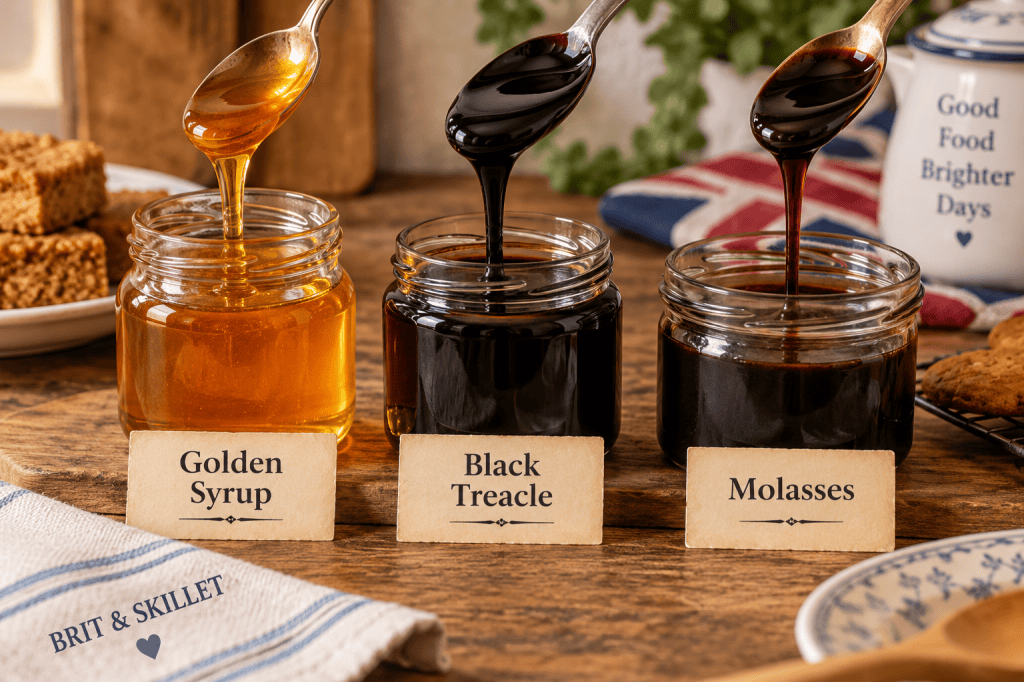
    In the UK, the two varieties you’re most likely to encounter are golden syrup and black treacle. Golden syrup is light in color with a buttery, caramel-like sweetness, while black treacle is much darker and has a stronger, slightly bitter flavor.

    Black treacle is especially useful in rich desserts and baked goods where you want a deep color and robust flavor. You may find it in recipes for gingerbread, fruit cakes, sticky puddings, and other traditional British treats.

    If a British recipe simply calls for “treacle,” pay attention to the recipe and its appearance. A pale, sweet syrup usually means golden syrup, while a dark, strongly flavored syrup generally means black treacle.

    What Is Molasses?

    Molasses is a thick, dark syrup produced during the process of refining sugar. It’s especially familiar in American baking, where it appears in recipes such as gingerbread, molasses cookies, baked beans, and barbecue sauces.

    Molasses comes in different varieties, ranging from relatively mild and sweet to very dark and intensely flavored. In general, its flavor is deeper and more robust than golden syrup.

    You may also come across blackstrap molasses. Blackstrap has a particularly strong, bitter flavor, so it isn’t automatically the best substitute when a British recipe calls for black treacle.

    Regular dark molasses is usually a closer match for black treacle, although the flavor still won’t be exactly the same. If you’re trying to recreate a traditional British recipe as closely as possible, using the ingredient specified in the original recipe is usually the safest choice.

    What Is Golden Syrup?

    Golden syrup is a thick, amber-colored sugar syrup with a smooth texture and a mild, buttery caramel flavor. It’s a familiar ingredient in British kitchens and appears in everything from flapjacks and biscuits to cakes, puddings, and treacle tart.

    Compared with molasses or black treacle, golden syrup is much lighter in both color and flavor. It adds sweetness and a subtle caramel note without giving baked goods the strong, slightly bitter taste associated with darker syrups.

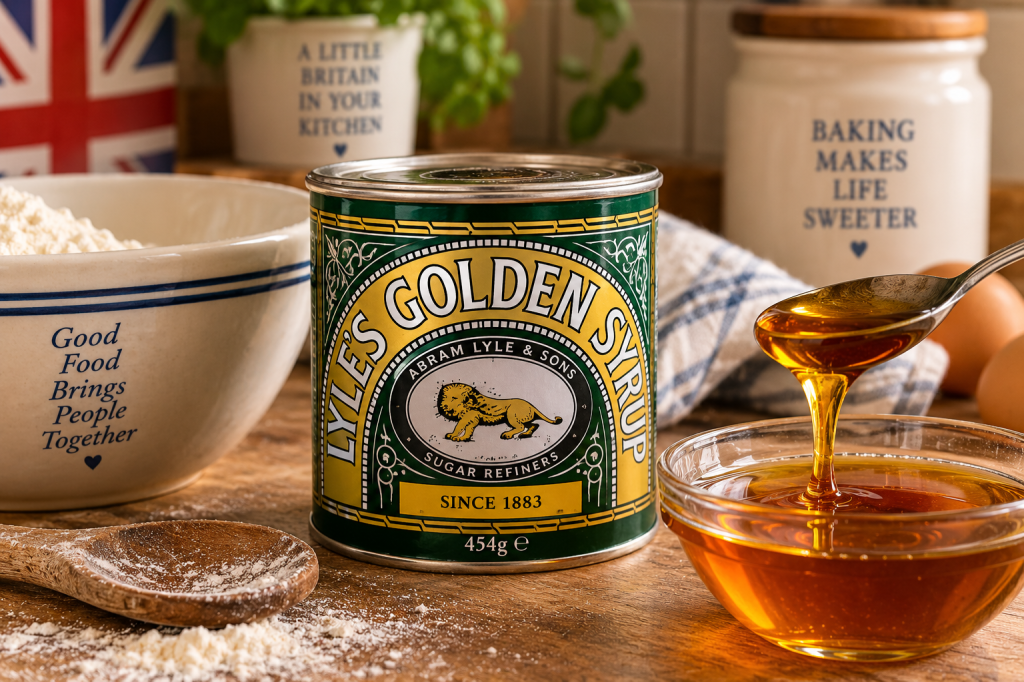
    One of the best-known varieties is Lyle’s Golden Syrup, recognizable by its traditional green-and-gold packaging. American bakers can often find golden syrup in international food sections, specialty British shops, or online.

    If you’re in the United States and wondering where to find it, see our guide Golden Syrup in America: What to Buy and Where to Find It.

    Treacle vs. Molasses vs. Golden Syrup: The Main Differences

    The easiest way to understand these three syrups is to compare their color, flavor, and typical uses.

    Golden syrup is light amber in color and has a mild, buttery caramel flavor. It works especially well in flapjacks, biscuits, cakes, puddings, and treacle tart.

    Black treacle is much darker and has a richer, stronger flavor with a slightly bitter edge. It’s commonly used in darker cakes, gingerbread, sticky puddings, and other rich British desserts.

    Molasses is also dark and strongly flavored, making it the closest commonly available American alternative to black treacle. However, the exact flavor depends on the type of molasses you buy.

    Blackstrap molasses is the strongest and most bitter of the group. Because of its intense flavor, it shouldn’t automatically be substituted for black treacle or regular molasses in a recipe.

    Quick rule of thumb: If a British recipe calls for golden syrup, use golden syrup when possible. If it calls for black treacle and you can’t find it, regular dark molasses may be a reasonable substitute. Avoid assuming blackstrap molasses will give you the same result.

    Can You Substitute Molasses for Treacle?

    Sometimes—but it depends on which type of treacle the recipe calls for.

    If a British recipe calls for black treacle, regular dark molasses can often be used as a substitute. The flavors aren’t identical, but both provide the dark color and deep sweetness needed in recipes such as gingerbread, fruit cakes, and sticky puddings.

    If the recipe calls for golden syrup, molasses isn’t a particularly good substitute. Molasses is much darker and has a stronger flavor, so it can noticeably change both the taste and appearance of the finished dish.

    For golden syrup, a mild alternative such as light corn syrup or honey may work better when genuine golden syrup isn’t available, although each substitute will produce a slightly different result.

    When making a traditional British recipe for the first time, it’s worth using the original ingredient if you can find it. Once you know how the recipe is supposed to taste and behave, experimenting with substitutions becomes much easier.

    Which One Should You Buy?

    If you enjoy making British recipes, keeping both golden syrup and a darker syrup in your pantry can be useful.

    For recipes such as flapjacks, treacle tart, biscuits, and many traditional puddings, golden syrup is the one you’re likely to reach for most often. Its mild caramel flavor makes it versatile for both baking and desserts.

    Black treacle is worth having if you plan to make richer British recipes such as gingerbread, dark fruit cakes, or sticky puddings. If black treacle is difficult to find in the United States, regular dark molasses can often serve as a practical alternative.

    If you’re just beginning to explore British baking, golden syrup is probably the best one to buy first. You’ll be able to use it in plenty of recipes—and, of course, it gives you the perfect excuse to make a batch of British flapjacks.

    Bringing British Baking Into Your American Kitchen

    Treacle, molasses, and golden syrup may look similar on the pantry shelf, but each brings something different to a recipe. Golden syrup offers a light caramel sweetness, black treacle provides a deeper and more robust flavor, and molasses gives American bakers a useful alternative for many darker British recipes.

    Once you understand the differences, British recipes become much less mysterious. Instead of wondering what to substitute, you can choose the syrup that best matches the flavor and texture the recipe is meant to have.

    If you’re new to British baking, golden syrup is a great place to start. Try it in a batch of traditional British flapjacks, then branch out into treacle tarts, sticky puddings, gingerbread, and other British favorites.

    And if you’re having trouble finding golden syrup in the United States, read our Golden Syrup in America: What to Buy and Where to Find It guide for more help.
  • Golden Syrup in America: What to Buy and Where to Find It

    Golden Syrup in America: What to Buy and Where to Find It

    If you’ve ever tried making a traditional British recipe in America, you may have come across one ingredient that can be surprisingly confusing: golden syrup.

    Golden syrup is a thick, amber-colored syrup with a rich, buttery caramel flavor. It’s a staple in many British kitchens and appears in everything from flapjacks and puddings to cakes and biscuits. The good news is that you can find golden syrup in the United States—you just need to know what to look for.

    In this guide, we’ll look at what golden syrup is, how it differs from common American syrups, where you can buy it, and what you can use if you can’t find the real thing.

    Affiliate disclosure: This post may contain affiliate links. If you make a purchase through one of these links, I may earn a small commission at no additional cost to you.

    What Is Golden Syrup?

    Golden syrup is a thick, smooth sugar syrup with a distinctive golden color and a mild caramel flavor. It has been a familiar ingredient in British baking for generations.

    Unlike maple syrup, golden syrup doesn’t taste like maple, and unlike honey, it doesn’t have a floral flavor. Its rich sweetness and thick texture make it especially useful in baked goods where it adds both flavor and chewiness.

    One of the best-known brands is Lyle’s Golden Syrup, recognizable by its classic green-and-gold packaging. It’s commonly used in British recipes such as flapjacks, steamed puddings, cakes, biscuits, and treacle tart.

    Is Golden Syrup the Same as Corn Syrup?

    No. Although golden syrup and corn syrup can look similar, they are different products.

    Golden syrup is made from sugar and has a noticeable caramel-like flavor. Light corn syrup is made primarily from corn starch and has a much milder, more neutral sweetness.

    Corn syrup can sometimes work as a substitute when a recipe mainly needs sweetness and moisture, but it won’t give a traditional British bake quite the same flavor.

    What About Maple Syrup or Honey?

    Maple syrup and honey can also work in certain recipes, but both bring their own distinctive flavors. They may also behave differently because their consistency and moisture content can vary.

    For classic British recipes such as flapjacks or treacle tart, using genuine golden syrup will usually give you the most traditional result.

    Where to Buy Golden Syrup in America

    Golden syrup isn’t as common in American supermarkets as it is in Britain, but it has become much easier to find.

    British and International Food Stores

    If you have a British or international grocery store nearby, this is a great place to start. Look in the baking aisle or the section devoted to imported British foods.

    Larger Grocery Stores

    Some larger supermarkets carry imported golden syrup in their international-food or baking sections. Availability varies by location, so it’s worth checking the store’s website before making a special trip.

    Online

    Buying golden syrup online can be one of the easiest options, particularly if you don’t have a British food shop nearby. Lyle’s Golden Syrup is widely sold online in both tins and squeeze bottles.

    Tip: When shopping online, check the container size and price before ordering. Imported foods can vary considerably in price between sellers.

    Which Golden Syrup Should You Buy?

    For someone trying a traditional British recipe for the first time, Lyle’s Golden Syrup is an easy choice because it is the classic product called for in many British recipes.

    The traditional tin is iconic, while the squeeze bottle can be more convenient for measuring and everyday use. The best choice really comes down to how you plan to use it.

    What Can You Make With Golden Syrup?

    Once you have a jar or tin of golden syrup in the cupboard, there are plenty of ways to use it. It is especially useful in traditional British baking.

    Some popular ideas include:

    • British flapjacks
    • Treacle tart
    • Sticky puddings
    • Biscuits and cookies
    • Cakes and loaf cakes
    • Homemade granola
    • Drizzling over pancakes, waffles, or porridge

    If you’re new to British baking, flapjacks are one of the easiest places to start. They require only a handful of ingredients and really showcase the distinctive flavor of golden syrup.

    How to Store Golden Syrup

    Golden syrup is easy to keep in the pantry. Store it tightly closed in a cool, dry place away from direct sunlight.

    Because the syrup is naturally very thick, it may become even thicker when kept somewhere cold. Keeping it at normal room temperature generally makes it easier to pour and measure.

    Always check the packaging for the manufacturer’s current storage instructions.

    What Can You Substitute for Golden Syrup?

    If you can’t find golden syrup, you may be able to substitute another liquid sweetener depending on the recipe.

    Light corn syrup is relatively neutral in flavor, while honey adds a more distinctive taste. Maple syrup is another possibility for some recipes, although its flavor and thinner consistency can noticeably change the finished result.

    For recipes where golden syrup is a major part of the flavor—particularly traditional British bakes—it is worth seeking out the real thing if you can.

    Bringing a Little Britain Into Your Kitchen

    Golden syrup may not be an everyday American pantry ingredient, but it opens the door to all sorts of classic British treats.

    If you’re curious about British baking, a tin or bottle of golden syrup is a useful ingredient to have on hand. Start with a batch of traditional flapjacks, then explore some of the other British recipes that use this distinctive syrup.

    And if you’ve ever stood in an American grocery store wondering what on earth a British recipe means by “golden syrup,” now you know exactly what you’re looking for.

  • British Flapjacks: The Easy Oat Treat Americans Need to Try

    British Flapjacks: The Easy Oat Treat Americans Need to Try

    If you grew up in Britain, chances are you know exactly what a flapjack is: a chewy, buttery oat bar held together with golden syrup. But in America, “flapjack” usually means a pancake. So consider this your introduction to the British kind — simple, comforting, and dangerously easy to make.

    Affiliate disclosure: This post may contain affiliate links. If you make a purchase through one of these links, I may earn a small commission at no additional cost to you.

    What Is a British Flapjack?

    A British flapjack is an oat bar traditionally made with oats, butter, brown sugar and golden syrup. The mixture is baked until golden, then sliced into squares or rectangles. Depending on how long you bake them, flapjacks can be wonderfully soft and chewy or a little firmer around the edges.

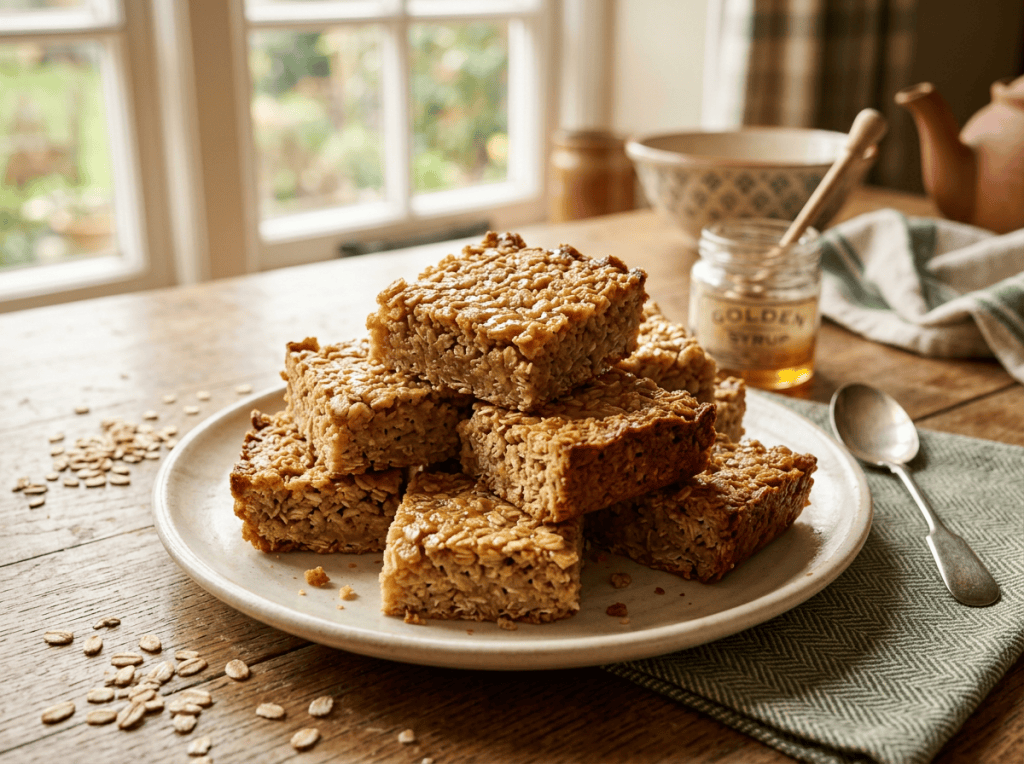
    Stack of golden oat bars on a plate beside syrup jar
    Golden oat bars are stacked on a plate beside syrup, oats, and a spoon in a sunlit kitchen.

    Classic British Flapjack Recipe

    Ingredients

    2 cups (180 g) rolled oats
    ½ cup (113 g) unsalted butter
    ⅓ cup (70 g) packed light brown sugar
    3 tablespoons (60 g) golden syrup
    Pinch of salt

    Instructions

    1. Preheat the oven to 350°F (175°C). Line an 8-inch (20 cm) square baking pan with parchment paper.
    2. Add the butter, brown sugar and golden syrup to a saucepan. Heat gently, stirring until the butter has melted and everything is smooth. Don’t let it boil.
    3. Remove the pan from the heat. Stir in the rolled oats and a pinch of salt until all the oats are thoroughly coated.
    4. Spoon the mixture into the prepared baking pan. Press it down firmly and evenly with the back of a spoon.
    5. Bake for about 20–25 minutes, until the edges are golden brown. For softer, chewier flapjacks, don’t let them get too dark.
    6. Remove from the oven and let them cool in the pan for about 10 minutes. While still warm, lightly score into squares.
    7. Allow the flapjacks to cool completely before removing them from the pan and cutting.

    Serving Ideas

    British flapjacks are perfect with a cup of tea or coffee. Enjoy them plain, or try adding a drizzle of chocolate, a handful of raisins, or a few chopped nuts for a simple variation.

    Golden Syrup in America: What to Buy and What to Substitute

    Golden syrup is one of the ingredients that gives a traditional British flapjack its distinctive buttery, caramel-like flavor. If you grew up in Britain, you probably recognize the familiar green-and-gold tin of Lyle’s Golden Syrup.

    The good news is that golden syrup is much easier to find in the United States than it used to be. Look in the international or baking aisle of larger supermarkets, British specialty shops, or online.

    If you can’t find golden syrup, honey or maple syrup can work in a pinch, but the flavor will be different. For the most traditional British-style flapjack, golden syrup is worth seeking out.

    Tips for Perfect British Flapjacks

    For softer flapjacks: Take them out when the edges are golden but the center still looks slightly soft. They will firm up as they cool.

    For firmer flapjacks: Bake them a few minutes longer, watching carefully so the edges don’t burn.

    Press the mixture firmly into the pan: This helps the flapjacks hold together when sliced.

    Don’t cut them immediately: Score the flapjacks while they’re warm, but wait until they’re completely cool before cutting them into individual bars.

    Use rolled oats: Old-fashioned rolled oats give the best traditional texture. Quick oats can produce a softer, less distinctive flapjack.

    How to Store Flapjacks

    Once completely cool, store the flapjacks in an airtight container at room temperature. They’re best enjoyed within about a week. Place parchment paper between layers if you’re stacking them.

    A Little Taste of Britain at Home

    British flapjacks are proof that some of the best treats are also the simplest. With just a handful of ingredients, you can make a chewy, buttery oat bar that feels right at home with an afternoon cup of tea. Whether you grew up eating flapjacks or you’re trying them for the first time, this classic British bake is an easy recipe worth keeping.