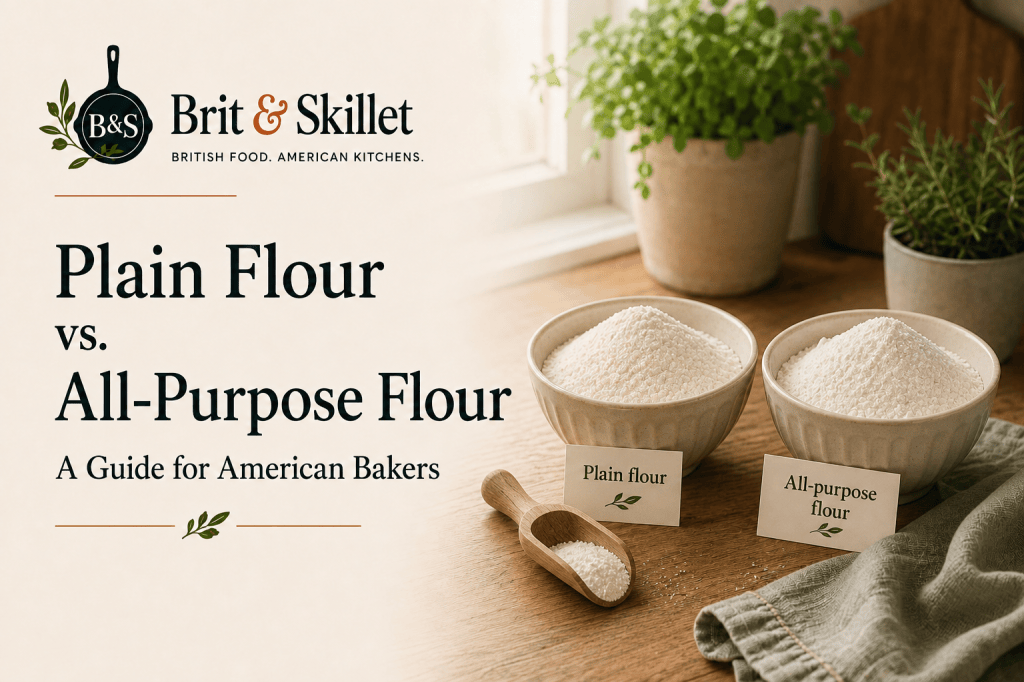
A British recipe asks for plain flour. Your American cupboard contains all-purpose flour. Can you use what you already have?
For many everyday recipes, all-purpose flour is the closest practical American equivalent. But the names don’t guarantee that every bag will behave identically.
Flour varies between brands and countries, including in its protein content—a detail that can affect the texture of cakes, pastry, and other bakes.
In this guide, we’ll explain what British recipes mean by plain flour, how it compares with American all-purpose flour, and what to check before making a substitution.
We’ll also clear up one distinction straight away: plain flour and self-raising flour are different products. Choosing the right bag matters more than whether it has a British or American name.
Brit & Skillet tip: Before buying imported flour, check the bag already in your cupboard. American all-purpose flour is often a sensible starting point when a British recipe asks for plain flour. Save the special shopping trip for an ingredient you actually need—and perhaps a packet of biscuits.
Affiliate disclosure: Brit & Skillet may earn a commission from qualifying purchases made through links on this page, at no additional cost to you.
What Is Plain Flour?
In British baking, “plain flour” usually means white wheat flour without added raising agents.
It’s used in everything from cakes and biscuits to pastry and sauces. The word “plain” doesn’t mean it’s low quality or missing something—it simply distinguishes it from self-raising flour.
Does Plain Flour Make a Cake Rise?
Plain flour doesn’t contain added baking powder. Depending on the recipe, the lift may come from separately added raising agents, beaten eggs, yeast, or another part of the method.
That’s why it’s important to read the whole ingredient list. A recipe asking for plain flour and baking powder has already accounted for them separately.
Is It the Same as American All-Purpose Flour?
American all-purpose flour fills a similar role and is often the practical substitute for British plain flour.
However, the names describe broad categories rather than one identical formula. Different brands can use different wheat blends and have different protein levels, which can affect how a bake turns out.
Our pick for American bakers: King Arthur Unbleached All-Purpose Flour is a dependable choice when a British recipe calls for plain flour and you need an American all-purpose flour.
We’ll explain that difference next, without turning your kitchen into a flour-testing laboratory.
What About Wholemeal Flour?
British “wholemeal flour” generally corresponds to American whole-wheat flour. It includes parts of the grain removed when making refined white flour.
It isn’t simply another name for plain white flour, and replacing one with the other can change the texture and liquid needs of a recipe.
Brit & Skillet tip: When a recipe says “plain flour,” check that your bag doesn’t say “self-rising.” The names may sound equally ordinary, but only one comes with the raising agents already invited to the party.
Plain Flour vs. All-Purpose Flour: Why Protein Content Matters
British plain flour and American all-purpose flour do similar jobs, but their protein content can differ.
That helps explain why the same recipe may produce a slightly different texture when you change flour brands—even when you weigh everything carefully.
What Does the Protein Do?
When wheat flour is mixed with water, certain proteins can form gluten. This network gives dough structure and elasticity.
How much gluten develops depends on more than the flour alone. Mixing, hydration, resting, and other ingredients all play a part.
Why Different Bakes Need Different Structure
Bread dough benefits from enough strength to stretch and hold gas as it rises.
For a tender cake or delicate pastry, you generally want less gluten development. That’s one reason recipes use different flours and mixing methods for different jobs.
More protein doesn’t automatically mean better flour. It means flour with different characteristics.
The Country Name Doesn’t Tell You Everything
Some American all-purpose flours have more protein than some British plain flours, but there’s variation within both categories.
Avoid assuming that every British bag is softer or every American bag is stronger. If the manufacturer provides a protein percentage, that gives you more information than the category name alone.
What Does This Mean for Your Recipe?
For many everyday bakes, all-purpose flour remains a sensible starting point when a British recipe asks for plain flour.
If a delicate cake or pastry turns out tougher than expected, flour choice is one detail to consider alongside measuring and mixing. It isn’t automatically the only cause.
Brit & Skillet tip: If you like how a particular flour performs, make a note of the brand. “The flour that worked beautifully last time” is useful information—provided you remember which bag it was.
Can You Substitute All-Purpose Flour for Plain Flour?
For many everyday British recipes, American all-purpose flour is a practical substitute for plain flour.
Start with the recipe’s stated weight, then follow its method carefully. You don’t need to change the quantity simply because your bag uses American wording.
Keep the Measurements in Grams
If a recipe asks for 200 grams of plain flour, weigh out 200 grams of all-purpose flour.
Converting to cups introduces another variable because the amount of flour in a cup depends on how you fill it.
For help understanding those differences, see How to Convert British Baking Measurements for American Recipes.
Keep Separately Listed Raising Agents
If the recipe calls for plain flour plus baking powder or bicarbonate of soda, keep those ingredients as directed when using ordinary all-purpose flour.
All-purpose flour doesn’t normally contain added raising agents. Check that you haven’t picked up self-rising flour instead.
Follow the Texture Cues
Pay attention when a recipe describes a soft dough, a crumbly mixture, or a particular batter consistency.
Different flours can absorb liquid differently, but don’t immediately add extra flour or liquid because a mixture looks unfamiliar. Read the recipe’s notes and allow for any resting time first.
Know When to Be More Particular
For a delicate bake, or a recipe that specifies a particular flour, check the author’s substitution advice.
All-purpose flour is a useful starting point—not a promise that every flour will produce an identical result in every recipe.
Brit & Skillet tip: On your first attempt, keep changes to a minimum. Switching the flour, reducing the sugar, and changing the tin all at once makes it rather difficult to work out who caused the trouble.
Plain Flour vs. Self-Raising Flour: Don’t Mix Them Up
Plain flour and self-raising flour may sit beside each other on the shelf, but they aren’t interchangeable without adjusting the recipe.
Plain flour has no added raising agents. Self-raising flour has them mixed in already.
Check the Whole Ingredient List
A recipe might ask for plain flour and a separate quantity of baking powder. Another might use self-raising flour.
Follow the combination given. Substituting self-raising flour while also adding all the separately listed raising agents can change how the mixture rises and sets.
Some recipes intentionally use self-raising flour with additional baking powder, so don’t remove an ingredient simply because it looks unnecessary.
British “Self-Raising” and American “Self-Rising”
The spelling is only part of the difference.
American self-rising flour commonly contains salt as well as baking powder. British self-raising flour generally contains raising agents without added salt, though you should check the particular product.
The flour itself and the proportions of added ingredients can also vary.
Can You Make Your Own?
You can combine plain or all-purpose flour with raising agents when following a suitable substitution formula.
Use the recipe author’s instructions where available. Don’t guess the baking-powder quantity or assume one homemade blend will match every commercial product.
Already Used the Wrong Bag?
If you notice before combining the ingredients, start again with the correct flour.
If everything is already mixed, there may not be a reliable way to correct it by adding a little more of something. Check the recipe’s troubleshooting advice before trying to rescue the mixture.
Brit & Skillet tip: Store plain and self-raising flour in clearly labelled containers. They look remarkably similar at seven in the evening when you’re convinced you can get a cake in the oven before dinner.
What About Cake Flour and Bread Flour?
American baking aisles offer other flour choices, including cake flour and bread flour. Neither is a direct translation of British plain flour.
They’re made for different baking needs, so choosing one simply because it sounds more specialised won’t necessarily improve your recipe.
Cake Flour
Cake flour generally has less protein than all-purpose flour and is designed to support a tender texture in suitable recipes.
That doesn’t mean every British cake recipe needs it. A recipe developed with plain flour may rely on the structure that flour provides.
If you’re considering cake flour, look for a substitution tested by the recipe author.
Bread Flour
Bread flour generally has more protein than all-purpose flour, helping dough develop the strength needed for many breads.
British recipes may call it “strong white flour” or “strong bread flour.”
It isn’t the usual first choice when a cake or delicate pastry recipe asks for plain flour. Extra strength can be useful in a loaf but less welcome in a tender bake.
The Name Describes a Purpose
Think of these labels as clues about how the flour is intended to perform:
- Plain or all-purpose flour: versatile flour for a range of recipes
- Cake flour: formulated for tender cakes in recipes suited to it
- Bread or strong flour: formulated for doughs that benefit from greater strength
There’s variation between brands, so follow the recipe’s flour specification whenever possible.
Brit & Skillet tip: “Strong flour” isn’t a compliment and “plain flour” isn’t an insult. They’re different tools for different jobs—rather like your bread knife and your favourite wooden spoon.
How to Choose Flour for a British Recipe
You don’t need to study every bag in the baking aisle. Start with what the recipe asks for, then check a few useful details.
Read Beyond the Recipe Title
A British cake might call for plain flour, self-raising flour, or another flour entirely. Don’t choose based only on what you’re baking.
Read the ingredient list and any notes about substitutions before you shop.
Check the Bag Carefully
Look for the flour type and whether it contains added raising agents or salt.
If the manufacturer provides information about protein content or suggested uses, that can help you compare products. There’s no need to guess an exact protein percentage from rounded nutrition-label numbers.
Start With What’s Available Locally
When a recipe asks for plain white flour, ordinary American all-purpose flour is often a practical starting point.
An imported bag may be useful for a particular recipe or preference, but its country of origin alone doesn’t guarantee a better result.
Keep a Short Baking Note
After baking, jot down the flour brand, any substitutions, and how the result turned out.
If you decide to try another flour next time, keep the other ingredients and method as consistent as possible. That makes the comparison more useful.
Brit & Skillet tip: A quick note saying “used this flour; lovely texture” is enough. You’re making a cake, not submitting a dissertation—although the tasting panel may take its responsibilities very seriously.
British and American Flour Names at a Glance
Use this table as a starting point when reading British recipes. These are practical comparisons, rather than guarantees that every product has an identical formula.
| British recipe says | American product to consider | What to check |
|---|---|---|
| Plain white flour | All-purpose flour | Protein content and performance can vary between brands |
| Self-raising flour | Self-rising flour, with care | Added salt, raising agents, and the recipe’s substitution instructions |
| Strong white flour | Bread flour | Choose a product suited to the recipe |
| Wholemeal flour | Whole-wheat flour | Follow the recipe’s directions; don’t automatically substitute it for white flour |
Where Does Cake Flour Fit?
American cake flour isn’t a direct translation of British plain flour. Use it when the recipe specifies it or provides a tested substitution.
Check Ingredients as Well as Names
The most important distinction is often whether the flour contains added raising agents. Confirm that first, then consider the flour’s intended use.
For more help translating ingredients and instructions, read British Baking Terms Explained: A Guide for American Bakers.
Brit & Skillet tip: Keep this table handy, but let the recipe have the final word. A useful translation gets you to the right shelf; the ingredient list helps you choose the right bag.
Which Flour Should You Use?
For many British recipes calling for plain white flour, American all-purpose flour is a sensible starting point.
Want a reliable option? See King Arthur Unbleached All-Purpose Flour at King Arthur Baking →
Use the stated weight, keep separately listed raising agents as directed, and follow the recipe’s mixing method. If the author specifies a particular flour or offers substitution advice, use that guidance.
Remember that plain flour, self-raising flour, cake flour, and bread flour have different characteristics. Choosing between them is about what the recipe needs—not which bag sounds most impressive.
You don’t need a cupboard full of imported ingredients to start British baking. A little label-reading and attention to the recipe can take you a long way.
Brit & Skillet tip: When a bake turns out beautifully, save the recipe and note the flour you used. Your future self will appreciate more detail than “the bag with the thing on it.”
British food. American kitchens. One less mystery in the flour aisle.
 Brit & Skillet