Tag: british pies

  • Traditional British Chicken and Leek Pie: An Easy Recipe for American Kitchens

    Traditional British Chicken and Leek Pie: An Easy Recipe for American Kitchens

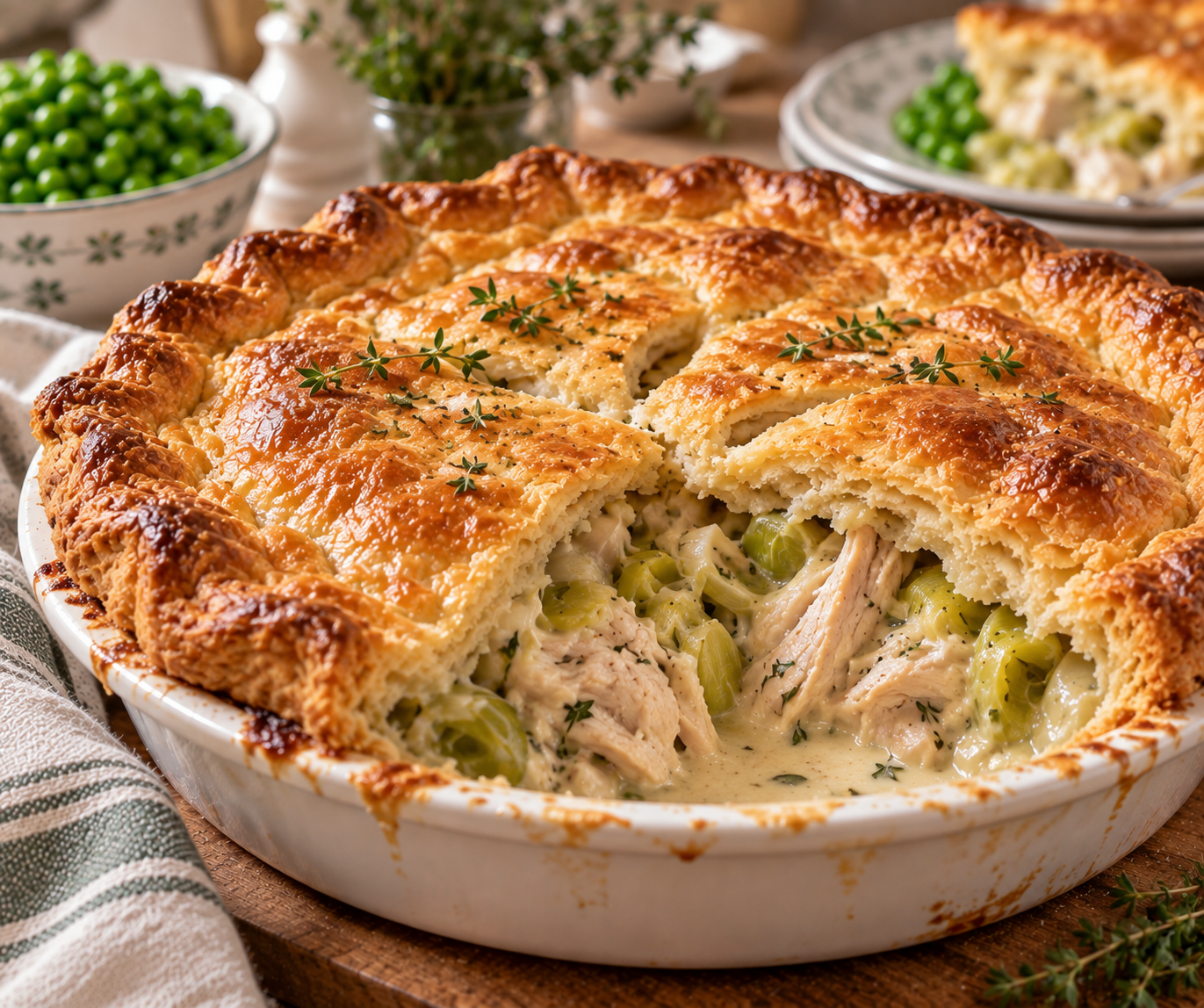
    Chicken and leek pie is British comfort food at its best.

    Tender pieces of chicken and sweet, softened leeks are folded into a creamy herb sauce, then tucked beneath a crisp, golden layer of puff pastry.

    It’s rich without being overly heavy, familiar without being boring and exactly the sort of dinner that feels right when the evenings start getting colder.

    Chicken and leek is also one of those flavour combinations that appears again and again in British cooking. Leeks have a gentler, sweeter flavour than ordinary onions, which makes them particularly good with chicken and cream.

    For American cooks, there’s nothing especially difficult about making a proper chicken and leek pie. You can use chicken thighs or breasts, ordinary American chicken broth and store-bought frozen puff pastry.

    The biggest trick is simply allowing the filling to cool before putting the pastry on top.

    Here’s how to make a classic British-style chicken and leek pie in an American kitchen.

    What Is British Chicken and Leek Pie?

    Chicken and leek pie is a savoury British pie filled with chicken and leeks in a creamy sauce.

    Some versions are completely enclosed in pastry, while others — including ours — use a pastry lid over a pie dish filled with the chicken mixture.

    Using pastry only on top makes the recipe considerably easier and allows us to use store-bought puff pastry without worrying about a soggy pastry base.

    The filling usually includes chicken stock, cream and herbs.

    You’ll also find variations containing bacon, ham, mushrooms, mustard or cheese.

    We’re keeping this version relatively simple so the chicken and leeks remain the stars.

    What Do Leeks Taste Like?

    Leeks belong to the same family as onions and garlic, but their flavour is milder and slightly sweeter.

    Once slowly cooked in butter, they become beautifully soft.

    That’s why they work so well with chicken.

    American supermarkets usually sell leeks individually or in bunches in the produce section.

    Look for leeks with firm white stalks and fresh-looking green tops.

    Which Part of a Leek Do You Eat?

    For this pie, use the white and pale green portions.

    The dark green leaves are considerably tougher.

    Don’t necessarily throw those away — they’re excellent for flavouring homemade stock.

    Trim off the roots and dark green tops before slicing the remaining leek.

    How Do You Clean Leeks?

    Leeks have layers that can trap quite a surprising amount of dirt and grit.

    After trimming them, slice the leeks lengthwise and rinse thoroughly between the layers.

    Alternatively, slice them first, place the pieces in a large bowl of cold water and swish them around.

    Allow the dirt to sink to the bottom, then lift the leeks out rather than pouring everything through a colander and dumping the grit back over them.

    Should I Use Chicken Thighs or Chicken Breasts?

    Either works.

    I prefer boneless, skinless chicken thighs because they stay juicy and tender in the creamy filling.

    Chicken breasts produce a slightly leaner pie but can dry out more easily.

    If using breasts, be especially careful not to overcook them during the initial cooking stage because they’ll continue cooking in the oven.

    Can I Use Leftover Roast Chicken?

    Absolutely.

    Chicken and leek pie is an excellent way to use leftover roast chicken.

    You’ll need approximately 3 cups (450–500 g) of cooked chicken, cut or torn into bite-sized pieces.

    Skip the initial chicken-cooking step and add the cooked chicken once you’ve made the sauce.

    It’s also a wonderful use for leftover rotisserie chicken.

    What Puff Pastry Should Americans Use?

    Frozen puff pastry from an American supermarket works perfectly well.

    Brands vary in size and thickness, so don’t worry if your pastry sheet doesn’t exactly match the dimensions given in a British recipe.

    You simply need enough pastry to cover the top of your baking dish with a small amount of overhang.

    Thaw it according to the package directions, but keep it cold until you’re ready to use it.

    Warm puff pastry becomes soft and difficult to handle.

    Traditional British Chicken and Leek Pie Recipe

    Prep Time: 30 minutes
    Cooling Time: 20–30 minutes
    Bake Time: 30–35 minutes
    Serves: 6

    Equipment

    • Large skillet or Dutch oven
    • 9-inch (23 cm) deep pie dish or approximately 2-quart baking dish
    • Cutting board
    • Sharp knife
    • Wooden spoon
    • Pastry brush

    Ingredients

    For the Filling

    • 1½ lb (680 g) boneless, skinless chicken thighs or breasts
    • 1 teaspoon fine salt, divided
    • ½ teaspoon freshly ground black pepper
    • 1 tablespoon olive or neutral oil
    • 3 tablespoons (42 g) unsalted butter
    • 2 large leeks, white and pale green portions only, thoroughly cleaned and sliced
    • 2 garlic cloves, minced
    • ¼ cup (30 g) all-purpose flour
    • 1½ cups (360 ml) chicken stock or broth
    • ½ cup (120 ml) heavy cream
    • 1 teaspoon Dijon mustard
    • 1 teaspoon dried thyme or 1 tablespoon fresh thyme leaves
    • 2 tablespoons chopped fresh parsley
    • ½ teaspoon Worcestershire sauce, optional

    For the Pastry

    • 1 sheet frozen puff pastry, approximately 8–10 oz (225–285 g), thawed according to package directions
    • 1 large egg
    • 1 tablespoon water

    Instructions

    1. Prepare the Chicken

    Cut the chicken into irregular bite-sized pieces, approximately 1½ inches (4 cm) across.

    Season with about ½ teaspoon of the salt and the black pepper.

    Brit & Skillet Tip

    Don’t cut the chicken into lots of perfectly tiny cubes.

    Slightly larger, irregular pieces stay juicier during cooking and give the finished pie a much more satisfying homemade texture.

    2. Brown the Chicken

    Heat the oil in a large skillet or Dutch oven over medium-high heat.

    Add the chicken in a single layer.

    Cook for approximately 4–5 minutes, turning occasionally, until lightly browned.

    The chicken doesn’t need to be completely cooked through at this point.

    Transfer it to a plate.

    3. Cook the Leeks

    Reduce the heat to medium-low.

    Add the butter to the same pan.

    Once melted, add the sliced leeks and remaining salt.

    Cook gently for approximately 8–10 minutes, stirring occasionally.

    The leeks should become soft and sweet without developing much colour.

    Add the garlic and cook for another 30 seconds.

    Brit & Skillet Tip

    Don’t rush the leeks.

    Cooking them gently rather than aggressively frying them brings out their natural sweetness and gives the filling its characteristic flavour.

    4. Add the Flour

    Sprinkle the flour over the softened leeks.

    Stir thoroughly and cook for approximately 1–2 minutes.

    The mixture will look quite thick.

    This flour will eventually thicken the chicken stock and cream into our pie sauce.

    5. Add the Chicken Stock

    Gradually pour in the chicken stock while stirring continuously.

    Add a little at first and stir until smooth before adding more.

    This helps prevent lumps.

    Once all the stock has been incorporated, bring the mixture to a gentle simmer.

    6. Add the Cream and Seasonings

    Stir in the heavy cream, Dijon mustard, thyme and optional Worcestershire sauce.

    Return the chicken and any juices on the plate to the pan.

    Simmer gently for approximately 5–7 minutes, stirring occasionally.

    The sauce should become creamy and thick enough to coat the chicken.

    Stir in the parsley.

    Taste and adjust the salt and pepper if necessary.

    How Thick Should the Filling Be?

    The sauce should be thicker than an ordinary cream sauce.

    Drag your wooden spoon through the pan.

    You should briefly be able to see the bottom before the sauce flows back into place.

    Remember that the filling will loosen slightly as the chicken and leeks release moisture in the oven.

    If it seems watery now, continue simmering for another few minutes.

    7. Transfer to the Pie Dish

    Spoon the filling into your pie dish or baking dish.

    Spread it evenly.

    Now leave it to cool for approximately 20–30 minutes.

    It doesn’t need to become refrigerator-cold, but it shouldn’t be steaming hot when the pastry goes on.

    Brit & Skillet Tip

    This is one of the most important steps in the entire recipe.

    Putting cold puff pastry directly over piping-hot filling begins melting the butter in the pastry before it reaches the oven.

    That can prevent the pastry from puffing properly.

    Cool filling + cold pastry = a much better pie.

    8. Preheat the Oven

    While the filling cools, preheat the oven to 400°F (200°C).

    9. Add the Puff Pastry

    Keep the puff pastry refrigerated until you’re ready for it.

    Place the pastry over the cooled filling.

    Trim away excessive overhang, leaving approximately ½–1 inch (1–2.5 cm) around the edge.

    Gently press the pastry against the rim of the dish.

    You can crimp the edges with your fingers or a fork if you’d like.

    10. Cut Steam Vents

    Using the tip of a sharp knife, cut 2–3 small slits in the centre of the pastry.

    These allow steam to escape while the pie bakes.

    11. Add the Egg Wash

    Beat the egg with 1 tablespoon of water.

    Brush a thin layer over the puff pastry.

    Avoid allowing large amounts of egg wash to run down the cut edges of the pastry, which can glue the layers together and interfere with the rise.

    12. Bake

    Place the pie on a baking sheet to catch any bubbling filling.

    Bake at 400°F (200°C) for approximately 30–35 minutes.

    The pastry should be well risen, crisp and deeply golden.

    The filling should be bubbling around the edges.

    13. Rest Before Serving

    Let the pie rest for approximately 10 minutes before serving.

    The filling will be extremely hot straight from the oven and will thicken slightly as it rests.

    What Is the Difference Between British Double Cream and American Heavy Cream?

    British double cream contains more fat than American heavy cream and has a thicker consistency.

    But you don’t need to hunt down imported double cream for this recipe.

    Ordinary American heavy whipping cream or heavy cream works perfectly well.

    Because we’re thickening the sauce with flour, the lower fat content isn’t a problem.

    Can I Use Half-and-Half?

    Yes, although the filling won’t be quite as rich.

    You may need to simmer the sauce slightly longer to achieve the proper consistency.

    I wouldn’t recommend ordinary low-fat milk as a direct substitute because the sauce can become too thin.

    Can I Add Bacon?

    Yes.

    Chicken, leek and bacon is another classic combination.

    Cut approximately 4 oz (115 g) bacon into small pieces and cook it in the pan before browning the chicken.

    Remove the crisp bacon, cook the chicken in some of the rendered fat and return the bacon when you add the chicken to the sauce.

    If your bacon is particularly salty, reduce the added salt accordingly.

    Can I Add Mushrooms?

    Absolutely.

    Add approximately 8 oz (225 g) sliced mushrooms after the leeks have softened.

    Cook until the mushrooms release their liquid and begin to brown before continuing with the flour.

    This creates an earthier, more savoury version of the pie.

    Can I Add Peas?

    Yes.

    Stir approximately 1 cup (140 g) frozen peas into the filling immediately before transferring it to the pie dish.

    There’s no need to thaw them first.

    Can I Use Shortcrust Pastry?

    Yes.

    Puff pastry creates the light, flaky top we’re using here, but shortcrust pastry is another traditional option.

    If you prefer a sturdier, more substantial pastry crust, shortcrust works beautifully.

    Why Didn’t My Puff Pastry Rise?

    The most common reasons are:

    • The filling was too hot
    • The pastry became warm before baking
    • The oven wasn’t fully preheated
    • Too much egg wash ran over the pastry edges
    • The pastry was rolled too thinly

    Keep puff pastry cold and put the assembled pie into a properly heated oven as soon as you’ve added the pastry.

    Why Is My Chicken and Leek Pie Watery?

    The filling probably wasn’t thick enough before it went into the pie dish.

    Leeks and chicken can both release additional moisture during baking.

    Make sure the sauce is distinctly thick and creamy before cooling it.

    If you’ve added mushrooms, cook away their excess liquid before adding the flour.

    Why Is My Chicken Dry?

    Chicken breasts are more prone to drying out than thighs.

    Remember that we’re only lightly cooking the chicken before it goes into the sauce because it will continue cooking in the oven.

    If you want the most forgiving option, use boneless skinless chicken thighs.

    Can I Make Chicken and Leek Pie Ahead?

    Yes.

    Prepare the filling up to one day ahead and refrigerate it in the pie dish.

    When you’re ready to bake, add the cold puff pastry and egg wash.

    You may need to add approximately 5–10 minutes to the baking time if the filling is refrigerator-cold.

    Don’t assemble the puff pastry lid a full day ahead because it can absorb moisture from the filling and lose some of its crispness.

    What to Serve With Chicken and Leek Pie

    This pie is lovely with:

    • Mashed potatoes
    • Buttered peas
    • Steamed green beans
    • Roasted carrots
    • Broccoli
    • Simple green salad

    Because the filling is already creamy, you don’t necessarily need additional gravy.

    For a particularly hearty British dinner, serve it with seasonal vegetables and mashed potatoes.

    How to Store Chicken and Leek Pie

    Allow leftovers to cool, then cover and refrigerate for up to approximately 3 days.

    Reheat individual portions in a 350°F (175°C) oven until thoroughly hot.

    The microwave works too, although the puff pastry will lose some of its crispness.

    Can You Freeze Chicken and Leek Pie?

    Yes.

    For the best result, freeze the filling separately before adding the puff pastry.

    Cool the filling completely and transfer it to a freezer-safe container.

    Freeze for up to approximately 3 months.

    Thaw overnight in the refrigerator, place in your pie dish and add fresh puff pastry before baking.

    You can also freeze a fully assembled unbaked pie, but results vary depending on the brand of puff pastry you’re using.

    Can I Use Rotisserie Chicken?

    Yes, and it makes this recipe considerably quicker.

    Use approximately 3 cups (450–500 g) shredded or chopped cooked chicken.

    Make the leek and cream sauce as directed, then stir the cooked chicken into the finished sauce just long enough to warm through.

    Cool before adding the pastry.

    A Proper British Chicken Pie

    There’s something particularly comforting about breaking through a crisp puff-pastry lid and finding a creamy chicken filling underneath.

    Chicken and leek pie isn’t complicated food.

    Its appeal comes from getting a few simple things right: sweet leeks cooked gently in butter, tender chicken, a properly seasoned creamy sauce and pastry that’s allowed to become genuinely crisp and golden.

    And because store-bought puff pastry does most of the difficult work, it’s far easier to make at home than its appearance suggests.

    Serve it with mashed potatoes and peas on a cold evening and you’ve got the sort of uncomplicated British dinner that’s very difficult not to love.

    For more traditional British comfort food, try our Traditional British Steak and Ale Pie, Traditional British Fish Pie, Traditional Cottage Pie, Traditional Lancashire Hotpot and Traditional British Beef and Ale Stew.

    And browse all of our Brit & Skillet Recipes for more British favourites made approachable for American kitchens.
  • Traditional British Steak and Ale Pie: An Easy Recipe for American Kitchens

    Traditional British Steak and Ale Pie: An Easy Recipe for American Kitchens

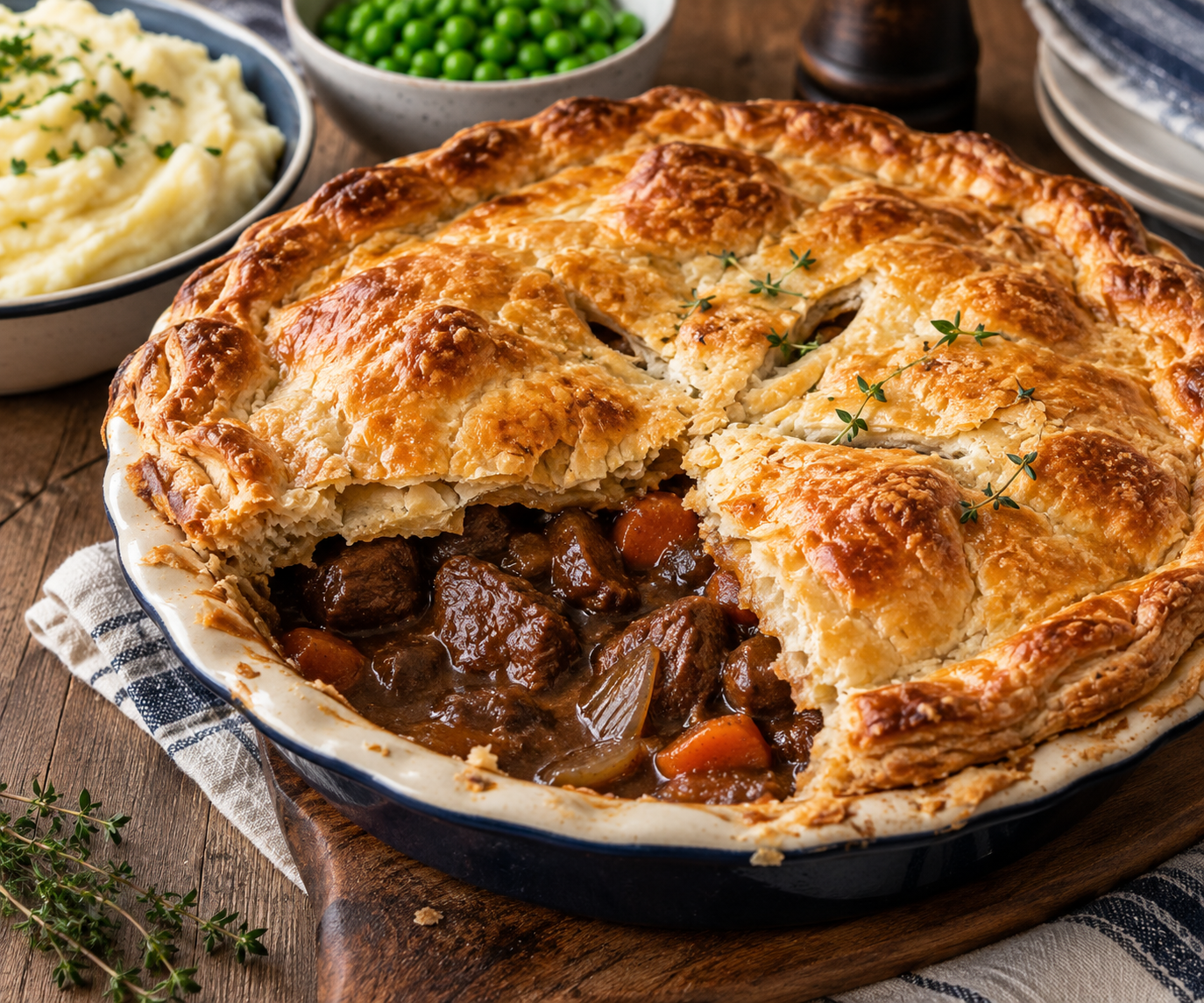
    Few dishes say British pub food quite like a proper steak and ale pie.

    Underneath that crisp, golden pastry is tender beef slowly cooked with onions, carrots and herbs in a rich, deeply savoury ale gravy. It’s hearty, warming and exactly the sort of dinner that feels right when the weather turns cooler.

    And although steak and ale pie sounds unmistakably British, it’s surprisingly straightforward to make with ingredients from an American supermarket.

    The key is choosing the right beef, using an ale that adds flavour without overwhelming the gravy, and giving the filling enough time to cook slowly until the meat becomes beautifully tender.

    For this Brit & Skillet version, we’re using American chuck roast, a readily available substitute for the braising beef you’d commonly see in a British recipe, and finishing the pie with puff pastry for a wonderfully flaky golden top.

    What Is Steak and Ale Pie?

    Steak and ale pie is a traditional British savoury pie made with pieces of beef cooked slowly in a gravy flavoured with ale.

    Onions are almost always included, and recipes may also contain carrots, mushrooms or other vegetables.

    The cooked beef filling is placed in a pie dish and topped with pastry before being baked until crisp and golden.

    It’s a classic pub meal and is particularly good served with mashed potatoes, peas and extra gravy.

    Is Steak and Ale Pie the Same as Steak and Kidney Pie?

    No.

    The two pies are related, but steak and kidney pie includes pieces of kidney alongside the beef.

    Steak and ale pie gets much of its distinctive flavour from the ale in the gravy and doesn’t require kidney.

    That makes it particularly approachable for American cooks who want a classic British beef pie without having to source organ meat.

    What Beef Should I Use in America?

    Despite the word steak in the name, this isn’t the place for an expensive grilling steak.

    You want a cut that becomes tender during slow cooking.

    For American kitchens, chuck roast is ideal.

    Chuck contains enough fat and connective tissue to become wonderfully tender after a long, gentle braise.

    Look for a boneless chuck roast and cut it into approximately 1½-inch pieces.

    Pre-cut beef stew meat can also work, although the cuts included in packaged stew meat can vary.

    What Kind of Ale Should I Use?

    Choose a British-style brown ale, amber ale or another moderately flavoured ale that you’d be happy to drink.

    You want enough maltiness to add depth to the gravy without excessive bitterness.

    Avoid extremely hoppy IPAs. Their bitterness can become more pronounced as the liquid reduces.

    A brown ale is particularly good for a classic steak and ale pie.

    Can I Use Guinness?

    Yes, but technically you’ll be moving from an ale pie toward a steak and stout pie.

    Stout produces a darker gravy with deeper roasted and slightly bitter flavours.

    It’s delicious, but it tastes noticeably different from a pie made with brown or amber ale.

    If you’d like the classic steak-and-ale character, start with brown ale.

    British Beef Stock vs. American Beef Broth

    British recipes frequently call for beef stock, while American supermarkets commonly sell products labelled beef broth.

    For this recipe, a good-quality low-sodium beef broth works perfectly well.

    Using low-sodium broth gives you more control over the seasoning because Worcestershire sauce and the reduced cooking liquid also contribute salt.

    If you have homemade beef stock, that’s excellent too.

    Traditional British Steak and Ale Pie Recipe

    Prep Time: 30 minutes
    Filling Cook Time: 2 hours
    Bake Time: 30–35 minutes
    Serves: 6

    Equipment

    • Large Dutch oven or heavy pot
    • Approximately 2½- to 3-quart pie dish or baking dish
    • Wooden spoon
    • Rolling pin, if needed
    • Pastry brush

    Ingredients

    For the Steak and Ale Filling

    • 2 pounds (900 g) boneless chuck roast, cut into approximately 1½-inch pieces
    • 1 teaspoon fine salt
    • ½ teaspoon freshly ground black pepper
    • 3 tablespoons (24 g) all-purpose flour, divided
    • 1–2 tablespoons neutral oil
    • 2 large yellow onions, sliced
    • 2 medium carrots, sliced
    • 2 cloves garlic, minced
    • 1 tablespoon tomato paste
    • 1 tablespoon Worcestershire sauce
    • 12 fluid ounces (355 ml) brown or amber ale
    • 1½ cups (360 ml) low-sodium beef broth
    • 1 teaspoon dried thyme
    • 1 bay leaf
    • Salt and black pepper, to taste

    For the Pastry

    • Approximately 14–17 ounces (400–490 g) puff pastry, thawed according to package directions
    • 1 large egg
    • 1 tablespoon (15 ml) water

    Instructions

    1. Season the Beef

    Pat the beef dry with paper towels.

    Season with the salt and black pepper.

    Sprinkle with 2 tablespoons of the flour and toss until the pieces are lightly coated.

    2. Brown the Beef

    Heat 1 tablespoon of oil in a large Dutch oven over medium-high heat.

    Brown the beef in batches.

    Don’t crowd the pot.

    Let the pieces develop a good brown crust before turning them.

    Transfer each browned batch to a plate and continue until all the beef has been browned, adding the second tablespoon of oil if necessary.

    The beef doesn’t need to cook through at this stage.

    Brit & Skillet Tip

    Browning the beef is one of the most important flavour-building steps in this recipe.

    If you pile all the meat into the pot at once, it releases moisture and steams rather than browns.

    A few extra minutes spent working in batches makes a noticeable difference to the finished gravy.

    3. Cook the Onions and Carrots

    Reduce the heat to medium.

    Add the onions and carrots to the same pot.

    Cook for approximately 8–10 minutes, stirring occasionally, until the onions have softened and begun to colour.

    Add the garlic and cook for another 30 seconds.

    4. Add the Tomato Paste and Flour

    Stir in the tomato paste and cook for approximately 1 minute.

    Sprinkle over the remaining 1 tablespoon flour and stir well.

    Cook for another minute.

    This small amount of flour helps the gravy thicken as the filling cooks.

    5. Add the Ale

    Slowly pour in the ale while stirring and scraping the bottom of the pot.

    Those browned bits stuck to the bottom contain lots of flavour.

    Allow the ale to simmer for approximately 3–4 minutes.

    6. Build the Gravy

    Add the beef broth, Worcestershire sauce, thyme and bay leaf.

    Return the browned beef and any accumulated juices to the pot.

    Stir everything together.

    The liquid should come most of the way up the beef without necessarily covering it completely.

    Bring to a gentle simmer.

    7. Slowly Cook the Filling

    Reduce the heat to low.

    Cover the pot partially and simmer very gently for approximately 1½–2 hours, stirring occasionally.

    The beef is ready when it’s tender enough to cut easily with a fork.

    If the gravy becomes too thick before the beef is tender, add a small splash of beef broth.

    Brit & Skillet Tip

    Don’t rush chuck roast.

    If the beef still seems tough after 90 minutes, it usually needs more cooking, not less.

    The connective tissue gradually breaks down during slow cooking, turning a relatively tough cut into beautifully tender beef.

    8. Thicken the Gravy

    Once the beef is tender, remove the lid completely.

    Simmer for another 10–15 minutes, if necessary, until the gravy is rich and thick enough to coat the beef.

    It should look like pie filling rather than soup.

    Remove the bay leaf.

    Taste and adjust the salt and pepper.

    9. Cool the Filling

    Transfer the filling to your pie dish.

    Allow it to cool for at least 30–45 minutes before adding the pastry.

    For even better results, you can refrigerate the filling until completely cold.

    Brit & Skillet Tip

    This step matters.

    Putting puff pastry directly over steaming-hot filling begins melting the pastry’s butter before the pie reaches the oven.

    Cool filling helps the pastry stay flaky and rise properly.

    10. Preheat the Oven

    Preheat the oven to 400°F (200°C).

    If your puff pastry needs rolling, lightly flour the work surface and roll it until it’s large enough to cover your pie dish with a little overhang.

    11. Add the Pastry

    Beat the egg with the tablespoon of water to make an egg wash.

    Brush a little egg wash around the rim of the pie dish.

    Lay the puff pastry over the filling.

    Press it gently around the rim to seal.

    Trim away excessive overhang, leaving approximately ½ inch around the edge.

    You can crimp the edge with a fork or your fingers.

    Cut two or three small slits in the centre so steam can escape.

    12. Egg Wash

    Brush the pastry lightly with the remaining egg wash.

    Avoid allowing large amounts of egg wash to run down the cut edges of the puff pastry because it can interfere with the layers rising.

    13. Bake

    Place the pie dish on a baking sheet in case the filling bubbles over.

    Bake at 400°F (200°C) for approximately 30–35 minutes, until the pastry is puffed, crisp and deeply golden.

    The filling should be bubbling around the edges.

    14. Rest and Serve

    Let the pie stand for approximately 10 minutes before serving.

    Spoon generous portions onto warm plates.

    Does Steak and Ale Pie Have Pastry Underneath?

    It depends.

    You’ll find British steak and ale pies made both ways.

    Some are completely enclosed in pastry with a pastry base and lid.

    Others — particularly pub-style versions — place the cooked filling in a pie dish and cover only the top with pastry.

    This recipe uses a puff pastry lid because it’s easier, reliable and particularly well suited to American kitchens.

    You still get the essential combination of rich beef filling and crisp golden pastry without worrying about a soggy pastry base.

    Can I Use Shortcrust Pastry?

    Yes.

    Shortcrust pastry creates a firmer, more traditional pie crust rather than the light flaky layers of puff pastry.

    Either works.

    If you already make the homemade shortcrust pastry from our Traditional British Bakewell Tart or Traditional British Treacle Tart, you can use a savoury version without the sugar.

    Puff pastry is simply the easiest option for this recipe.

    Can I Add Mushrooms?

    Absolutely.

    Mushrooms are common in many versions of steak and ale pie.

    Add approximately 8 ounces (225 g) sliced mushrooms after the onions have softened.

    Cook until the mushrooms release their moisture and begin to brown before adding the garlic.

    They’ll add even more savoury depth to the filling.

    Can I Make Steak and Ale Pie Without Alcohol?

    Yes.

    Replace the ale with an equal amount of additional beef broth.

    For extra depth, add another teaspoon of Worcestershire sauce.

    The resulting pie won’t have the malty flavour of a traditional steak and ale pie, but you’ll still have a rich British-style beef pie.

    If avoiding alcohol for dietary, religious, medical or other reasons, remember that cooking with alcoholic beverages does not necessarily remove all of the alcohol.

    Does All the Alcohol Cook Out?

    No.

    It’s a common misconception that alcohol immediately disappears during cooking.

    The amount remaining depends on factors including cooking time, temperature, cooking vessel and method.

    If you need the dish to contain no alcohol, use the beef-broth substitution rather than relying on cooking to remove it.

    Why Is My Pie Filling Watery?

    The filling should be thick before the pastry goes on.

    Remember that the pastry only needs about 30 minutes in the oven, which isn’t enough time to substantially reduce a watery stew underneath.

    Once the beef is tender, remove the lid and simmer until the gravy coats the meat.

    Then cool the filling before assembling the pie.

    Why Is My Beef Tough?

    Chuck roast needs slow cooking.

    If the pieces remain chewy, continue simmering them gently.

    Don’t increase the heat dramatically in an attempt to speed things up.

    A low simmer and sufficient time produce the tender texture you’re looking for.

    Why Didn’t My Puff Pastry Rise?

    There are several common causes:

    • The filling was too hot when the pastry was added.
    • The pastry became too warm while being handled.
    • The oven wasn’t fully preheated.
    • Too much egg wash ran down the cut pastry edges.
    • The pastry was rolled excessively thin.

    Keep puff pastry cool until you’re ready to use it and place the assembled pie into a properly heated oven.

    What to Serve with Steak and Ale Pie

    This is pub food, so simple sides are exactly right.

    Try it with:

    • Creamy mashed potatoes
    • Garden peas
    • Buttered cabbage
    • Green beans
    • Roasted carrots
    • Extra gravy

    Yes, serving a pastry-topped pie with mashed potatoes is very British — and very good.

    For an especially comforting British dinner, add peas and plenty of gravy.

    Can I Make the Filling Ahead?

    Yes — and this is actually one of the best ways to make steak and ale pie.

    Prepare the entire beef filling a day ahead.

    Allow it to cool, cover and refrigerate overnight.

    The next day, transfer it to your pie dish if necessary, top with cold puff pastry and bake.

    Not only does this make dinner easier, but the cold filling is ideal for keeping the pastry flaky.

    Can I Assemble the Whole Pie Ahead?

    You can assemble it several hours ahead and refrigerate it before baking.

    Keep it cold until you’re ready to put it in the oven.

    For the best appearance, add the final egg wash shortly before baking.

    You may need to add several minutes to the baking time if the filling is refrigerator-cold.

    How to Store Leftover Steak and Ale Pie

    Allow leftovers to cool, then refrigerate them in an airtight container or cover the pie dish.

    Eat within approximately 3 days.

    For the best pastry texture, reheat the pie in a 350°F (175°C) oven until piping hot.

    The microwave works for individual portions, but the pastry will soften.

    Can You Freeze Steak and Ale Pie?

    Yes.

    The beef filling freezes particularly well.

    Prepare the filling, cool it completely and freeze it in an airtight container for up to 3 months.

    Thaw overnight in the refrigerator before transferring it to a pie dish and topping with fresh puff pastry.

    You can also freeze the cooked pie, although reheated puff pastry won’t be quite as crisp as freshly baked pastry.

    A Proper British Pub Classic

    There’s something wonderfully satisfying about breaking through a crisp pastry lid and finding tender beef in rich ale gravy underneath.

    Steak and ale pie isn’t complicated food. Its flavour comes from giving ordinary ingredients the time they need — properly browning the beef, slowly cooking the filling and reducing the gravy until it’s rich enough to belong inside a pie.

    Serve it with mashed potatoes and peas and you’ve got one of Britain’s great comfort-food dinners without needing anything particularly difficult to find in an American supermarket.

    If you enjoy hearty British dinners, try our Traditional Lancashire Hotpot, Traditional British Cottage Pie and Traditional British Toad in the Hole next.

    For something sweet afterward, our Traditional Sticky Toffee Pudding makes a rather convincing British pub-style finish.

    Or browse all of the Brit & Skillet Recipes for more British favourites made approachable for American kitchens.