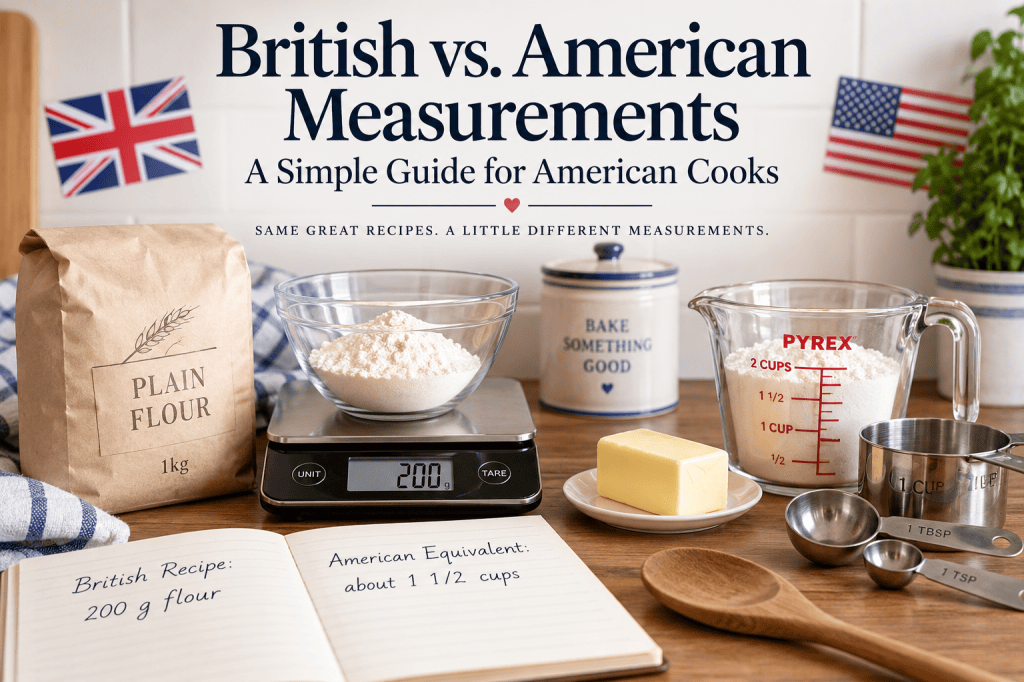
If you’ve ever followed a British recipe in an American kitchen, you may have noticed that the measurements don’t always look familiar. Grams and milliliters appear where you might expect cups and tablespoons, and even something as simple as a “cup” can cause confusion when recipes cross the Atlantic.
British baking traditionally relies much more heavily on weight, while American recipes commonly measure dry ingredients by volume using cups. That difference can matter—especially in baking, where a little too much flour or too little sugar can change the finished result.
In this guide, we’ll look at how British and American measuring methods differ, why weighing ingredients can be more accurate, and what American cooks should know before tackling a British recipe.
Affiliate disclosure: This post may contain affiliate links. If you make a purchase through one of these links, I may earn a small commission at no additional cost to you.
Do British Recipes Use Measuring Cups?
British recipes can use measuring cups and spoons, but modern British baking recipes commonly give measurements in grams and milliliters rather than relying primarily on cups for dry ingredients.
This means a British recipe might tell you to use 200 g of flour instead of “about 1½ cups of flour.” For an American baker who is used to reaching for a measuring cup, that can initially seem inconvenient—but there’s a good reason for it.
Measuring ingredients by weight is generally more consistent. A cup of flour can contain different amounts depending on how the flour is scooped, packed, or leveled, while 200 grams is always 200 grams.
That’s why a simple digital kitchen scale can be one of the most useful tools for an American who wants to bake British recipes regularly.
Is a British Cup the Same as an American Cup?
Not necessarily. This is where measuring by “cups” can become confusing when recipes travel between countries.
A standard US cup is about 237 milliliters, although it is commonly rounded to 240 mL in recipes and nutrition information. A metric cup is 250 milliliters and is used in some countries and recipes.
Because many modern British recipes use grams and milliliters rather than cups, you shouldn’t automatically assume that a cup measurement you find in a British or international recipe means exactly the same thing as your American measuring cup.
The safest approach is to follow the units provided by the recipe whenever possible. If the recipe gives ingredients in grams, use a kitchen scale rather than converting everything into cups. This avoids unnecessary rounding and usually gives you a more reliable result.
British vs. American Tablespoons and Teaspoons
The good news is that British and American teaspoon and tablespoon measurements are close enough that most home recipes won’t cause much confusion.
A standard teaspoon is 5 milliliters in both modern British metric measurements and common American recipe measurements.
A British metric tablespoon is 15 milliliters, which is also approximately the size of a standard US tablespoon. So when a modern British recipe calls for a tablespoon or teaspoon, your American measuring spoons will generally work just fine.
However, measurements can vary in older recipes and between countries. If you’re following a vintage British cookbook or a recipe from somewhere outside the UK or United States, it’s worth checking exactly what measurement system the author is using.
For modern British recipes, the bigger difference for American cooks is usually not the spoons—it’s getting accustomed to measuring ingredients in grams instead of cups.
Why British Bakers Use Kitchen Scales
Measuring ingredients by weight is especially useful in baking because it removes much of the variation that comes with measuring cups. Flour is a perfect example: one person might lightly spoon flour into a cup, while another might scoop directly from the bag and pack considerably more flour into the same cup.
With a digital kitchen scale, you simply place your mixing bowl on the scale, set it to zero (often called tare), and add the ingredient until you reach the weight specified in the recipe.
A scale can also mean fewer dishes. Instead of using several measuring cups, you can often add ingredients directly to the same bowl, resetting the scale to zero between additions.
If you plan to make British recipes regularly, look for a digital kitchen scale that can easily switch between grams and ounces and has a tare function. You don’t need an expensive professional model for everyday home baking.
British-to-American Measurement Quick Guide
Here are a few useful measurements to keep in mind when working with British and American recipes:
1 US cup → about 237 mL
1 metric cup → 250 mL
1 teaspoon → 5 mL
1 tablespoon → about 15 mL
1 ounce (weight) → about 28 grams
1 pound → about 454 grams
Remember that converting ingredients such as flour or sugar from grams to cups isn’t as simple as converting milliliters to cups. Different ingredients have different densities, so 100 grams of flour takes up a different amount of space than 100 grams of sugar.
Whenever a British baking recipe provides weights in grams, using those original measurements with a kitchen scale is usually easier and more reliable than converting every ingredient into American cups.
Can You Make British Recipes Without a Kitchen Scale?
Yes. You can still make plenty of British recipes without owning a kitchen scale, especially if the recipe already provides American cup measurements or reliable conversions.
However, if the original recipe is written in grams, converting every ingredient into cups can introduce small differences. This matters most in baking, where the balance between flour, sugar, butter, and liquids affects texture and structure.
If you don’t have a scale, use a trustworthy ingredient-specific conversion rather than assuming the same cup conversion works for every ingredient. When measuring flour with American cups, spoon the flour lightly into the cup and level the top instead of packing it down.
For occasional British cooking, measuring cups may be perfectly adequate. But if British baking becomes a regular part of your kitchen, a small digital scale can make following recipes considerably simpler.
Making British Recipes Easier in an American Kitchen
British measurements can seem unfamiliar at first, but you don’t need to completely change the way you cook. Once you become comfortable with grams and milliliters, following British recipes can actually become simpler.
A basic digital kitchen scale takes much of the guesswork out of baking, particularly when measuring ingredients such as flour, sugar, and butter. Instead of worrying about whether a cup is packed too tightly or whether a conversion is exact, you can simply use the weight given in the original recipe.
Measurements are only one of the differences you may encounter. British recipes also use ingredient names that can be unfamiliar to American cooks, including caster sugar, self-raising flour, golden syrup, black treacle, and bicarbonate of soda.
For help translating those ingredients, see our guide British Baking Ingredients Americans Need to Know.
With a kitchen scale, a few ingredient translations, and a willingness to try something new, you’ll be well prepared to bring a little Britain into your American kitchen.
 Brit & Skillet